


THEO CROKER
Grammy-nominated trumpeter, composer, producer, and bandleader Theo Croker continues to expand the boundaries of modern jazz with his new album, Dream Manifest (Dom Recs / Fat Beats, June 13). Hailed by the LA Times as “a path to jazz greatness,” the project blends jazz, experimental hip-hop, and cosmic soul into a genre-defying sonic journey.
Singles like the high-energy “We Still Wanna Dance” (produced by D’LEAU), the soulful “High Vibrations” (featuring Malaya), and the hypnotic “Crystal Waterfalls” showcase Croker’s dynamic vision — a sound both timeless and forward-facing (Wall Street Journal). NPR describes his vibe as “chill,” driven by a “clear musical approach and determination,” qualities that have made him a standout collaborator with Ari Lennox, Common, J. Cole, Jill Scott, and Wyclef Jean.
Croker’s live performances are cinematic and immersive, guided by a producer’s mind and a jazz artist’s spontaneity. As DownBeat notes, he “layers music and lyrics with the deft touch of a hip-hop producer and the spontaneity of a jazz trumpeter.” His trumpet becomes both melody and texture within a rich production landscape performed live with his acoustic band.
In 2025, he premiered Dream Manifest at London’s Barbican Theatre with designer Nicholas Daley. The Evening Standard called it “jazz, just not as we know it,” while Jazzwise praised its emotional depth and “total stage control.”
Tickets: $37.54 ($30.00 + $7.54 fees) | $54.54 ($45.00 + $9.54 fees)
Discounter Parking: $18.80 ($15.00 + $3.80 fees)
$20.00 Minimum Per Person
More Posts: adventure,bandleader,club,composer,genius,instrumental,jazz,music,preserving,travel,trumpet

LIZZ WRIGHT
Through an inimitable voice that The New York Times touts as, “a smooth, dark alto possessed of qualities you might associate with barrel-aged bourbon or butter-soft leather,” renowned vocalist and songwriter Lizz Wright sings with a soaring reflection of the cultural fabric of America. She lies beneath the script of history, transcending social divides with an offer of love and deep sense of humanity. Her music accepts the beauty of reality and creates a collective experience of belonging for the listener. Wright’s songs embody a tradition that allows us to always feel at home.
Wright’s 2024 studio album release, Shadow, presents Lizz in a gentle and triumphant light. With five originals penned by Wright, Shadow is anchored by acoustic guitars and layered with string quartets, harp, Carnatic Indian classical strings, gospel vocals, and bare emotion. It celebrates the intimacy of romantic love, loss, community, and healing. The album was produced by Chris Bruce and executive produced by Wright on Blues & Greens Records (with licensing/distribution through Lightyear Entertainment/Virgin Music). Wright worked with renowned engineer Ryan Freeland (who recorded Grace and has also worked with music legend Bonnie Raitt), and the album features acclaimed guest artists Angelique Kidjo and Meshell Ndegeocello.
At the age of 22, Wright first made a name for herself nationally as a vocalist with a touring concert tribute to Billie Holiday. At 23, she signed with Verve Records for the release of Salt, which topped Billboard’s contemporary jazz charts. She went on to record for Universal Music Group and released the albums Dreaming Wide Awake (2005), The Orchard (2008), and Fellowship (2010). On Concord, Wright released Freedom & Surrender (2016) – featuring the single “Lean In,” which landed on President Obama’s Summer 2016 playlist – and Grace (2017). Wright’s (2022) release of Holding Space (a live recording of a concert in Berlin at the Columbia Theater) was her debut live album on Blues and Greens Records.
Wright looks forward to the release of a duo album in 2026.
Tickets: $43.21 ($35.00 + $8.21 fees) | $54.54 ($45.00 + $9.54 fees)
Discounted Parking: $18.80 ($15.00 + $3.80 fees)
$20.00 Minimum Per Person
More Posts: adventure,bandleader,club,genius,instrumental,jazz,music,preserving,vocal
Requisites
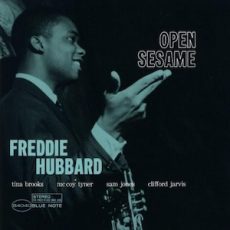
Open Sesame ~ Freddie Hubbard | By Eddie Carter
I’ve been a huge Freddie Hubbard fan since I was ten years old, and he’s always been one of my favorite trumpet players. It was while listening to a few of his albums that the inspiration for this morning’s discussion was born. Submitted for your consideration is his first release as a leader, a 1960 release, Open Sesame (Blue Note BLP4040/BST 84040). Freddie was 22 years old when he recorded it, and he’s joined by an excellent ensemble: Tina Brooks on tenor saxophone, McCoy Tyner on piano, Sam Jones on bass, and Clifford Jarvis on drums. The copy I own is the 1999 Classic Records U.S. stereo audiophile reissue sharing the original catalog number.
The title tune, Open Sesame by Tina Brooks, gets the first side off to a good start with the rhythm section’s intro to the quintet’s lively theme. Freddie launches into the first solo with vigorous zest. Tina follows him into the second statement enthusiastically, then McCoy explores the third reading at a consistently high level before the group reassembles for the closing chorus and ending. But Beautiful by Jimmy Van Heusen and Johnny Burke is a pretty ballad whose gentle melody begins with Freddie leading the group. Brooks starts the first solo gracefully, then Tyner continues with a wonderfully rich interpretation. Hubbard shares the song’s final elegant reflection, leading to the ensemble’s reprise and tender close.
Gypsy Blue by Tina Brooks is a medium blues that the quintet brings to life with an easygoing melody. Tina starts the opening solo at an unhurried pace, then Freddie takes over, giving a soulful interpretation. McCoy follows, feeding fresh ideas into the third statement, and Sam takes a carefree walk toward the ensemble’s restatement of the theme and fadeout. Tyner’s introduction sets the stage for the group’s speedy melody of All or Nothing at All by Arthur Altman and Jack Lawrence. Hubbard flies swiftly out of the gate first, then Brooks swings to perfection next. Tyner follows with a spirited statement, and Hubbard and Jarvis share a short exchange preceding the group’s return to the theme.
The trio’s bluesy introduction segues to the ensemble’s relaxed theme, One Mint Julep by Rudolph Toombs. Tina opens with a laid-back swing as comfortable as a favorite outfit. Freddie follows, demonstrating great poise and precision in every note. McCoy then steps into the spotlight for a few easy, flowing lines before the theme returns and the song fades out. The closer is a toe-tapper original by Freddie Hubbard, Hub’s Nub. After the sextet establishes the theme, Freddie takes the lead and constructs a joyous interpretation. Tina is right on his heels with a sprightly statement, and McCoy gets the last word before the theme’s reprise and fadeout.
The original session was produced by Alfred Lion, with Rudy Van Gelder at the controls. The Classic Records audiophile edition was expertly remastered by Bernie Grundman, delivering exceptional audio quality and an outstanding soundstage that places the musicians right in your listening room. Pressed on 180-gram vinyl, the record is perfectly quiet until the music fills the room. Fans of Freddie Hubbard’s Blue Note releases will find this album essential for their library. Open Sesame is a remarkable showcase of musicianship, and this album marks the beginning of a remarkable career. It’s also a title I’m proud to own and wholeheartedly recommend for your shelves!
~ But Beautiful – Source: JazzStandards.com ~ All or Nothing at All – Source: Wikipedia.org © 2026 by Edward Thomas Carter

More Posts: choice,classic,collectible,collector,history,instrumental,jazz,music,trumpet

CHRISTIAN MCBRIDE & URSA MAJOR
Eleven-time Grammy Award-winning bassist, composer, and bandleader Christian McBride will delight audiences with his unique musical style influenced by jazz, R&B, pop/rock, neo soul, and classical music.
Whether behind the bass or away from it, Christian McBride is always of the music. A luminary with one hand reaching for new heights and the other extended in fellowship, McBride invites audiences to join in his love of jazz, R&B, pop/rock, hip-hop, neo soul, and classical. An eleven-time Grammy Award-winning bassist, composer, and bandleader, McBride has served as Artistic Director of the historic Newport Jazz Festival, New Jersey Performing Arts center (NJPAC) and the TD James Moody Jazz Festival, as well as the National Jazz Museum in Harlem.
Cover: $30.00 ~ $60.00 | VIP ~ $80.00
More Posts: bandleader,bass,genius,instrumental,jazz,music,preserving,travel
Requisites
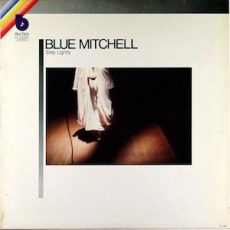
Step Lightly ~ Blue Mitchell | By Eddie Carter
In this morning’s discussion, trumpeter Blue Mitchell takes center stage with an underrated, yet delightful album. Step Lightly (Blue Note Classic LT-1082) was his debut on Blue Note, but his ninth recording session as a bandleader. It was initially recorded in 1963. But the album remained unreleased in the United States until seventeen years later. I first heard him on “Blowin’ The Blues Away,” by Horace Silver, “Open House,” and “Plain Talk” by Jimmy Smith, and “Steppin’ Out,” by Harold Vick. For his first effort, Mitchell is joined by an all-star cast: Leo Wright on alto saxphone (tracks: A1 to A3, B1, B3), Joe Henderson on tenor sax (tracks: A1, A2, B1 to B3), Herbie Hancock on piano, Gene Taylor on bass, and Roy Brooks on drums. The copy I own is the 1980 U.S. stereo release.
Side One gets underway with Mamacita by Joe Henderson, which first appeared on Kenny Dorham’s “Trompeta Toccata” in 1965. The sextet’s infectious bossa nova melody sets the tone for Blue to swing straight ahead in the lead solo. Leo follows with a sparkling statement, then Joe emerges to give a buoyant reading. Herbie steps up last for a short interpretation before the ensemble reconvenes for the closing chorus. Sweet and Lovely by Gus Arnheim, Jules Lemare and Harry Tobias slows the tempo down for the trio’s lovely introduction ahead of the group’s theme. Mitchell opens with a warm and sensitive statement. Wright compliments him gracefully next, and Henderson beautifully embraces the third reading. Hancock finishes with a delicately gentle interpretation preceding the group’s romantic reprise and ending.
Andrea, by Roger Boykin, closes out the first side with a catchy mid-tempo melody by the sextet. Blue is up first and leads the way with a charming interpretation. Leo takes over next with an attractive tone that’s very pleasing, then Herbie has a well-executed reading before the theme’s restatement and soft climax. Side Two kicks off with Joe Henderson’s Step Lightly which Blue would record again on 1965’s “The Thing To Do.” The group’s relaxed vibe on the theme sets things in motion for Mitchell’s breezy opening solo. Henderson follows with a soulful statement, and Wright is as smooth as silk in the third reading. Hancock wraps up everything with an easygoing interpretation leading to the ensemble’s closing theme and fade-out.
Cry Me a River by Arthur Hamilton comes to life with the ensemble’s poignantly sensitive theme. Blue starts the solos by pouring pure sincerity into every note from his trumpet. Joe comes in next and delivers an equally touching interpretation, then Herbie ends with a thoughtful statement before the group’s return to take the song out softly. The sextet ends the album on an upbeat note with a trip to Bluesville by Sonny Red Kyner. Mitchell lets his trumpet do the talking in the first of two infectious interpretations. Henderson comes right behind him and turns in one of his best solos on the album. Mitchell returns to ride the medium groove to a satisfying conclusion before the ensemble’s theme returns, and they take it out.
Alfred Lion produced the original recording session, and Rudy Van Gelder operated the recording console. Michael Cuscuna produced the album for release. The reissue’s sound quality is first-rate, bringing the musicians into your listening room to perform with stunning fidelity. Blue Mitchell recorded twenty-eight albums as a leader and contributed to an extensive discography as a sideman. He worked with Horace Silver from 1958 to 1964. After Silver disbanded the quintet, he formed a group featuring a few of the members. He also performed with John Mayall, Louie Bellson, Bill Holman, and Bill Berry, and eventually became the main soloist for Tony Bennett and Lena Horne. His last group was a quintet co-led with Harold Land until he passed away from cancer at age 49 on May 21, 1979.
If you’re a fan of jazz trumpet and in the mood for an excellent hard bop album, I offer for your consideration, Step Lightly by Blue Mitchell on your next record store visit. It’s a terrific release by a musician deserving of greater recognition, with tight musicianship and exceptional performances that are definitely worth exploring for a spot in your jazz library!
~ Blowin’ The Blues Away (Blue Note BLP 4017/BST 84017), Open House (Blue Note BLP 4269/BST 84269), Plain ~ Talk (Blue Note BST 84296), Steppin’ Out (Blue Note BLP 4138/BST 84138), The Thing To Do (Blue Note BLP4178/BST 84178), Trompeta Toccata (Blue Note BLP 4181/BST 84181) – Source: Discogs.com ~ Sweet and Lovely – Source: JazzStandards.com ~ Cry Me a River – Wikipedia.org © 2026 by Edward Thomas Carter
More Posts: choice,classic,collectible,collector,history,instrumental,jazz,music,trumpet