Daily Dose Of Jazz…
Steve Davis was born March 14, 1929 in Philadelphia, Pennsylvania. The youngest of 10 children, he became interested in music as a young teenager and was inspired by his older brother who also played the bass. He was part of a group of young Philadelphia jazz musicians that included saxophonists Benny Golson and John Coltrane. At age 16 he began playing with local big bands and dropped out of high school a year later to pursue a music career.
During the 1940s and 1950s he worked frequently playing with Philly Joe Jones and Jimmy Oliver among others. In 1960, he was briefly a part of the John Coltrane Quartet, before being replaced temporarily by Reggie Workman and permanently by Jimmy Garrison. He was the double bassist on the recordings of My Favorite Things, Coltrane Plays The Blues and Coltrane’s Sound.
He also recorded as a sideman with Chuck and Gap Mangione on Hey Baby! In 1961 and with quartet fellow and brother-in-law McCoy Tyner on the 1963 album Nights of Ballads & Blues. Davis went on to play on several of James Moody’s groups. He worked throughout the 1960s as a freelancer in New York and as a side man appearing on albums by Kenny Dorham and others.
Moving to Rochester, New York in 1970 Steve played bass with the Gap Mangione Trio, Spider Martin Group and other local bands. He was a mentor to younger jazz musicians in Rochester and enjoyed passing on his knowledge. 1980 saw him beginning to suffer from emphysema and returned to Philadelphia.
Bassist Steve Davis, who was also known by his Muslim name Luquman Abdul Syeed, died on August 21, 1987 at the age of 58.
More Posts: bass,history,instrumental,jazz,music

Daily Dose Of Jazz…
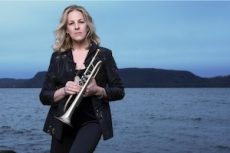
Dana Hall was born on March 13, 1969 in Brooklyn, New York where he spent the first few years of his life, then relocated with his family to his mother’s hometown of Philadelphia, Pennsylvania. There he was exposed to jazz and soul music at an early age through the family’s record collection. The family interest in creative music, and their open door policy toward Philly jazz musicians of the era sparked his curiosity, passion and ultimately career in music.
At the age of 12, Dana’s family moved from Philadelphia to Voorhees Township, New Jersey and began studying drums under renowned drum instructor Vincent “Jim” Hurley at Voorhees Middle School. Following study was with award-winning educator and bassoonist Dennis MacMullin at Eastern Regional High School where he also began playing the oboe and throughout college.
He attended Iowa State University with a double major in aerospace engineering and percussion. At ISU, Hall cultivated his interest in music, studying marimba, vibes, timpani, hand percussion, and drum set. After completing his education in aerospace engineering at Iowa State University, he received his Bachelor of Music degree from William Paterson College and a master’s degree in Composition and Arranging from DePaul University. He is presently a distinguished Special Trustees Fellow pursuing his Doctorate in Ethnomusicology at the University of Chicago.
As a jazz drummer, he is primarily influenced by the work of Art Blakey, Elvin Jones, Philly Joe Jones, Max Roach, and Roy Haynes, Jeff ‘Tain’ Watts, Ralph Peterson, Jr., and Kenny Washington, among many others. The list of artists that Hall has performed, toured, and/or recorded with is too long to mention here but it reflects the diverse, varied approaches of his music-making in the fields of jazz and popular music.
He’s both a member of the Terell Stafford Quintet and the Music Director of the Chicago Jazz Ensemble. He has been a member of the Carnegie Hall Jazz Band, and the Des Moines and the Cedar Rapids Symphonies.
As an educator he has been on the faculty of several colleges and universities including DePaul, Jazz at Lincoln Center Band Director’s Academy, Essentially Ellington faculties. Thelonious Monk Institute of Jazzand the Jazz Institute of Chicago’s Artists Residency Program.
Drummer, percussionist, composer, bandleader, and ethnomusicologist Dana Hall has released one album as a leader and continues to teach, perform, and record.
More Posts: composer,drums,educator,ethnomusicologist,history,instrumental,jazz,music,percussion

Daily Dose Of Jazz…
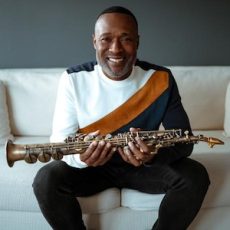
Quin Davis was born Quinn Hall Davis on March 12, 1944 in Artesia, California. He toured and recorded with Buddy Rich in 19966 to 1967 and again from 1969 to 1970.
Leaving Rich in 1970, Quin was the solo alto saxophonist with Stan Kenton for three years followed by another three year residency with Harry James until 1976.
Little is known or written about alto saxophonist and flutist Quin Davis after this point in his life.
More Posts: history,instrumental,jazz,music,saxophone

Daily Dose Of Jazz…
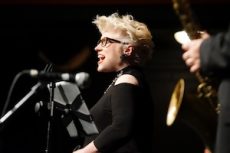
Patty Waters was born on March 11, 1946 in Iowa and started singing semi-professionally in high school. After school, she sang for the Jerry Gray Hotel Jazz Band, then her family moved to Denver, Colorado. There she started listening to Billie Holiday, whose life and singing had a profound influence on her.
The early 1960s saw her following the recommendation of friends to move to New York City. Albert Ayler heard her in a dining club and introduced her to Bernard Stollman, the owner of the experimental jazz label ESP-Disk. Her most influential albums, Sings released in 1965) and College Tour in 1966 were recorded on this label.
In the late 1960s, she spent time in Europe and then left the music world in 1969 to raise her son in California. Almost 30 years later she recorded the album Love Songs in 1996 and began performing in public again. In 2004 she released You Thrill Me: A Musical Odyssey, a collection of rare and unissued recordings from the years 1962–1979.
She returned in 2019 with the album Live recorded at the First Unitarian Congregational Church in Brooklyn. The album was followed in 2020 by another live recording entitled An Evening In Houston. That same year she released an unissued 1970 LP titled Plays via her own label.
Vocalist Patty Waters, best known for her free jazz recordings in the Sixties and her recording of the nearly fourteen minute version of the traditional song Black Is the Colour (Of My True Love’s Hair from Sings, which is rendered in a haunting, anguished wail, continues to record, perform and tour.
More Posts: bandleader,history,instrumental,jazz,music,vocal

Requisites
Free Wheeling ~ The Ted Brown Sextet Featuring Warne Marsh and Art Pepper | By Eddie Carter
I first heard a track from Free Wheeling (Vanguard VRS-8515) by The Ted Brown Sextet a few years ago on Sirius XM’s Real Jazz. I’ve loved the tenor sax since I was a child, so I was ecstatic to discover a new musician and finally get a copy. It was Ted’s first release as a leader, and the music within it is an excellent representation of West Coast jazz. During his career, he recorded with Lee Konitz, Hod O’ Brien, and Lennie Tristano, and on this date, he’s joined by Art Pepper on alto sax, Warne Marsh on tenor sax, Ronnie Ball on piano, Ben Tucker on bass, and Jeff Morton on drums. My copy is the 1975 King Record Company Japanese Mono reissue (Vanguard GXC 3121M).
Side one starts with the front line’s brisk introduction to Aretha by Ronnie Ball. Ronnie infuses the first solo with energy and agility. Art and Warne follow in successive order, hitting an ideal groove. Jeff is up next with a brief but lively finale ahead of the sextet’s theme’s restatement and climax. The ensemble moves the needle upward for Long Gone by Warne Marsh. The front line sets the mood in the opening chorus; then, Ted makes his entrance first for an exciting solo. Warne steps up next and takes the reins. Ronnie follows with a swift reading; then Art gets right to work and cooks. Jeff signals the end with a brief comment into the closing chorus and ending.
Once We Were Young by Walter Gross is a lovely song that Ted begins with a dreamy melody that Warne picks up in the background. Ronnie comes in for a short, sensitive interlude until both horns return for a beautiful theme restatement and tender climax. Foolin’ Myself is the creation of Andy Razaf and Thomas “Fats” Waller. The rhythm section starts with a mid-tempo introduction, segueing into the catchy melody. Ronnie takes the lead and gives an enchanting interpretation. Ted begins the second statement, then is joined by Art and Warne in succession for a hauntingly sincere reading that concludes softly.
The sextet takes us to Avalon by Al Jolson, Buddy DeSylva and Vincent Rose. The song’s title comes from a California city, and the front line kicks off the lively melody together. Ted goes first and makes a vigorous opening statement. Jeff succeeds him and delivers the goods in a spirited conversation with the leader before the group reconvenes to take the song out. On a Slow Boat To China by Frank Loesser starts Side Two with the sextet slowing the beat slightly for the opening chorus. Ted is thoroughly at ease in the first interpretation, and then Ronnie takes a few lovely choruses. Ted and Ronnie have a short exchange preceding the song’s conclusion.
Crazy She Calls Me by Carl Sigman and Bob Russell begins with the ensemble’s moving, deeply satisfying theme. Warne is the first soloist, and from his horn, notes of velvety softness flow. Ronnie expresses the song’s sentimentality next. Ted handles the following reading with a good deal of warmth, and then Warne returns to help bring the song to a gorgeous climax. Broadway by Wilbur H. Bird, Teddy McRae and Henri Woode opens with the front line’s collective melody. Warne, Art, and Ted are the first three in the solo spotlight, followed by an ensemble chorus together. Ronnie takes a splendid reading next, then Ben has a short summation as Jeff keeps perfect time toward the finale.
Arrival by Ronnie Ball is our final stop in this cool jazz session, and it’s off to the races from the start of the melody. Art leads the way with a swift opening statement. Warne delivers the second solo fleetingly; then, both horns make quick work of the finale in an exchange with Jeff before taking the song out. Alfred Marx supervised the original session, and the Vanguard Recording Society, Inc. recorded it. The sound quality of this reissue is exceptionally good and for a vintage fifties recording, exceeded my expectations. The music is also excellent, as is the pressing, and the vinyl is noticeably quiet.
There is one error on my copy, which doesn’t appear on the original album. The composers for Crazy She Calls Me are incorrectly listed on the Side Two label as the team of Cahn and Mayer but actually are Carl Sigman and Bob Russell. The album cover is also one of the strangest I’ve ever seen, but don’t let that dissuade you from checking out Free Wheeling by The Ted Brown Sextet on your next record hunt. If you’re a fan of cool jazz or West Coast Jazz, it’s a great-blowing session with Warne Marsh and Art Pepper and a wonderful introduction to a musician deserving of wider recognition. To borrow a quote from the great Vin Scully in game one of the 1988 World Series, “Not a bad opening act!”
~ Avalon – Source: JazzStandards.com ~ Broadway, Crazy She Calls Me, On a Slow Boat To China – Source: Wikipedia.org © 2024 by Edward Thomas Carter
More Posts: choice,classic,collectible,collector,history,instrumental,jazz,music,saxophone