

Daily Dose Of Jazz…
Karl Sterling was born in Ithaca, New York on June 5, 1961. Growing up in a musical household, it was a natural thing for him to take to music and drums. Both parents attended the Ithaca College School of Music with his father, a drummer, composer/arranger, and band leader, his mother, a vocalist and pianist.
His interest turned to medicine and he became a nuerorehabilitation specialist, educator, and advocate for people with Parkinson’s disease. So in 2018 Karl founded the Parkinson’s Global Project nonprofit corporation dedicated to funding research and supporting associations around the world.
Using his musical talents to raise awareness of the disease, in 2019, Sterling recorded Dream, a project in which Jimmy Haslip, Jeff Richman, Peter Erskine, Scott Kinsey, and other musicians donated their time and talent.
He has since traveled, researching with and educating neurologists, physical therapists, fitness trainers, people with Parkinson’s, and caregivers all over the world.
Drummer Karl Sterling has spent the majority of his life in the Syracuse, New York area and continues to perform, compose and educate.

More Posts: bandleader,composer,drums,educator,history,instrumental,jazz,music

Daily Dose Of Jazz…
Alan Branscombe was born on June 4, 1936 in Wallasey, Cheshire, England into a family of musicians. His father and grandfather were professional musicians and began on alto sax at age six. As a child he played drums with Victor Feldman in a talent show as a child.
During his time in the Army he played with Jeff Clyne in 1954–56. He toured and recorded with Vic Ash in 1958, recorded with Tony Kinsey the following year, and toured Japan with Stanley Black at the turn of the new decade. Alan worked with John Dankworth as pianist and vibraphonist intermittently between 1960 and 1972, including in the 1963 film The Servant.
Joining Harry South’s band at Ronnie Scott’s club in the mid-1960s, Branscombe went on to play as a sideman with Tubby Hayes, Stan Tracey, and Paul Gonsalves through the decade. He played with Ben Webster in 1965 and again in 1970, and in the Seventies he was with Albert Nicholas, toured in Europe with Stan Getz, and played with the Lamb-Premru group around 1971.
As a leader Branscombe recorded with Tony Kinsey and Tony Coe as sidemen on the album The Day I Met the Blues in 1977. As a session musician, he played tenor saxophone on The Beatles song Got To Get You Into My Life.
Pianist, vibraphonist, and alto saxophonist Alan Branscombe died on October 27, 1986.
More Posts: bandleader,history,instrumental,jazz,music,piano,saxophone,vibraphone
Daily Dose Of Jazz…
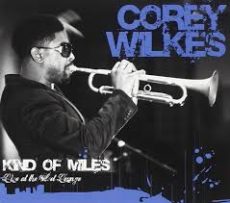
Corey Wilkes was born June 3, 1979 in Chicago, Illinois. He began his musical journey at a young age and received a full scholarship to Berklee College of Music in Boston, Massachusetts. After graduating, he became an in-demand touring and recording artist, collaborating with the Art Ensemble of Chicago, Roy Hargrove, Kahil El Zabar, James Carter, Tedeschi Trucks Band, Nicole Mitchell, Dr. Lonnie Smith, Makaya McCraven and many more.
Wilkes’ talents as a composer won him an Outstanding Achievement for Documentary Program ~ Historical Emmy Award for his film score for the Ida B Wells documentary. He is also a Grammy-nominated musician for his work as a member of the Ethnic Heritage Ensemble. His electro-acoustic soulmusic blends jazz, electronic music, and soulful vocals in his solo projects.
Beyond music Corey has also worked with visual artists such as Theaster Gates, Nick Cave, Lucy Slivinski and Rashid Johnson, creating multi-disciplinary performances that blend music, art, and culture. He has also worked with renowned House Music DJ’s such as Osunlade, Ron Trent, Jaimie Principle, and Vick Lavender, fusing jazz with electronic and house music.
Trumpeter, producer, composer and actor Corey Wilkes continues to captivate audiences around the world.
More Posts: bandleader,composer,history,instrumental,jazz,music,producer,trumpet
Requisites
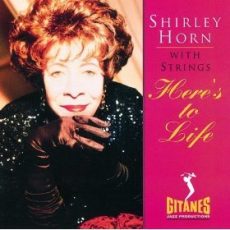
The very first time I heard Shirley Horn sings and play piano was in the 1970s at the Bohemian Caverns in Washington, D.C. and I fell in love with her voice and style. By then she had recorded five albums and when I was on the radio she became a part of my regular playlist. Here’s To Life is a studio album recorded in September 1991 by the vocalist, and released in 1992. The album was arranged by Johnny Mandel who composed three of the songs on the album. He also received a Grammy Award for Best Instrumental Arrangement Accompanying Vocals on this album. It’s a quiet album of ballads that once again showcases Shirley’s talent. Johnny Mandel arranged and conducted the recording session for the Verve label.
The album opens with the title track with Here’s To Life which became her signature song. The music was written by Artie Butler and the poignant lyrics were written by Phyllis Molinary. The lyric, known world-wide as one of her finest works and the song is considered a modern day jazz standard. She followed with a medley of Come A Little Closer/Wild Is the Wind. The former song is about New Yorkers, the city and the cell phone that disputes a couple’s marriage. The song is paired with Wild Is The Wind which was written as the theme song for the 1959 film of the same name and recorded by Johnny Mathis. It was nominated for an Oscar for Best Song.
How Am I to Know? by Jack King and Dorothy Parker takes the third slot on the album. A Time for Love was written for the 1966 film An American Dream. The Begman/ Mandel tune, Where Do You Start tells the story of a couple breaking up and undecided about what belongs to whom. The next song You’re Nearer is a Lorenz Hart/Richard Rodgers composition for the Broadway musical Too Many Girls. Our next entry in Return to Paradise was written for the 1953 film of the same name by Dimitri Tiomkin and Ned Washington. Isn’t It A Pity was composed by the Gershwins for the unsuccessful 1933 musical Pardon My English, however, the song became a part of the Great American Songbook.
Quietly There is taken from the noir film Harper that starred Paul Newman as a detective. If You Love Me is an English adaptation of the popular French song “Hymne à l’amour of Hymn To Love. The album closes with Summer is the first English version of the Italian standard Estate. She ordered English lyrics after hearing Joao Gilberto’s version, which spread the song to worldwide fame.
Shirley Horn sings and plays piano and is joined by bassist Charles Ables and dummer Steve Williams as her core trio. She invited trumpeter Wynton Marsalis – to play on A Time For Love and Quietly There. Richard Todd plays the French horn on the title track. Reminding me of how precious life is and how much we should live and love, this has become my favorite album by this vocalist. I hope you enjoy it just as much as I.
More Posts: choice,classic,collectible,collector,history,instrumental,jazz,music,vocal
Daily Dose Of Jazz…
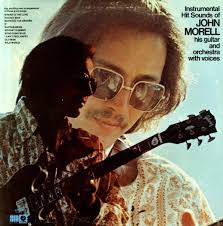
John Morell was born into a family of guitarists on June 2, 1958 in Niagara Falls, New York. His father was his first teacher and together they would play jazz with him leading and his father accompanying him and then they would switch.
As he matured he began composing and controlling the setting. His most recent recording Trading Places is an album that swings with a more contemporary sound. Morell often played with drummer John Guerin and added organist and keyboardist Steve Bohanon to make a trio.
He and Guerin have played on 40 films and countless TV soundtracks or at recording sessions for albums. The guitarist figures he’s played on 40 films, and countless TV soundtracks and recordings.
In 1968 Berkeley, California he played a concert with the Gil Evans Orchestra and the Miles Davis Quintet. For four years beginning in 1970, John was a member of the Shelly Manne outfit. Then, for a period of time Morell gave up playing to focus on building furniture. Though it paid the bills it wasn’t satisfying and he returned to music, operating his own studio and continued to flourish in a side career as a woodworker.
Guitarist, organist and composer John Morell, best known for his work with drummer Shelly Manne’s sextet, continues to perform and record.
More Posts: bandleader,composer,guitar,history,instrumental,jazz,music