

Daily Dose Of Jazz…
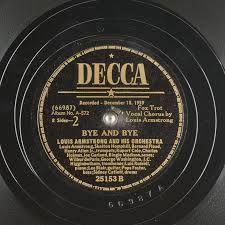
Bernard Flood was born on December 16, 1907 in Montgomery, Alabama and graduated from Alabama’s Tuskegee Institute in the Twenties. The following decade he went to New York City and became associated with a series of bandleaders in a slow and careful fashion. For the first two years he worked with Bob Neal, moved over to Fess Williams for about an equal length of time, before becoming involved with Teddy Hill in 1933 on through the middle of the decade.
He was quickly in and out of the Luis Russell and Chick Webb outfits before joining up with Charlie Johnson. By 1937 the trumpeter was hitting high notes with Edgar Hayes as well as with Johnson, the former leader launching a terrific European tour. In 1939 Bernard became part of the Louis Armstrong big-band project, dropping out for a spring 1941 James Reynolds gig before rejoining Armstrong and remaining until 1943.
Military service called in 1943 and three years later he was discharged and began working with Luis Russell and Duke Ellington. Flood went on to start his own combo, and collaborated with Happy Caldwell in both the late Forties and early 1950s.
Retiring from full-time music in the early ’70s, Flood was available for gigs, but made no new recordings during this period. Suffering from diabetes Bernard lost both of his legs due to the disease. Trumpeter Bernard Flood, who was featured in the HBO documentary Curtain Call performing Wonderful World, transitioned on June 9, 2000 in Englewood, New Jersey.

More Posts: bandleader,history,instrumental,jazz,music,trumpet
Daily Dose Of Jazz…
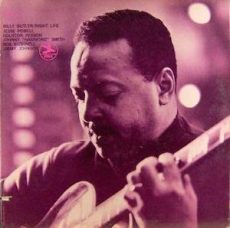
Billy Butler was born William Butler Jr. on December 15, 1924 in Philadelphia, Pennsylvania and began his career in the 1940s behind the Harlemaires. The 1950s saw him as a member of a trio led by Doc Bagby and accompanied keyboardist Bill Doggett.
Butler worked with Al Casey, King Curtis, Eddie “Lockjaw” Davis, Bill Davison, Tommy Flanagan, Panama Francis, Dizzy Gillespie, Benny Goodman, Johnny Hodges, Floyd “Candy” Johnson, David “Fathead” Newman, Houston Person, Sammy Price, Jimmy Smith, Norris Turney, and Dinah Washington.
He is credited as the guitarist on the 1961 Peppermint Twist, Parts 1 & 2 by Joey Dee and the Starliters at the Peppermint Lounge in New York City. He co-wrote Honky Tonk, an R&B hit for Doggett.
Guitarist Billy Butler transitioned on March 20, 1991 from a heart attack at home in Teaneck, New Jersey.
More Posts: bandleader,guitar,history,instrumental,jazz,music
Daily Dose Of Jazz…
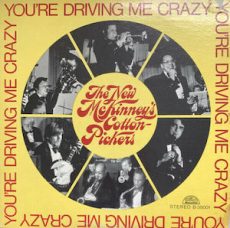
Theodore Guy Buckner was born on December 14, 1913 in St. Louis, Missouri but was raised in Detroit, Michigan where he played very early in his career before joining McKinney’s Cotton Pickers.
He became a member of the Jimmie Lunceford Orchestra, remaining from 1937 to 1943. After working with Lunceford, Buckner primarily played locally in Detroit, where he worked well into the 1970s. He played in small jazz combos, worked in the Motown studios, and co-led a big band with Jimmy Wilkins, Ernie Wilkins’s brother.
He toured Europe in 1975, and also appeared in the New McKinney’s Cotton Pickers that decade. Saxophonist Ted Buckner, who was the older brother of pianist Milt Buckner, transitioned on April 12, 1976 in Detroit.
More Posts: bandleader,history,instrumental,jazz,music,saxophone
Three Wishes
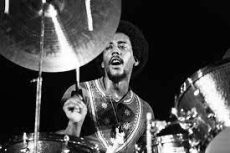
While hanging out with Roy McCurdy the Baroness had the pleasure of asking him what he would wish for if magically they could be realized and he told her:
- “For my family to be happy and secure.”
- “To play as often as I wanted to, consistently good.”
- “Oh, I don’t know! To be happy. And peace of mind. That’s probably… probably is it.”

Daily Dose Of Jazz…
Louis Raphael Mucci was born December 13, 1909 in Syracuse, New York and began as a baritone horn player and was appearing in professional settings by the time he was ten years old. As a teenager he switched to trumpet and worked in the late 1930s with Mildred Bailey and Red Norvo before joining Glenn Miller’s ensemble in 1938-1939.
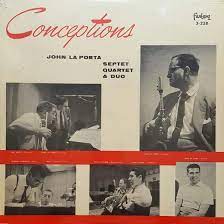
During World War II he played in the bands of Bob Chester, Hal McIntyre, Claude Thornhill, and Benny Goodman. In the first half of the 1950s Lou worked as a house musician for CBS and also recorded with Buddy DeFranco and Artie Shaw. Later in the decade he worked with Helen Merrill, John LaPorta and Miles Davis, the latter lasting into the early Sixties.
Trumpeter Lou Mucci, who also played with Kenny Burrell in 1964, transitioned on January 4, 2000.
More Posts: history,instrumental,jazz,music,trumpet