

Daily Dose Of Jazz…
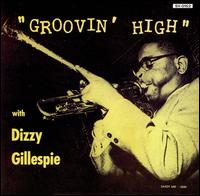
Alton “Slim” Moore was born October 7, 1908 in Selma, Alabama and began on baritone horn before settling on trombone by age 17. He played with local bandleaders and territory bands in his youth, such as Georgia Barlowe, Eddie Lemon, Gonzelle White, and Gene Coy.
Moving to New York City early in the Thirties he played with Jack Butler, Charlie Skeete, and Bobby Neal. Frequently switching ensembles in New York, in 1938 he did a short tour of Cuba with the Leon Gross Orchestra. Toward the end of the decade Moore moved up to play in more high-profile bands such as those of Fats Waller, Coleman Hawkins, Hot Lips Page, and Charlie Johnson. In the 1940s he played with Ella Fitzgerald, Benny Carter, Dizzy Gillespie and Louis Armstrong.
By the 1950s Slim had reduced his outings to part-time playing, after an extended stay in the band of Stafford “Pazuza” Simon. He would go on to play with Fletcher Henderson in 1957, and in the 1960s played in the Prince Hall Symphonic Band in New York as well as other big band revival outfits.
Trombonist Slim Moore, who also played and recorded on euphonium and did some scat singing, transitioned in 1978 in New York City.

More Posts: euphonium,history,instrumental,jazz,music,trombone

Daily Dose Of Jazz…
Ami Nakazono was born on October 6, 1986 in Kagoshima, Japan and began classical piano lessons at the age of 4. By 12 she was playing the alto saxophone and joined her school brass band. After two years, she won the “City Solo Instrumental Competition.” At the same time she was offered a full scholarship to study music at Fukuoka Daiichi High School in Fukuoka, Japan, where she studied classical music, theory, ear training, harmony, and brass band skills.
After graduation, she entered Senzoku Gakuen University, Japan’s most prestigious university, with a jazz major. During this time, Ami formed her own band and began playing gigs in and around Tokyo, Japan. Again two years later in 2007 she accepted a scholarship from Berklee College of Music, moved to Boston, Massachusetts and continued to perform and study under Walter Beasley, Dino Govoni, Bill Pierce, Shannon LeClaire and Jeff Harrington, and flute with Mia Olson. In 2008 with mentor and inspiration George W. Russell Jr., the two worked on several collaborations during this period at Berklee.
Nakazono began performing internationally with the acclaimed band, Violette, headed by French jazz singer~songwriter Violette De Bartillat. In 2010 she recorded for two critically praised albums, Joie de Vivre with Violette and Shine with George W Russell Jr.
Saxophonist Ami Nakazono is currently an active member of Boston’s entertainment group Raw Ambition and continues to perform at prestigious venues and festivals across the United States.
More Posts: bandleader,history,instrumental,jazz,music,saxophone
Daily Dose Of Jazz…
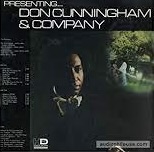
Alicia Cunningham was born Alicia Rodriguez of Mexican heritage on October 5, 1946 in Los Angeles, California. A classically trained vocalist and pianist, she worked in the L.A. studios and as an educator at Loyola University in her early years.
Meeting her husband Don was fortuitous when he moved to Los Angeles in the early 70s. Their combination of his jazz-influenced energetic singing style and Alicia’s fluid, clear and lyrical sound, established a solid reputation. This would lead to a tour with Count Basie in Europe for five months at major events and jazz festivals in England and Switzerland.
She was an intricate and melodic harmonizer and arranger and paired with the Cunningham stage presentation, they offered enormous panache. They not only kept her hometown audiences satisfied but they traveled around the country and the world thrilling listeners in Europe, Canada, Singapore, Brazil, Japan, Indonesia and South Korea.
In 2012, they released their final album together titled Sao Paulo Lights that was recorded in Brazil. In the autumn of 2014, Alicia made her last performance in St. Louis when Don received a St. Louis Jazz Hall of Fame Award.
Vocalist Alicia Cunningham, who sang hard jazz, transitioned in Las Vegas, Nevada on December 23, 2014 at the age of 68 after battling cancer for a year.
More Posts: arranger,bandleader,history,instrumental,jazz,music,vocal
Three Wishes
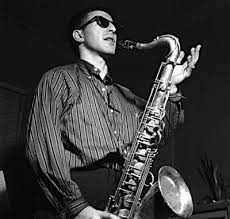
When Pannonica approached J. R. Monterose with the question of three wishes if granted what would he ask for he told her:
- “Play, play, play.”
More Posts: baroness,history,instrumental,jazz,music,pannonica,saxophone,three,wishes
Daily Dose Of Jazz…
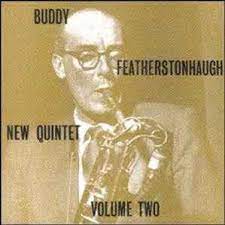
Buddy Featherstonhaugh was born Rupert Edward Lee Featherstonhaugh on October 4, 1909 in Paris, France. After the family moved to England he studied in Sussex, and had his first professional gig with Pat O’Malley in 1927. He went on to play with Spike Hughes from 1930 to 1932, and toured England in Billy Mason’s band behind Louis Armstrong that same year and in 1933 recorded with a group called The Cosmopolitans. which included Fletcher Allen. In 1935 he recorded with Valaida Snow and two years later with Benny Carter.
During World War II, he led a Royal Air Force band which included in its ranks Vic Lewis, Don McAffer, and Jack Parnell. They went on to record as The BBC Radio Rhythm Club Sextet during 1943-45. After the war Buddy toured Iceland in 1946, and then left the jazz scene, taking up work as a car salesman.
1956 saw his return to playing and recording in a quintet with trumpeter Leon Calvert, Roy Sidewell, Kenny Wheeler, and Bobby Wellins. He also appeared with the band at Butlin’s Holiday Camps in the mid-1950s. He toured the Middle East in 1957, after which he retired.
Saxophonist and clarinetist Buddy Featherstonhaugh, who was an occasional racing car driver who won the 1934 Albi Grand Prix, transitioned on July 12, 1976.
More Posts: bandleader,clarinet,history,instrumental,jazz,music,saxophone