

Daily Dose Of Jazz…
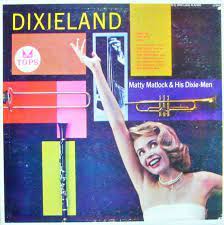
Julian Clifton Matlock was born on April 27, 1907 in Paducah, Kentucky and raised in Nashville from the age of ten. He began playing clarinet when he was 12.
From 1929 to 1934, Matlock replaced Benny Goodman in the Ben Pollack band doing arrangements and performing on clarinet. He was one of the main arrangers for Bob Crosby’s band and joined Crosby’s group in 1935 as clarinettist, playing with both the main Crosby band and the smaller Bobcats group. However, he was often seconded to write full-time for the orchestra and the Bobcats. He stayed with Crosby until the band broke up in 1942.
After the dissolution of Crosby’s group, Matty worked in Los Angeles, California playing for recordings made by a variety of Dixieland groups. In 1955, he appeared in the film Pete Kelly’s Blues, playing clarinet for a band that is seen in a scene in a Kansas City speakeasy in 1927. He would go on to play with Bing Crosby, Ella Fitzgerald, Ray Heindorf, Ben Pollack and Beverly Jenkins.
Dixieland clarinettist, saxophonist and arranger Matty Matlock, who recorded three albums as a leader, passed away on June 14, 1978 in Los Angeles, California.
More Posts: arranger,bandleader,clarinet,history,instrumental,jazz,music,saxophone
Daily Dose Of Jazz…
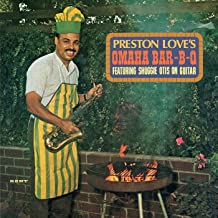
Preston Haynes Love was born on April 26, 1921 in Omaha, Nebraska, grew up in North Omaha and graduated from North High.
He became renowned as a professional sideman and saxophone balladeer in the big band heyday, being a member of the bands of Nat Towles, Lloyd Hunter, Snub Mosley, Lucky Millinder and Fats Waller before getting his big break with the Count Basie Orchestra at age 22. Love played and recorded with the Count Basie band from 1945–1947 and played on Basie’s only #1 hit record, Open The Door Richard.
He eventually became a bandleader himself, playing with Lena Horne, Billie Holiday, his friends Johnny Otis and Wynonie Harris, with whom he had several hits. In 1952, he launched the short-lived Spin Records, as a joint effort with songwriter Otis René (When It’s Sleepy Time Down South). The label released material by the Preston Love Orchestra, among others.
By the early 1960s he was working with Ray Charles in California and Aretha Franklin, eventually becoming Motown’s West Coast house bandleader. He played and toured with The Four Tops, The Temptations, Tammi Terrell, Marvin Gaye, Gladys Knight and others. Preston also recorded with Nichelle Nichols, Janis Joplin, Frank Zappa, Shuggie Otis, T-Bone Walker, Charles Brown, Ruth Brown, Smokey Robinson, Diana Ross and Stevie Wonder, among numerous others.
Love continued touring the U.S. and Europe into the 2000s, additionally lecturing and writing about the history he was part of. In his later years he returned to Omaha, wrote a book, led bands, the last of which featured his daughter vocalist Portia Love, drummer Gary E. Foster, pianist Orville Johnson, and bassist Nate Mickels. He also held down the position of advertising agent for the city’s local newspaper, Omaha Star, a local newspaper serving the city’s Black community. He appeared in the Clint Eastwood film Play Misty For Me with the Johnny Otis band.
Saxophonist, bandleader, and songwriter Preston Love, who was inducted into the Omaha Black Music Hall of Fame, passed away on February 12, 2004 after a battle with prostate cancer.
More Posts: bandleader,history,instrumental,jazz,music,saxophone,songwriter
Requisites
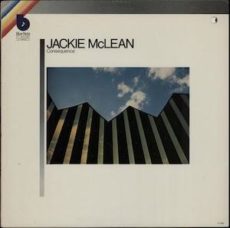
Consequence, as defined in the Merriam-Webster Dictionary, is “something that happens as a result of a particular action or set of conditions”. In effect, that’s a perfect way to describe this morning’s choice from the library, Consequence (Blue Note Classic LT-994). Alto saxophonist Jackie McLean’s two previous releases, One Step Beyond and Destination Out expressed an abstract style toward progressive jazz and both were still selling well. I think this is why Alfred Lion didn’t release the album after it was recorded. However, this 1965 date pairs McLean with one of his favorite collaborators, Lee Morgan on trumpet. The rhythm section is equally stellar, Harold Mabern on piano, Herbie Lewis on bass, and Billy Higgins on drums. My copy used in this report is the original 1979 Stereo LP.
Bluesanova, the first of two tunes by Morgan starts Side One with a dazzling theme led by the front line. Lee takes off first on an enthusiastic rhythmic flight succeeded by Jackie who wails with exciting freshness. Harold weaves a happy spell on the closing performance, then the front line makes one final comment each before the ensemble dissolving into nothingness. Consequence, also by McLean is a speed demon from the outset of the brisk opening chorus. The leader opens the soloing like a meteorite streaking across the sky. Morgan raises the temperature to the searing heat of a tropical summer on the second reading. Mabern delivers a ferocious statement next, then Higgins has a rapid-fire exchange with Lee and Jackie into an abrupt climax.
My Old Flame by Sam Coslow and Arthur Johnston made its debut in the 1934 film, Belle of The Nineties. The lyrics of this beautiful ballad describe a woman recalling a former lover with reflective affection, and the group presents a passionately tender interpretation. Jackie takes the first step with a touching opening statement. Harold and Lee turn in two beautifully expressed readings before Jackie appears again for a delicately elegant ending. A festive mood gets Side Two underway with McLean’s Tolypso, a danceable mid~tempo tune providing the ideal setting for a graciously inviting lead presentation by the altoist. Morgan adds some hot and spicy sauce to this festive occasion and Mabern sizzles with an effervescent spontaneity before the trio leads the partygoers into a fadeout.
Slumber is by Lee Morgan and during the melody, I thought I’d heard it before and was experiencing déjà vu. It turns out I did recognize it because it was recorded two years later on The Procrastinator (1978) as Soft Touch. After the ensemble’s unhurried melody, Lee opens the first solo expressing an enjoyable, relaxed mood. Jackie’s alto swings brightly next and Harold captivates on the closing reading. McLean’s Vernestune was originally recorded as The Three Minors in 1962 for an album that was shelved until its release in Japan, Jackie McLean Quintet (1977). It begins with a speedy main theme in unison. McLean provides plenty of fireworks on the first solo, then Morgan answers with a quick attack. Mabern blazes brightly on the closing presentation with a ferocious determination that doesn’t stop until the upbeat exit.
McLean and Morgan were a perfect match together and Alfred Lion utilized their talents whenever he could. Jackie performed on Lee’s LP’s: Leeway (1961), Cornbread (1967), Charisma (1969), The Sixth Sense (1970), Tom Cat (1980), and Infinity (1981). Lee returned the favor on Jackie’s album Jacknife (1975). The sound of the original recording by Rudy Van Gelder is quite good without a bit of harshness from top to bottom. I did an A-B listening comparison between Consequence and Record Five of The Complete Blue Note 1964-66 Jackie McLean Sessions (1993), which duplicates the LP song sequence. The sound of the Mosaic album is exceptional with a significant improvement in the highs, midrange, and bass. If you like jazz or are a fan of Jackie McLean, Consequence is a solid straight-ahead session with an extraordinary supporting cast that you can’t listen to without tapping your feet. Together, they create thirty-six minutes of enjoyable listening worthy of occupying a spot in any Hard-Bop or Post-Bop library!
Charisma (Blue Note BST 84312), Destination Out (Blue Note BLP 4165/BST 84165), Infinity (Blue Note Classic LT-1091), Jacknife (The Blue Note Reissue Series BN-LA457-H2), Leeway (Blue Note BLP 4034/BST 84034), One Step Beyond (Blue Note BLP 4137/BST 84137), The Complete Blue Note 1964-66 Jackie McLean Sessions (Mosaic Records MQ6-150), Jackie McLean Quintet (Blue Note LNJ-80118), The Procrastinator (Blue Note Classic Jazz Series BN-LA582-J2), Tom Cat (Blue Note Classic LT 1058) – Source: Discogs.com
~ My Old Flame – Source: JazzStandards.com ~ Belle of The Nineties – Source: Wikipedia.org ~ Bluesanova – https://www.youtube.com/watch?v=pBEDJ1Ke5l0 ~ Consequence – https://www.youtube.com/watch?v=-YKe7O6KDxM © 2021 by Edward Thomas Carter
More Posts: choice,classic,collectible,collector,history,instrumental,jazz,music,saxophone
Daily Dose Of Jazz…
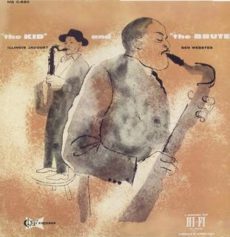
Rick Henderson was born on April 25, 1928 in Washington, D.C. and studied composition as a high schooler and played locally in the late 1940s. He served in the Army from 1951 to 1953, then joined Duke Ellington’s Orchestra after being recommended by Clark Terry.
He played with Ellington during his years on Capitol Records, doing arrangements in addition to his duties as a player. He also composed tunes such as Carney for the Ellington band. After leaving Ellington’s employ in 1956, Rick returned to D.C. where he led the Howard Theatre’s house band until 1964.
Following this he worked as an arranger and composer for jazz orchestras, military bands and school ensembles. Among those who used his charts, in addition to Ellington, were Count Basie, Illinois Jacquet, and Billy Taylor. Henderson continued to lead bands into the 1990s, including the University of Maryland Jazz Ensemble from 1977 to 1978.
Saxophonist and arranger Rick Henderson passed away from arteriosclerotic cardiovascular disease on May 21, 2004.
More Posts: arranger,bandleader,history,instrumental,jazz,music,saxophone
Daily Dose Of Jazz…
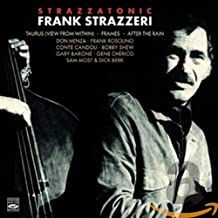
Frank Strazzeri was born on April 24, 1930 in Rochester, New York and he began on tenor saxophone and clarinet at age 12, then switched to piano soon after. He attended the Eastman School of Music, then took a job as a house pianist in a Rochester nightclub in 1952. While there he accompanied visiting musicians such as Roy Eldridge and Billie Holiday.
Moving to New Orleans, Louisiana in 1954, he played with Sharkey Bonano and Al Hirt in a Dixieland jazz setting, but his focus since then was on bebop. He played with Charlie Ventura in 1957–58 and Woody Herman in 1959 before moving to Los Angeles, California in 1960.
During his time there Frank worked extensively as a studio musician on the West Coast jazz scene, and toured with Joe Williams, Maynard Ferguson, Les Brown and Elvis Presley.
He went on to work with Terry Gibbs, Herb Ellis, the Lighthouse All-Stars, Art Pepper, Bud Shank, Cal Tjader, Louie Bellson, Curtis Amy, Harold Land and Chet Baker. In addition he recorded eighteen as a leader.
Pianist Frank Strazzeri passed away on May 9, 2014 at the age of 84.
More Posts: bandleader,history,instrumental,jazz,music,piano