

Daily Dose Of Jazz…
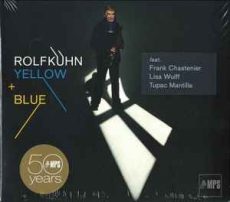
Tupac Mantilla was born October 21, 1978 in Bogotá, Columbia. Holding a Master of Music Honors Degree from the New England Conservatory, he won first prize at the Bogotá Philharmonic Orchestra’s Classical Soloist Competition in 2002.
As a scholar, Mantilla is associated with Stanford University and the Berklee College of Music. He gives workshops and lectures and runs rhythm/percussion oriented programs worldwide, through Percuaction’s Global Rhythm Institute (GRI), of which he is founder, CEO and artistic director.
Mantilla has appeared at festivals, institutions and venues and several percussion-oriented workshops and lectures for multi-national companies and organizations around the world.
Mantilla has collaborated and performed with artists including Bobby McFerrin, Bill Cosby, Esperanza Spalding, Zakir Hussain, Savion Glover, Danilo Perez, Tia Fuller, Julian Lage, Reinhard Flatischler, Kenny Werner, John Patitucci, Bob Moses, Cecil McBee, Medeski Martin & Wood, Lisa Fischer, Selene Muñoz, Jamey Haddad, Anders Koppel, and the Bogotá’s Philharmonic Orchestra, among others.
Drummer and percussionist Tupac Mantilla, who is the artistic director of the percussion group Tekeyé, continues to devote much of his time to his solo percussion project.

More Posts: bandleader,frums,history,instrumental,jazz,marimba,music,percussion
Daily Dose Of Jazz…
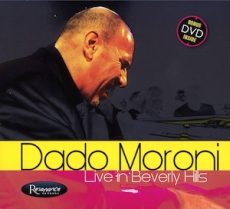
Edgardo “Dado” Moroni was born October 20, 1962 in Genoa, Italy and started playing piano at age four. A self-taught musician, by his mid-teens he was playing professionally around Italy and by age 17 had recorded his first album.
Throughout the 1980s Dado worked mostly in Europe and played a long stint as part of former Duke Ellington bassist Jimmy Woode’s trio at Widder Bar in Zurich, Switzerland. At 25, in 1987 he served as a juror at the prestigious Thelonious Monk International Piano Competition.
He moved to the U.S. in 1991 and became part of the New York jazz scene. He appeared regularly as a leader and sideman at Blue Note, Birdland, and the Village Vanguard. During this period he recorded several CDs.
Moroni has played with Freddie Hubbard, Clark Terry, Zoot Sims, Harry “Sweets” Edison, Ray Brown, Ron Carter, Oscar Peterson, Ahmad Jamal, Hank Jones, Niels-Henning Ørsted Pedersen and Alvin Queen.
Based in Italy, Dado continues to perform worldwide. In 2007 he won the Italian Jazz Awards as Best Jazz Act. 2009 had him named Best Italian Jazz Pianist in the Top Jazz referendum sponsored by Musica Jazz magazine. The following year he was appointed Professor of Jazz Piano at Giuseppe Verdi Conservatory of Music in Turin, Italy.
Pianist, composer and educator Dado Moroni continues to perform, record and teach.
More Posts: composer,educator,history,instrumental,jazz,music,piano
MANDY GAINES & BRAD MYERS
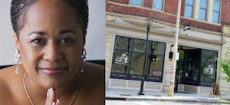
Mandy Gaines began singing at an early age in school and church. She holds a B.A. from the College of Wooster in Speech/Arts. She has continued her studies through private vocal instruction and workshops emphasizing oral interpretation, jazz improvisation, vocal technique, theatre, and broadcasting/media studies.
Brad Myers is a jazz, rock, and roots musician, composer, teacher, producer, and engineer. He plays acoustic and electric guitar, bass guitar, and mandolin and sings. A $15 food/drink minimum is charged per person in the party, per set.
Performers: Mandy Gaines — vocalist, Brad Myers — guitar
Cover: $15.00
More Posts: adventure,bandleader,club,genius,instrumental,jazz,music,preserving,travel,vocal
SCOTT BELCK QUINTET FEATURING GREGORY TARDY
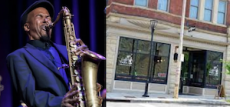
Dr. Scott Belck is Professor of Music and Director of Jazz Studies at the University of Cincinnati College-Conservatory of Music (CCM), where he leads the CCM Jazz Orchestra and teaches jazz trumpet. A versatile performer, he’s played lead trumpet with the Cincinnati Pops, Glenn Miller Orchestra, Bootsy Collins’ Funk Unity Band, and numerous symphonies and jazz festivals.
He co-founded several ensembles including Tromba Mundi, Jazz Central Big Band, and the Flying Circus Big Band. Belck is also a published author and the founder of Lip Slur World Headquarters. Gregory Tardy is a saxophonist and clarinetist known for his soulful, expressive style rooted in jazz tradition yet always pushing forward. Originally a classical clarinetist, he shifted to jazz after hearing Coltrane and Monk’s “Monk’s Mood,” eventually immersing himself in the New Orleans scene alongside artists like Nicholas Payton and Brian Blade.
Tardy gained national attention with Elvin Jones’ Jazz Machine and went on to perform and record with jazz luminaries such as Wynton Marsalis, Tom Harrell, Andrew Hill, Betty Carter, and Bill Frisell. His work as a leader includes acclaimed albums for Impulse!, Palmetto, and Steeplechase Records, most recently If Time Could Stand Still on WJ3. Now a professor at the University of Tennessee–Knoxville, Tardy continues to perform internationally and inspire the next generation of jazz musicians.
The Band:
Scott Belck — trumpet
Gregory Tardy— tenor saxophone/clarinet
Dan Karlsberg — piano
Justin Dawson — bass
John Taylor — drums
Cover: $15.00
More Posts: adventure,bandleader,clarinet,club,genius,instrumental,jazz,music,preserving,travel,trumpet

ARTURO O’FARRILL
Born in Mexico and raised in New York, Arturo O’Farrill is a prolific pianist, composer, and passionate promoter of Latin music and its cultural heritage. The son of Latin jazz musician, arranger and bandleader Chico O’Farrill, and pianist, composer, and director for the Afro Latin Jazz Orchestra.
He is best known for his contributions to contemporary Latin jazz, more specifically Afro-Cuban jazz, having received Grammy Awards and nominations, though he has trained in other forms such as free jazz and experimented briefly with hip hop.
grew up in New York City. Arturo’s professional career began with the Carla Bley Band and continued as a solo performer with a wide spectrum of artists including Dizzy Gillespie, Lester Bowie, Wynton Marsalis, and Harry Belafonte.
In 2007, he founded the Afro Latin Jazz Alliance as a not-for-profit organization dedicated to the performance, education, and preservation of Afro Latin music.
Arturo has performed with orchestras and bands including his own Afro Latin Jazz Orchestra and Arturo O’Farrill Sextet, as well as other Orchestras and intimate ensembles in the US, Europe, Russia, Australia, and South America.
Tickets: $40.00 General Admission | Dinner & Show $85.00
More Posts: adventure,bandleader,club,composer,genius,instrumental,jazz,music,piano,preserving,travel