

Requisites
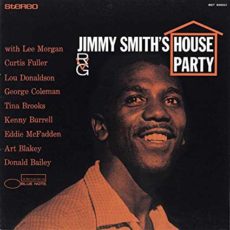
House Party is the fourteenth album by jazz organist Jimmy Smith featuring performances recorded in 1957 and 1958 and released on the Blue Note label. Rudy Van Gelder chose the Manhattan Towers Hotel Ballroom in New York City for the recording sessions in 1957-1958, while he was still using his parents’ Hackensack, New Jersey home studio to record artists for Blue Note.
Track Listing | 42:46- Au Privave (Charlie Parker) – 15:09
- Lover Man (Jimmy Davis, Ram Ramirez, James Sherman) – 7:00
- Just Friends (John Klenner, Sam M. Lewis) – 15:15
- Blues After All (Kenny Burrell) – 6:06
- Jimmy Smith – organ
- Lee Morgan – trumpet (tracks 1, 3, 4 & 5)
- Curtis Fuller – trombone (tracks 3 & 4)
- George Coleman – alto saxophone, (tracks 3 & 4)
- Lou Donaldson – alto saxophone, (tracks 1, 2 & 5)
- Tina Brooks – tenor saxophone (tracks 1 & 5)
- Kenny Burrell – guitar, (tracks 1, 4 & 5)
- Eddie McFadden – guitar, (track 2 & 3)
- Donald Bailey – drums, (tracks 2, 3 & 4)
- Art Blakey – drums, (tracks 1 & 5)
- Alfred Lion – producer
- Rudy Van Gelder – engineer
- Reid Miles – design
- Francis Wolff – photography
- Robert Levin – liner notes
Psychologists call it déjà vu, the distinct impression of having had the same experience before, that’s what it was alright, believe me. I was eight years old when I first discovered Jimmy Smith after hearing him on The Sermon (BLP 4011/BST 84011). His contributions to the development of modern jazz on the Hammond organ as a solo instrument helped to popularize it for others who would follow. Smith would ultimately lead me to discover the music of Charles Earland, Richard “Groove” Holmes, Jack McDuff, Jimmy McGriff, Don Patterson, John Patton, Freddie Roach, Shirley Scott and Dr. Lonnie Smith who made the organ their primary instrument. Houseparty
(Blue Note BLP 4002) hit the stores in 1958 and was the second album I would hear by the man who jazz critics, fans and fellow musicians called “incredible”.
It was recorded at the same session which produced The Sermon and is Smith’s fourteenth album for Blue Note since his debut, A New Sound, A New Star, Volumes 1 & 2 (BLP 1512/BST 81512 – BLP 1514/BST 81514) in 1956. The supporting cast joining the organist are Lee Morgan on trumpet; Curtis Fuller on trombone; Lou Donaldson and George Coleman on alto sax; Tina Brooks on tenor sax; Kenny Burrell and Eddie McFadden on guitar; Art Blakey and Donald Bailey on drums. I became a huge fan of his playing and purchased as many of his albums as my meager allowance would allow. My copy used for this report is the 1959 US Mono reissue (Blue Note Records, Inc. – 47 West 63rd NYC on the Side 1 label and the Deep Groove only on Side 2 with the label showing Blue Note Records, Inc. – NewYork USA), the 2nd US pressing.
The album opens with a vigorous uptempo workout of the 1951 jazz standard, Au Privave by alto saxophonist Charlie Parker who recorded it for Mercury Records on a 78-rpm single (11087), released the same year. It would reappear on Charlie Parker’s 1958 posthumous Verve Records LP, Swedish Schnapps (MG V-8010). Jimmy opens with a brief introduction, afterward, Lee provides a solo chorus of the melody first, followed by the ensemble who add their own excitement to the uptempo theme. Smith is first in the solo spotlight on the attack with a wailing performance, possessing amazing fluency on each chorus. Morgan adds some bite to the second statement with an intense groove that maintains the cooking intensity from beginning to end.
Donaldson steps in next for a torrid performance which gives off intensive heat. Tina Brooks comes in next, riding hard on the next robust reading, providing scorching verses of infinite effervescence delivered with an aggressive impact. At its conclusion, I wished he could have been featured elsewhere on the LP. Burrell takes over, adding a vigorous reading of his own with skillful authority preceding Jimmy’s returns for a short solo spot ahead of the ensemble’s strong finale.
Of all the songs in The Great American Songbook, Lover Man, in my opinion, is the pinnacle standard of jazz, pop, and soul. It was written by Jimmy Davis, Roger Ramirez, and Jimmy Sherman for Billie Holiday who made it a hit on the pop and R&B charts in 1945. This rendition of the timeless classic highlights Lou Donaldson as the featured soloist with Jimmy’s trio of guitarist Eddie McFadden and drummer Donald Bailey. A hauntingly beautiful bass line by Smith makes the introduction, prior to the saxophonist’s warm, affectionate theme statement. Lou’s alto sax moves up to a sprightly tempo for two lively verses of stimulating solo work before returning to a softer mood for his final chorus.
Eddie and Jimmy each deliver one chorus of intensely persuasive passion, then Lou returns to lead the quartet into a thoughtfully, modest climax. Just Friends, the 1931 popular song by John Klenner and Sam M. Lewis kicks off Side Two at medium-tempo with McFadden leading Smith and Bailey through the bluesy melody. Eddie takes the lead solo, offering the first two of four choruses that are infectiously propulsive with a flowing beat. Jimmy takes the next turn, toning down his searing attack to presenting four choruses of low-keyed swing with a down-home flavor as scrumptious as a good meal. Lee is up next, delivering the next reading with a bright tone,
exemplary poise, and accuracy which is executed beautifully. George Coleman enters the spotlight next, establishing long flowing, graceful lines from his alto sax for a lightly swinging performance of carefree verses. Curtis Fuller conjures up some mellow phrases on the final interpretation preceding the final two choruses by McFadden with Smith and Bailey providing the foundation into the close.
Blues After All is from the pen of Kenny Burrell and our final stop on Houseparty. This slow-tempo blues is of the soul food variety and serves up a solo order of Coleman, Morgan, Fuller, Smith, Burrell. Jimmy brings the song to life with one of the smoothest introductions you’ll ever hear. He also provides the bass line with his left foot while playing chords with his left hand, harmonic and rhythmic lines with his right hand. Kenny’s sensitive approach to the melody is shown to fine advantage as he provides the initial theme. The three horns join the trio when the theme is repeated during the opening and closing chorus. The lead solo by George is a tasteful delight to tempt you for what’s to come, followed by Lee who produces a savory broth of the blues that is slowly simmered to perfection. Curtis comes to the table with a plate of appetizing notes that gives the song a wonderful flavor. Jimmy adds the red beans and rice to our dish on the next performance and Burrell delivers the final ingredient to make the meal complete and end the album on a scrumptious note.
Houseparty was recorded by Rudy Van Gelder who used the Manhattan Towers Hotel Ballroom in New York City for recording sessions with larger groups of musicians that would not fit in his parent’s living room. Both, Houseparty and The Sermon were recorded there and are among the outstanding releases in Smith’s discography. The sound is well done and each of the instruments a delight to hear with a wonderful soundstage. Jimmy exhibits a style of playing that is completely comfortable in the Hard-Bop or Soul-Jazz genres. He recorded a total of six studio albums for Blue Note featuring his trio, plus special guests. The other five LP’s are A Date With Jimmy Smith, Volume 1 & 2 (BLP1547/BST 81547 – BLP 1548/BST 81548) in 1957, The Sermon in 1959, Open House (BST 84269) and Plain Talk (84296) in 1968. If you’re a fan of the jazz organ, I offer for your evaluation, Houseparty. It’s an amazing album by Jimmy Smith that though out of print on LP in the US since the 1985 Stereo Cadre Rouge DMM Audiophile Edition (BST 84002), won’t break the bank when seeking a Mono or Stereo copy for your library. It’s also an LP you can enjoy alone, in the company of friends or guests at your next Houseparty! The Blue Note RVG Edition CD-album (7243 524542 8) released in 2000 adds an additional song, Confirmation by Charlie Parker.
Lover Man – Source: JazzStandards.com Au Privave, Just Friends, The Manhattan Towers Ballroom – Source: Wikipedia.org
More Posts: choice,classic,collectible,collector,history,instrumental,jazz,music,organ
Daily Dose Of Jazz…
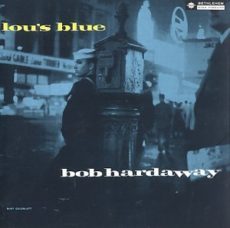
Bob Hardaway was born on March 1, 1928 in Milwaukee, Wisconsin to a dad who earned the nickname of J.B. “Bugs” Hardaway by inventing the characters of Bugs Bunny and Woody Woodpecker. Moving to Hollywood got him his early coaching from film composer Darrell Caulkner. As an instrumentalist, he learned many fundamentals in his Air Force band, which inspired him to write music for a touring show, Air Force Frolics, which he also conducted. After military service he returned to college in Los Angeles, California then began a career as a big-band section player in reliable outfits such as Ray McKinley. It was Billy May who came through with the first recorded solo opportunity for him on a Capitol album promising an instrumental Bacchanalia.
Hardaway’s presence as a soloist was furthermore boosted on a mid-’50s series of Decca sides by bandleader Jerry Gray, among the features being the reliable “Thou Swell,” the gentle “Baby’s Lullaby,” and a pounding “Kettle Drum.” He had the first saxophone chair in the Woody Herman band in 1956 and also performed and recorded with big-band maestros Stan Kenton, Les Elgart, Benny Goodman, Alvino Rey, and Med Flory, among others. He would record on sessions with Lulu, Bonnie Raitt, Neil Diamond, Roger Neumann’s Rather Large Band, Harry Nilsson and Doris Day.
Jazz discographies alone pile up nearly 75 recording sessions involving Hardaway between 1949 and 1995. In addition, there were vocalists and vocal groups too numerous to name outside of that genre with which he recorded, usually in the company of A-list session players such as bassist Carol Kaye. At 91, multi-instrumental reedist Bob Hardaway has been retired since the Nineties.

More Posts: clarinet,english horn,flute,history,instrumental,jazz,music,saxophone
Daily Dose Of Jazz…
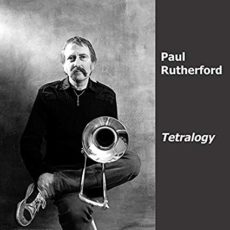
Paul William Rutherford was born on February 29, 1940 in Greenwich, South East London, England. He initially played saxophone but switched to trombone. During the Sixties, he taught at the Guildhall School of Music and Drama.
By 1970, Rutherford, guitarist Derek Bailey and bassist Barry Guy formed the improvising group Iskra 1903, sans drums and percussion, permitting the players to explore a range of textures and dynamics which set it apart from such other contemporary improvising ensembles. The group stayed together until 1973, recording a double album from Incus, later reissued with much bonus material on the 3-CD set Chapter One.
The group’s name is the Russian word for spark and was the title of the Iskra revolutionary newspaper edited by Lenin. The “1903” designation means 20th-century music for the trio. Another edition of the group included Evan Parker under Iskra 1904, and Rutherford at one point assembled a 12-piece ensemble called Iskra 1912.
The group was later revived with Philipp Wachsmann replacing Bailey, a phase of the group’s life that lasted from roughly 1977 to 1995, documenting their earlier work on Chapter Two (Emanem, 2006) and its final recordings were issued on Maya (Iskra 1903) and Emanem (Frankfurt 1991).
Rutherford went on to play with Globe Unity Orchestra, London Jazz Composer’s Orchestra, Centipede, the Mike Westbrook Orchestra, and the Orckestra, a merger of avant-rock group Henry Cow, the Mike Westbrook Brass Band and folk singer Frankie Armstrong. He also played a very small number of gigs with Soft Machine.
He is perhaps most famous for solo trombone improvisations. His album The Gentle Harm of the Bourgeoisie is a landmark recording in solo trombone and his 1983 trio album Gheim, recorded at the Bracknell Jazz Festival is another acclaimed work. A film soundtrack was separately released as Buzz Soundtrack.
A major player in the British free improvisation scene and part of the European free jazz scene, he was one of the first to use unorthodox playing techniques for improvisation. Trombonist Paul Rutherford, one of the first to use trombone multiphonics, i.e. he sang into the trombone and blew at the same time, passed away from cirrhosis of the liver and a ruptured aorta on August 5, 2007, at the age of 67.
More Posts: bandleader,history,instrumental,jazz,music,trombone
Daily Dose Of Jazz…
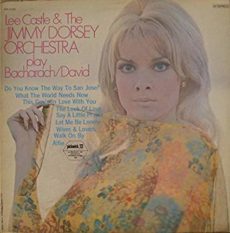
Lee Castle was born Lee Aniello Castaldo on February 28, 1915 in New York City. His first major professional job under his birth name was with Joe Haymes in 1935. This he followed by a couple of stints with Artie Shaw, Tommy Dorsey and also studied under Dorsey’s father. He also performed with Jack Teagarden, Glenn Miller, Will Bradley, and Benny Goodman.
Lee put together his own band in 1938, and continued to lead off and on through the Forties. He didn’t adopt the name Lee Castle in 1942. In 1953 he returned to duty under Tommy Dorsey and his brother Jimmy Dorsey. After Jimmy’s death, Castle became the leader of his ensemble, remaining in the position until the 1980s.
Trumpeter and bandleader Lee Castle passed away on November 16, 1990 in New York City.
More Posts: bandleader,history,instrumental,jazz,music,trumpet

Daily Dose Of Jazz…
Chuck Wayne was born Charles Jagelka on February 27, 1923 in New York City to a Czechoslovakian family. As a boy, he learned banjo, mandolin, and balalaika. By the early 1940s he was playing in jazz bands on 52nd Street and after two years in the Army, he returned to New York City, joined Joe Marsala’s band, and settled in Staten Island until a 1991 move to New Jersey. He changed his musical style after hearing Charlie Parker, recording with Dizzy Gillespie in 1945. Frustrated with the difficulty of getting the sound he wanted, he considered switching to saxophone.
Wayne was a member of Woody Herman’s First Herd, the first guitarist in the George Shearing quintet, worked with Coleman Hawkins, Red Norvo, Bud Powell, Jack Teagarden, George Shearing, Lester Young, and Barbara Carroll. During the 1950s, he played with Tony Bennett, Gil Evans, Brew Moore, Zoot Sims, and George Wallington. In the Sixties, CBS hired him as a staff guitarist and for the next two decades, he played on Broadway, accompanied vocalists, and performed in guitar duos with Joe Puma and Tal Farlow.
He wrote Sonny in honor of Sonny Berman. Years later, Miles Davis took the song, renamed it Solar, and claimed he wrote it. His Butterfingers and Prospecting have been incorrectly attributed to Zoot Sims. Chuck was known for a bebop style influenced by saxophone players of his time and he developed a technique not widely adopted, and also developed a comprehensive approach to guitar chords and arpeggios.
Over the course of his career, he recorded eight albums as a leader beginning with his 1953 album The Chuck Wayne Quintet on the Progressive label. He worked as a sideman with Gil Evans, Anthony Perkins, Dick Katz, Duke Jordan, and Frank Wess, among others. Guitarist Chuck Wayne, one of the first jazz guitarists to learn bebop, passed away on July 29, 1997.
More Posts: bandleader,guitar,history,instrumental,jazz,music