Hollywood On 52nd Street
This Time The Dream’s On Me was given to the jazz world when Harold Arlen and Johnny Mercer penned what would become a classic standard. Debuting in the 1941 film, Blues In The Night, starring Priscilla Lane, Jack Carson, Betty Field, Richard Whorf, Wallace Ford and Elia Kazan.
The Story: Jigger Lane forms a band that includes singer Ginger “Character” Powell, wife of the trumpeter Leo Powell, and Nickie Haroyen and Peppi. All of them dedicate themselves to work as a unit and to play ‘blues’ music. The dedication isn’t paying off in money and while riding the rails in a boxcar they meet and befriend a gangster named Del Davis. He offers them a job at a New Jersey roadhouse, where Powell falls in love with Kay Grant, a former real-good friend of Davis. But when Powell learns that Character is about to have a baby, he returns to her. Jigger tries to make Kay the band’s singer and, when this fails, runs off with her. She leaves him with nothing to show for him except a nervous breakdown. Back at the roadhouse, after his recovery, Kay shows up, has a quarrel with Davis, shoots and kills him and plans to take back up with “Jigger”, who knows better but just can’t help himself. While she is waiting in a car for him, along comes cripple Brad Ames, who she put in that condition. He gets in and drives the car over a cliff, leaving no survivors in the two-passenger crash. The band is back together at the end, still using boxcars as their transportation, but happy playing the blues.
Sponsored By
www.whatissuitetabu.com

Daily Dose Of Jazz…
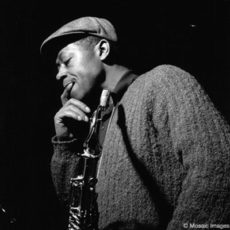
Larance Marable was born on May 21, 1929 in Los Angeles, California and was related to Mississippi riverboat bandleader Fate Marable. He first had a strong career as a bop musician in the 1950s working with the likes of Dexter Gordon and Charlie Parker among others.
In the 1960s Marable started to venture into the cool jazz idiom with musicians like Zoot Sims, George Shearing, Sonny Stitt and Chet Baker, working with the latter as early as 1956 on the album Chet Baker Sings.
In the Seventies he toured with Supersax and Bobby Hutcherson but recorded Tenorman as a leader with James Clay. He also played with Kenny Drew, Teddy Edwards, Stan Getz, Hampton Hawes, and Milt Jackson. Earlier in his career, he was known as Lawrence but the hard bop drummer Larance Marable, best known for his work as a regular member of Charlie Haden’s Quartet West, passed away on July 4, 2012 in his hometown of Los Angeles.
More Posts: bandleader,drums,history,instrumental,music

Review: Julie Dexter & The HC3 | The Smiling Hour
There is an inherent understanding of individual artistry I bring to this listening experience. I am filled with anticipation, expectation and a curiosity of what this ensemble will do with the compendium of genius represented in part by Carmichael, Ellington, Lins, Shorter and Higginbotham.
The true measurement of a vocalist is the musicians encircling her and this storyteller has chosen well. With minimalistic accompaniment, they cajole the melody along with a voice that undeniably understands what the lyricist penned. Her interpretations are pure and simple statements from the emotional depths of her soul. Of course, I speak of Julie Dexter, who brings to bear a jazz sensibility reminiscent of the legendary jazz vocalists of the last century.
But do not be deceived. This is far from a project of solo amplitude but a synergy of rhythmic voices that speak volumes. The subtleties in their playing do not bemoan their complete lack of ego as they unfold the story in each song. Like children passing notes in school, this rhythm section comprised of pianist Nick Rosen, bassist Kevin Smith and the anchor Henry Conerway III on drums, easily play off one another, keeping the improvisation of the story vibrant while maintaining the integrity of the composition.
They begin the set with an up-tempo swing invitation to come along to the Black Nile interjected with a bit of scatting on her interpretation of a Vanessa Rubin lyric. Turning to a light-hearted lament, Julie relates her loss of words that’s more a compliment that a complaint with You Leave Me Breathless. The quartet reaches back some forty years to remind the listener that Thom Bell and Linda Creed are still relevant in this modern day world of strife with People Make The World Go Round.
There are three moments of quiet during this session where the ballad takes the spotlight: Jay Livingston’s Never Let Me Go, Hoagy Carmichael’s The Nearness Of You and Good Morning Heartache by Irene Higginbotham. Kevin’s refreshing bowing and plucks, Nick’s offerings of piano accents and Henry’s brush setting tempos compliment Julie’s heartfelt interpretations.
Returning to the fun, we have Nat Adderley’s composition The Old Country, an easy romp with That’s Livin’, a tribute to Duke Ellington that showcases the trio’s interaction on the lone instrumental, Cotton Tail. Well placed in the lineup is the gentle Ivan Lins’ bossa title track The Smiling Hour giving you to sway to the rhythms before closing out the set with the classic Mongo Santamaria’s Afro Blue.
In a world where the milieu seeks style over substance, this formidable foursome is notorious for the honesty of their sound, thus proving substance is their style. There is sparseness in their articulation exhibiting a maturity that echoes less is more. Within this offering lies an unscripted collective intimacy that captures the discipline and freedom in each performance and they have given a new bloom to the classics that will stand the test of time. But what I like most about this expose they’ve aptly titled The Smiling Hour is… the promise of things to come.
carl anthony | notorious jazz | may 19, 2015
Give A Gift Of Jazz ~ Share ![]()
#preserving genius
More Posts: bandleader,bass,drums,history,instrumental,jazz,music,piano,review,vocal

Hollywood On 52nd Street
Irving Berlin composed Blue Skies in 1926 as a last-minute addition to the Rodgers and Hart musical Betsy. After only 39 performances the song was an instant success, though the show closed. However, in 1927, it became one of the first songs to be featured in a talkie, when Al Jolson performed it in The Jazz Singer.
The Story: The son of a Jewish Cantor must defy the traditions of his religious father in order to pursue his dream of becoming a jazz singer. Cantor Rabinowitz is concerned and upset because his son Jakie shows so little interest in carrying on the family’s traditions and heritage. For five generations, men in the family have been cantors in the synagogue, but Jakie is more interested in jazz and ragtime music. One day, they have such a bitter argument that Jakie leaves home for good. After a few years on his own, now calling himself Jack Robin, he gets an important opportunity through the help of well-known stage performer Mary Dale. But Jakie finds that in order to balance his career, his relationship with Mary, and his memories of his family, he will be forced to make some difficult choices.
Sponsored By
www.whatissuitetabu.com

Hollywood On 52nd Street
In 1932 composer Harry Warren scored the music for the 1933 movie musical 42nd Street along with lyricist Al Dubin for Warner Brothers Studio. From the film came the classic jazz standards “Lullaby of Broadway”.
The film was nominated for a Best Picture Oscar, was selected for preservation in the U.S. National Film Registry by the Library of Congress and ranked #13 on the American Film Institute list of Best Musicals in 2006.
The Story: It is 1932, the depth of The Depression and noted Broadway producers Jones played by Robert McWade and Barry portrayed by Neal Sparks are putting on Pretty Lady, a musical starring Dorothy Brock Bebe Daniels. She is involved with wealthy Abner Dillon played by Guy Kibbee, the show’s “angel” of a financial backer, but while she is busy keeping him both hooked and at arm’s length, she is secretly seeing her old vaudeville partner, out-of-work Pat Denning.
Julian Marsh (is hired to direct, even though his doctor warns that he risks his life if he continues in his high-pressure profession; despite a long string of successes he is broke, a result of the 1929 Stock Market Crash. He must make his last show a hit, in order to have enough money to retire.
Sponsored By
www.whatissuitetabu.com