

Daily Dose Of Jazz…
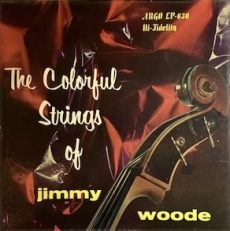
James Bryant Woode was born September 23, 1926 in Philadelphia, Pennsylvania. His father, for whom he was named, was a music teacher and pianist who had played with Hot Lips Page. He studied piano and bass in Boston, Massachusetss at Boston University and at the Conservatory of Music, as well as at the Philadelphia Academy.
He joined the Duke Ellington Orchestra in 1955 and appeared on many of Ellington’s recordings, including Such Sweet Thunder and Ella Fitzgerald Sings the Duke Ellington Songbook, recorded in 1957. Jimmy performed at the 1956 Newport Jazz Festival issued on Ellington at Newport. In 1960 he left the Orchestra to live in Europe.
An original member of The Kenny Clarke-Francy Boland Big Band, in 1995 he also toured with Lionel Hampton’s Golden Men of Jazz. 2003 saw Woode forming a trio with drummer Pete York and German jazz musician/comedian Helge Schneider, touring in Germany with his interpretation of jazz classics like Georgia and Summertime. As a consequence of his co-operation with Schneider, he also starred in the 2004 feature film Jazzclub in the role of a struggling jazz bassist.
Woode’s song Just Give Me Time was covered by Carola in 1966, first released on her album Carola & Heikki Sarmanto Trio, reaching the Finnish charts in 2004.
Bassist Jimmy Woode, who was born on the same day, the same month, the same year as saxophonist John Coltrane, died April 23, 2005, at age 78 at his home in Lindenwold, New Jersey, of complications following a surgery for a stomach aneurysm.

Daily Dose Of Jazz…
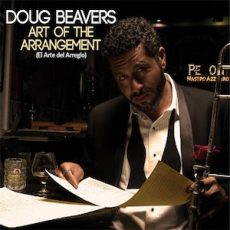
Doug Beavers was born September 22, 1976 in Bellflower, California. He received a BA in music from California State University, East Bay, an MA in composition from the Manhattan School of Music. He is the founder of the music production company and record label, Circle 9.
As a performer Doug has worked with Eddie Palmieri, Spanish Harlem Orchestra, Mingus Big Band, Christian McBride, Paul Simon, and others. He also served as an adjunct professor at Los Medanos College and music faculty of Jazz Trombone at California State University, East Bay.
His most recent album recording,Sol, was released in 2020. In 2021, he received a New Jazz Works grant from Chamber Music America. Trombonist, arranger, composer and producer Doug Beavers, a Grammy Award-winning musician, is currently an adjunct faculty member at the College of New Jersey.
More Posts: arranger,bandleader,composer,history,instrumental,jazz,music,producer,trombone
Requisites
Bud Powell – A Portrait of Thelonious | By Eddie Carter
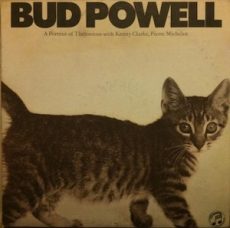
Submitted for your approval this morning is an underrated, yet excellent 1965 trio album by pianist Bud Powell. A Portrait of Thelonious (Columbia CL 2292/CS 9092) is a wholehearted tribute to Thelonious Monk, one of the most influential figures in jazz. Pierre Michelot joins him on bass, and Kenny Clarke is on drums. Together, this trio of giants captures the spirit, complexity, and emotional depth of four Monk compositions, one standard and three little- known originals, as seen through Powell’s interpretations. The chemistry between the musicians yields a dynamic exploration of Monk’s repertoire, rendering the album both a reverent homage and a fresh reimagining of the jazz piano tradition. My copy of this album is the 1980 U.S. Columbia Jazz Odyssey Series stereo reissue (PC 36085).
Monk’s Off Minor opens the first side at a medium beat for the friendly melody. Bud is the featured soloist and glides through an enchanting performance with Pierre and Kenny providing a crisp, driving foundation right up to the song’s finish. There Will Never Be Another You by Mack Gordon and Harry Warren is a joyous interpretation that the trio brings to life with a playful spirit during the theme, which is sure to bring a smile to the listener’s face. Again, Powell is the lone soloist and provides a leisurely presentation, possessing a carefree zest that’s consistently rewarding, leading to the theme’s reprise and climax.
Thelonious Monk created some of jazz’s most memorable standards, and Ruby, My Dear is one of his most beautiful compositions, named for his first love, Rubie Richardson. The trio opens with a delicate melody. Bud presents a haunting, poignant performance, marked by gentle sensitivity, layered over the warm, supportive accompaniment of Pierre and Kenny, ahead of a gorgeous conclusion. No Name Blues by Earl Bostic is a catchy tune that begins with the trio’s effective medium-tempo beat for the theme. Powell’s lead solo is an ear-pleaser that swings comfortably into Michelot’s relaxing performance, fueled by Clarke’s brushwork preceding the trio’s bouncy closing chorus.
Thelonious is another of Monk’s inventive melodic ideas from 1947, like Off Minor and Ruby, My Dear. The trio immediately grabs the listener with a catchy hook and a solid medium-tempo groove during the introduction and theme. Powell swings effortlessly in the song’s only solo before the ensemble’s reprise and ending. Monk’s Mood is a pretty ballad by Thelonious Monk that’s luxurious yet straightforward. Powell has the solo spotlight to himself and delivers a gorgeous performance of beauty, elegance, and affectionate warmth, while Michelot and Clarke keep close preceding the song’s peaceful conclusion.
The beat moves upward for I Ain’t Foolin’ by Charles Albertine next. It’s a toe-tapper from the start of the ensemble’s bubbly introduction and melody. Bud navigates the tune’s lively structure in a spirited performance blending bebop lines and Monk-inspired blues inflections until the theme’s restatement and exit. Squatty by Brian Fahey concludes the album, with Clarke setting the tone ahead of the trio’s infectious groove on the melody. Powell establishes a relaxed rhythm, inviting listeners to unwind during the first solo. Michelot steps forward next with a concise reading of lively notes before the trio’s finale.
Julian “Cannonball” Adderley produced A Portrait of Thelonious, and it’s unknown who the original engineer was.Arthur Kendy was behind the dials of the reissue. The album’s sound quality across the highs, midrange, and bass is superb, placing the musicians in your listening room. Each instrument is captured with remarkable clarity, and the balanced mix highlights the interplay between the trio, making every note feel immediate and intimate. If you’re seeking a superb piano trio album for your library, I enthusiastically invite you to check out A Portrait of Thelonious by Bud Powell on your next record shopping trip. It’s an excellent introduction to his music that’s sure to become a welcome addition to any fan’s library who appreciates piano jazz!
~ There Will Never Be Another You – Source: JazzStandards.com ~ Off Minor, Ruby, My Dear, Thelonious – Source: Wikipedia.org © 2025 by Edward Thomas Carter
More Posts: choice,classic,collectible,collector,history,instrumental,jazz,music,piano
Daily Dose Of Jazz…
Frank Orchard was born on September 21, 1914 in Chicago, Illinois. He studied at Juilliard from 1932-33 and performed for a year with Stanley Melba’s band, but then worked outside of music altogether, mostly as a salesman until 1941.
Orchard became a part of the New York Dixieland scene in the 1940s, working with Jimmy McPartland, Jimmy Dorsey, Louis Armstrong, Bobby Hackett, Max Kaminsky, Wingy Manone, Joe Marsala and the Eddie Condon gang.
The mid-1950s saw Frank’s move to Dayton, Ohio and eventually to St. Louis, Missouri and still playing trombone although out of the spotlight. He never led his own record date and returned to New York in the 1960s. He worked regularly at Jimmy Ryan’s from 1970-71 and with Billy Butterfield in 1979.
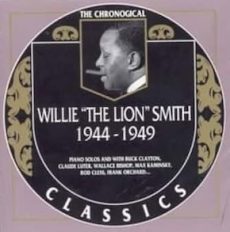
Trombonist, violinist, banjoist and tubist Frank Orchard, who also played in the Willie “The Lion” Smith band with Jack Lesberg, Mac McGrath, Max Kaminsky, Rod Cless, died December 27, 1983 in Manhattan, New York City, New York.
More Posts: banjo,history,instrumental,jazz,music,trombone,tuba,violin
Daily Dose Of Jazz…
Jerome Don Pasquall was born on September 20, 1902 in Fulton, Kentucky, and grew up in St. Louis, Missouri. As a child, he played the mellophone in brass bands. He served in the United States Army in 1918 in the 10th Cavalry Band, and picked up clarinet during this time.
Following his discharge, Pasquall played with Ed Allen in 1919 and then found work on riverboats playing with Charlie Creath and Fate Marable. He moved to Chicago, Illinois to study at the American Conservatory, and played with Doc Cook’s Dreamland Orchestra as a tenor saxophonist.
Departing for Boston, Massachusetts he attended the New England Conservatory of Music. In 1927 and 1928, he played with Fletcher Henderson. Following this he returned to Chicago and led his own ensemble, in addition to playing with Freddie Keppard, Dave Peyton, Jabbo Smith, Tiny Parham, and Fess Williams.
He toured Europe with the 1934 Blackbirds, Eddie South, Henderson again in 1936, and Noble Sissle from 1937 throught World War II in 1944. After the mid-1940s, he did freelance work in New York City with Tony Ambrose among others, and gradually receded from active performance.
Clarinetist, alto saxophonist, mellophonist Jerome Don Pasquall, who never led his own recording session, dies on October 18, 1971 in New York City, New York.
More Posts: bandleader,clarinet,history,instrumental,jazz,mellophone,music,saxophone