


JAZZMEIA HORN
Named by her jazz loving grandmother, Jazzmeia Horn was born in Dallas, Texas, in 1991. She grew up in a close church-going family singing gospel music.
Horn graduated from Booker T. Washington High School for the Performing and Visual Arts, which was attended by other great artists such as Roy Hargrove, Norah Jones, and Erykah Badu. In 2009, she enrolled at The School of Jazz at The New School in New York City.
Jazzmeia won the 2013 Sarah Vaughan International Jazz Vocal Competition and the 2015 zzmeThelonious Monk Institute International Jazz Competition and, shortly after, was signed by Concord Records. In 2017, she released her debut album, “A Social Call,” which was nominated for a Grammy Award.
She continued to tour nationally and internationally, honing her vocal, performance, and writing skills to get across her message about the global need for love and social change in the world. In 2019, she released “Love and Liberation,” which also received a Grammy nomination. The following year, she published her book “Strive From Within: The Jazzmeia Horn Approach” while recording her big band album “Dear Love.”
While performing and writing, Ms. Horn teaches students and conducts outreach programs across the globe through The Jazz Horn International Vocal Initiative.
Cover: $57.69 ~ 74.19 | fee included
More Posts: adventure,bandleader,club,genius,jazz,music,preserving,travel,vocal

GUNHILD CARLING
Gunhild Carling is an internationally acclaimed Swedish jazz star, celebrated for her dazzling performances, incredible versatility, and magnetic stage presence.
A true force of nature, Gunhild sings, tap dances, and plays over a dozen instruments — including trombone, trumpet, bagpipes, piano, harmonica, recorder, drums, harp, and ukulele — often switching between them seamlessly in a single performance.
With over 70 million views on YouTube and other platforms, Gunhild has captivated audiences across the globe, performing everywhere from intimate jazz clubs to royal celebrations.
Cover: Sold Out
More Posts: adventure,bandleader,club,genius,instrumental,jazz,music,preserving,travel,trombone

FRANKIE QUIÑONES & THE LATIN JAZZ COLLECTIVE
Frankie Quiñones & The Latin Jazz Collective for an unforgettable evening of world-class Latin jazz, salsa, Afro-Cuban rhythms, and soulful improvisation. Experience the energy, passion, and musical mastery of Atlanta’s premier Latin jazz ensemble as they bring together vibrant percussion, dynamic horns, and captivating melodies for a night that will move your soul and your feet.
Frankie, aka Frankie Q, started playing drums and percussion in the church and began taking music seriously in hisjunior year of highschool where he joined a local band back home in Buffalo, New York. After high school he applied and got accepted to Berklee College of Music. It was not an easy journey, but he wouldn’t trade it for the world. Each setback and disappointment added to his music and has enhanced the story he tells via the drum. He doesn’t believe in overcoming, he believes in staying, fighting and showing up. Every experience adds to who you are and the story that you tell in your music, and choosing to play it and live in every moment.
Frankie Quiñones ~ Congas, Drums, Percussion
Tony Castillo ~ Piano
Jhon Martez ~ Trumpet
Justin Raines ~ Bass
Luis “Chunky” Gonzalez ~ Drums
Solaya ~ Vocals | Special Guest
Cover: $25.00
More Posts: adventure,bandleader,club,drums,genius,instrumental,jazz,music,percussion,preserving,travel
TED HOWE TRIO
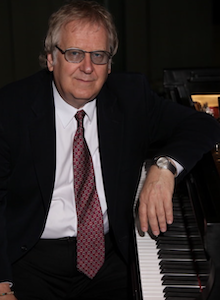
Ted’s natural persistence and relentless fascination of developing his craft dominated his life. He soon became not only a student at Berklee, but a professor of piano arranging, theory and improvisation — all before reaching the age of 24. He joined the faculty of Georgia State University where he assisted in developing its first jazz education program.
Ted has produced “An Evening Of Duke Ellington With Ted Howe & The Ruth Mitchell Dance Theatre”, a full fledged ballet featuring 21 dancers, choreographed by members of the Alvin Ailey Dance Company. The ballet music was entirely Ted’s arrangements of Duke’s music set to dance. Premiering in Atlanta to glowing reviews, the ballet was performed to sold out houses.
As a Summit Records artist he has released three albums and has performed with a long list of sixty-nine musicians and vocalists that included Henry Mancini, Diahann Carroll, Russell Malone, Lainie Kazan, Morgana King, Tiger Okoshi, Carol Channing, Rene Marie, Herb Pomeroy, Ed Thigpen, Billy Daniels, Mel Torme and more.
The Band:
Ted Howe: Piano
Neal Starkey: Bass
Jerry “Guru” Fields: Drums
Cover: $30.00
More Posts: adventure,bandleader,bass,club,drums,genius,instrumental,jazz,piano,preserving,travel
LIZZ WRIGHT WITH KENNY BANKS SR.
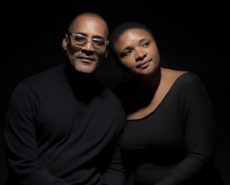
With one of the most spellbinding voices of her generation, Lizz Wright has spent more than two decades creating music that moves effortlessly through jazz, gospel, blues, R&B and the deep traditions of the Black American church.
At the heart of that journey has been pianist Kenny Banks Sr., one of Wright’s earliest mentors and most trusted collaborators. Their musical connection began more than 25 years ago in Atlanta, when Wright first heard Banks perform and knew immediately she wanted to make music with him. What followed was a remarkable creative partnership spanning Wright’s acclaimed career, from her 2003 debut Salt through The Orchard, Fellowship, Freedom & Surrender, Grace and Shadow.
Their new album, Nearness, brings that relationship into its most intimate setting yet: just Wright’s extraordinary voice and Banks on piano and organ. Together, they revisit jazz standards and spirituals including “The Nearness of You,” “All the Things You Are,” “Amazing Grace,” “Deep River” and “How I Got Over,” alongside two originals.
The result is both beautifully spare and deeply powerful: a celebration of friendship, mentorship, shared musical history and what Wright calls “a great platonic love.” After a quarter-century of making music together, Nearness captures two extraordinary artists listening, responding and trusting one another completely.
Cover: $57.60 ~ $60.00
More Posts: adventure,bandleader,club,genius,jazz,music,preserving