

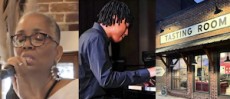
TOMI BERRY & OMAR ASKEW
Tomi Berry is a beautiful performer, inside and out, brings natural grace, a rich soulful voice, and spiritual essence to her performances throughout the Atlanta area and beyond. Wherever she sings, she spreads joy, whether singing smooth R&B, swinging jazz, or sultry ballads, she holds an audience in rapt attention. A spiritual song-stylist, she engages her listeners in musical conversation.
Omar Askew, a 19-year-old student at Kennesaw State University, is dedicated to studying Jazz Performance on the piano. Constantly striving for self-improvement, he aims to excel every time he touches his instrument. In lessons, Omar pushes his students to become the best pianists they can be, helping them achieve their personal goals.
Cover & Parking: Free
More Posts: adventure,bandleader,genius,instrumental,jazz,music,piano,preserving,travel,vocal
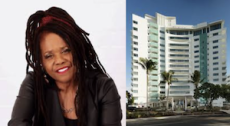
CATHERINE RUSSELL
The Faena Jazz Series kicks off with renowned jazz and blues singer Catherine Russell. A former backup singer for Steely Dan and David Bowie, she is now a Harvard Jazz Master in residence.
In 2016 she recorded the album Harlem on My Mind and her rendition of the Irving Berlin title tune was highly praised by the Jazz Times. Her most recent album, My Ideal, is a collaboration with Sean Mason, and received a 2025 Grammy Nomination for Best Jazz Vocal Album.
Tickets: $70.00 ~ $225.00
More Posts: adventure,bandleader,genius,instrumental,jazz,music,preserving,travel,vocal
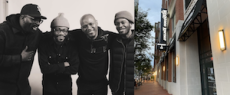
BRANDON WOODY’S UPENDO
Brandon Woody is a Baltimore-born, Bach-endorsed trumpeter, composer, and bandleader whose music flows from the rich lineage of Black music, including jazz, gospel, improvisation, and beyond, to explore themes of love, resilience, and community. Hailed by The New York Times and Los Angeles Times as a rising force in contemporary jazz, Woody signed with the legendary Blue Note Records in November 2024 and released his debut album, “For The Love Of It All”, in May 2025. Featuring his longtime band Upendo, the album showcases Woody’s ability to craft music that is both deeply personal and universally resonant.
Rooted in Baltimore, Woody has built his career from his hometown, drawing on its vibrant creative culture and community spirit. The Washington Post described Woody’s music as “staggeringly self-assured” and “radiating warmth, purpose, and a sense of place,” reflecting both the clarity of his artistic vision and his deep connection to his community. He has performed with artists such as Terri Lyne Carrington, BADBADNOTGOOD, Danilo Pérez, Casey Benjamin, Marcus Gilmore, the Robert Glasper Black Radio Orchestra, Paul Russell, and Solange Knowles. His television appearances include Godfather of Harlem (MGM+), Lady in the Lake (Apple TV), and The Bride (Warner Bros.
The Band:
Brandon Woody, trumpet
Charlie Powell, guitar
Troy Long, piano
Michael Saunders, bass
Quincy Phillips, drums
Tickets: $30.00 ~ $35.00 +fees
Streaming: $10.00 +fees
More Posts: adventure,bandleader,club,genius,instrumental,jazz,music,preserving,travel,trumpet
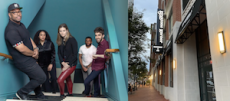
CHRISTIAN MCBRIDE & URSA MAJOR
World renowned bassist, composer, arranger, educator, and eight-time Grammy Award-winner, Christian McBride has been one of the most important and prolific figures in the jazz world for over 20 years. From jazz to R&B, and pop/rock and hip-hop/neo-soul to classical, Christian is one of the most acclaimed bassists of his generation, renowned for his bold, swinging style and robust sound. He has appeared on more than 300 recordings as a sideman, and is an eight-time Grammy Award winner, earning a 2016 GRAMMY Award for “Best Improvised Jazz Solo”, the only bassist to ever win at this category.
Christian McBride has worked with the best of the very best – James Brown, Herbie Hancock, Pat Metheny, Chaka Khan, Freddie Hubbard, Sonny Rollins, J.J. Johnson, Ray Brown, Milt Jackson, McCoy Tyner, Roy Haynes, Chick Corea, Isaac Hayes, Natalie Cole, Lalah Hathaway, Sting, Carly Simon, Don Henley, Bruce Hornsby, The Roots, D’Angelo & Queen Latifah. Christian has been artist-in-residence and artistic director with organizations such as Jazz Aspen, Los Angeles Philharmonic, The Jazz Museum in Harlem, Jazz House Kids, the New Jersey Performing Arts Center – Newark, the Montclair Jazz Festival, and the Newport Jazz Festival.
The Band:
Christian McBride ~ bass
Nicole Glover ~ saxophone
Ely Perlman ~ guitar
Michael King ~ piano
Savannah Harris ~ drums
Tickets: $45.00 ~ $55.00 +fees
Streaming: $20.00 +fees | %:00pm Show
More Posts: adventure,bandleader,bass,club,genius,jazz,music,preserving,travel
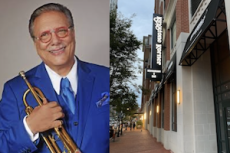
ARTURO SANDOVAL
The 10-time Grammy Award winner and Emmy Award recipient, Arturo Sandoval is also a 6-time Billboard Award winner and the recipient of the 2013 Presidential Medal of Freedom.
protégé of the legendary jazz master Dizzy Gillespie, he was born in Artemisa, a small town in the outskirts of Havana, Cuba, on November 6, 1949, just two years after Gillespie became the first musician to bring Latin influences into American Jazz. Sandoval began studying classical trumpet at the age of twelve, but it didn’t take him long to catch the excitement of the jazz world. He has since evolved into one of the world’s most acknowledged guardians of jazz trumpet and flugelhorn, as well as a renowned classical artist, pianist and composer.
He is one of the most dynamic and vivacious live performers of our time, and has been seen by millions at the Oscars, at the Grammy Awards, and the Billboard Awards. Musicians and fans alike rightly marvel at his technical ability on the horn – the effortless high notes and the dizzying speed and execution of his improvised runs.
The Band:
Arturo Sandoval, trumpet
Keith Fiala, trumpet
Michael Tucker, saxophone
Larry Bustamante, baritone saxophone
Will Brahm, guitar
Lisandro Pidre, piano
Maximilian Gerl, bass
Daniel Feldman, drums
Samuel Torres, percussion
Tickets: $65.00 ~ $75/00 +fees
Streaming: $15.00 +fees | 6:00pm Show
More Posts: adventure,bandleader,club,genius,instrumental,jazz,music,preserving,travel,trumpet