

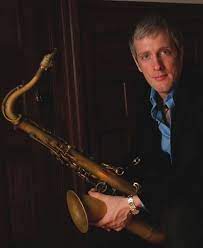
JAZZ DIALOGUE OPEN JAM
Grant Stewart (ts)
Tardo Hammer (p)
Ilya Lushtak (g)
David Wong (b)
Phil Stewart (d)
More Posts: adventure,club,festival,genius,jazz,music,preserving,restaurant,travel

Daily Dose Of Jazz…
George Horace Webb was born on October 8, 1917 in London, United Kingdom to a former music hall artiste. He grew up with a love of early jazz recordings, principally those made by the New Orleans musicians. A keen jazz enthusiast, he was a self-taught amateur pianist.
Working as a machine gun fitter in the Vickers-Armstrong factory at Crayford, he organized lunchtime entertainment at the factory, assembling scratch bands from among the workers. With his band, George Webb’s Dixielanders, he played regularly and famously at The Red Barn public house at Barnehurst, Kent, beginning in the early 1940s. They made several recordings and BBC radio broadcasts but by 1948 they had disbanded.
Webb was then part of Humphrey Lyttelton’s band from 1948 to 1951. After a short-term reformation of the Dixielanders in 1952, he concentrated on running a jazz club. In the mid-Sixties he was a musician agent and manager. Early in the following decade, he returned to more frequent playing and toured Europe as a soloist. Another version of the Dixielanders operated for a year and then ran a pub for 12 years.
A move back to Kent had him guest performing in various bands into the 2000s with Humphrey Lyttelton, Wally Fawkes and Eddie Harvey. In his playing he tried to re-create the style of such bands as King Oliver’s.
Pianist George Webb, who is considered by many as the father of the traditional jazz movement in Britain, transitioned on March 10, 2010.

More Posts: bandleader,history,instrumental,jazz,music,piano
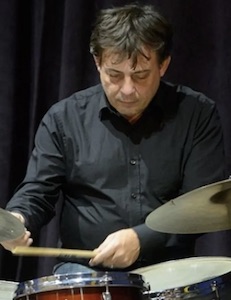
CLARK TRACEY QUINTET
Line-up:
CLARK TRACEY drums
JAMES OWSTON double bass
GRAHAM HARVEY piano
ALEX CLARKE alto/tenor sax
EMILY MASSER vocals
Much acclaimed jazz drummer Clark Tracey has been leading his own bands since 1981 and currently leads an ever evolving quintet as well as tribute bands to his father, the late Stan Tracey. His latest quintet features a few of the most exciting young musicians today.
Alex Clarke on alto and tenor sax is aged 23. She won the Rising Star in the British Jazz Awards 2 years ago and was runner up in the BBC Young Jazz Musician last year. Last year she successfully released her debut CD “Only A Year” with Dave Newton, Dave Green and Clark Tracey.
Emily Masser is an astonishing vocalist, still 19 years of age and attending Trinity. Her vocalese skills have already introduced her to hardened jazzers like Claire Martin and Liane Carroll who have both endorsed her and invited her to sit in with them. Daughter of Dean Masser, her years belie her enormous talent, which began at Chethams School of Music.
Graham Harvey is one of the UK’s most experienced pianists, studied at Berkley, MD of Incognito, Stacey Kent’s pianist and much sought after as a freelancer.
James Owston on bass is 25, a graduate of Birmingham Conservatoire and again a runner up in the BBC Young Jazz Musician Finals a few years ago. Considered by Clark to be one most technically gifted upright bassists in the UK and is now working with a variety of musicians.
More Posts: adventure,club,drums,genius,jazz,music,preserving,travel

THE BAD PLUS
The Bad Plus
Reid Anderson bass
David King drums
Chris Speed tenor saxophone
Ben Monder guitar
After working as a trio for nearly 20 years, the Bad Plus now is a quartet with saxophonist Chris Speed and guitarist Ben Monder joining the group in 2021. Compared with the group’s original piano trio instrumentation, the addition of saxophone and electric guitar allows TBP to explore new degrees of melodic lyricism, and a broader sonic palette. These new members have a long history with the original members and are prolific performers in their own right. Monder played with Paul Motion and is a current member of the Maria Schneider Orchestra, and even contributed guitar charts to David Bowie’s final album. Speed is a longtime NYC resident with a massive list of eclectic ensembles with which he performs from folk to avant garde to jazz.
In contrast to the large venues where the Bad Plus will be performing in the region (Portland and Seattle over 800 seats, Bend 450 seats), The Jazz Station, with 70 seats, offers an intimate experience unlike any other on their current tour.
More Posts: adventure,club,genius,jazz,music,preserving,travel
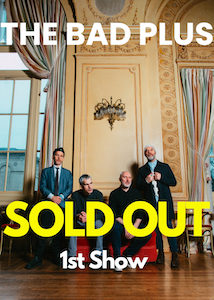
THE BAD PLUS
The Bad Plus
Reid Anderson bass
David King drums
Chris Speed tenor saxophone
Ben Monder guitar
As part of their fall 2023 international tour, The Bad Plus are performing at The Jazz Station on Broadway in downtown Eugene. A breakout worldwide phenomenon when they appeared in the early 2000’s, the group has been together for over 20 years and played every major jazz venue and festival in the world multiple times.
The Bad Plus has won critical acclaim and a legion of fans worldwide with their unique sound and flair for live performance. They seek musical inspiration from all musical genres, having recorded versions of songs by Nirvana, Blondie, Pink Floyd, Ornette Coleman, The Pixies, Rush, Tears For Fears, Neil Young, David Bowie, Yes, Interpol, Johnny Cash, The Bee Gees, Burt Bacharach, Cyndi Lauper and Black Sabbath, to name a few.
As founding member drummer Dave King puts it, “If it comes down to it and you had to put us in a category, we are most certainly part of the jazz canon. The new band—all of us come from an improvisational background. We have all played different types of jazz. But the influences—they push out the corners of what people think of as jazz.” These influences form the basis for King and bassist Reid Anderson’s original compositions, which are the backbone of TBP’s repertoire.
More Posts: adventure,club,genius,jazz,music,preserving,restaurant,travel