

DC JAZZ FESTIVAL | THE WHARF
District Pier
Vinny Valentino Group | GRAMMY Nominated | 2:40pm
Dave Holland Trio | NEA Jazz Master, GRAMMY Awards Winner | 4:005pm
Samara Joy | 2023 GRAMMY Award Winner for Best New Artist | 5:50pm
Kenny Garrett | NEA Jazz Master, GRAMMY Awards Winner | 7:55pm
Transit Pier
Mark G. Meadows | 1:00pm
Birckhead | Best Alto Saxophonist by the Washington City Paper | 2:00 P
Big Chief Donald Harrison | NEA Jazz Master | 4:45 PM
Etienne Charles |Creative Capital Awardee, Guggenheim Fellow | 5:00 PM
Sold Out Tickets: ADA Seated ~ $89.00 | Seated ~ $119.00
More Posts: adventure,festival,genius,jazz,music,preserving,travel
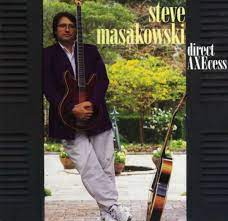
Daily Dose Of Jazz…
Steve Masakowski was born on September 2, 1954 in New Orleans, Louisiana and The Beatles influenced his desire to play guitar. When he was fourteen, he played bass guitar and co-founded the band Truth, which was based on the rock band Cream. During his high school years he became interested in composing, and started taking guitar lessons to learn about harmony. His teacher introduced him to the music of jazz guitarists Joe Pass, Wes Montgomery, Pat Martino, and Lenny Breau.
He went to Berklee College of Music in 1974, studied music theory, arranging, and composition. Returning home with his girlfriend Emily Remler after getting his degree, Steve founded the group Fourplay, not to be confused with the later jazz group of the same name. From 1976 to 1978, he studied classical composition and orchestration at the New Orleans Center for Creative Arts with Bert Braud.
The early Eighties he played regularly with local New Orleans musicians such as Willie Tee, Earl Turbinton, Jr. and Alvin Tyler, as well as accompanying visiting musicians Randy Brecker, Tom Harrell, Art Baron, and Dave Liebman. His next band Mars played a mix of jazz and electronic music. He then went on to found the Composers Recording Studio with harpist Patrice Fisher, guitarist Jimmy Robinson, and violinist Denise Villere. After a ten year stretch the studio closed and he started working in duet with Ellis Marsalis Jr., then joined Astral Project, toured with Dianne Reeves. He leads the band Nova NOLA.
As an educator in 1991, he became a full-time faculty member at the University of New Orleans and became Chair of Jazz Studies and director of the jazz program in 2004 . He invented the key-tar, a guitar-like instrument with seven rows of keys instead of strings, one key at each fret. This pre-MIDI controller was hardwired to a Moog synthesizer.
Inspired by a visit to New Orleans by seven-string guitarist Bucky Pizzarelli, he began to explore the seven-string guitar, first finding an early Gretsch, then designing his own models which have the expanded range of a normal guitar and bass guitar combined. Guitarist and educator Steve Masakowski continues to perform, record and educate.

More Posts: bandleader,guitar,history,instrumental,jazz,music
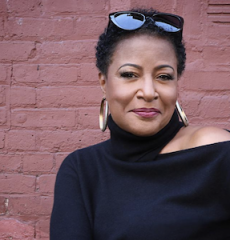
VANESSA RUBIN QUARTET
New York City vocalist extraordinaire and 2020 NAACP Image Awards nominee makes a one-night-only return.
Vanessa’s journey to becoming a jazz singer could be said to have begun at an early age. She was characterized by her mother as always being “a very vocal child,” and knew Vanessa would, “do something with that big ol’ mouth of hers.” Coming from parents who valued academia, discipline and hard work, that “something” was meant to be law school. Attaining a BA from the The Ohio State School of Journalism in 1979 was not a disappointment. However, her decision to pursue a career jazz singing did come as a surprise. Vanessa’s fascination with language coupled with her passion for music, especially jazz, pointed her on a collision course toward jazz performance.
Her “a-ha” moment came during a college beauty pageant at which Vanessa was accompanied by a very young, and even then, a very capable Bobby Floyd of Columbus, Ohio. Her first performance of a jazz evergreen, the Billie Holiday original “God Bless The Child,” garnered both rousing applause and the winning talent award. Most importantly though, it awakened what Vanessa describes as “her calling.” “I fell in love with the moment, the music, the audience and the effect it had on them and me,” Rubin remembers.
Vanessa’s first gigs began around 1980 in small clubs around Cleveland such as Tucker’s Place, Bob’s Toast of the Town, Lancer’s Steak House, Club Isabella, The Native Son and The Teal Lounge. Some early band mates included Wynn Bibbs, Skip Gibson, saxophonist and arranger Willie Smith, Neal Creque, Matthew “Chink” Stevenson and, later, the uniquely soulful organ quartet of The Blackshaw Brothers with Cecil Rucker on vibes. “We worked 8 days a week all over Cleveland catching the tail end of what was left over from the good old days,” Rubin recalls. After two years, Rubin was anxious to set her sights on New York where she earnestly and humbly soaked up the tutelage of many veterans like Pharaoh Sanders, Frank Foster and Barry Harris.
More Posts: adventure,club,festival,genius,jazz,music,preserving,travel,vocal
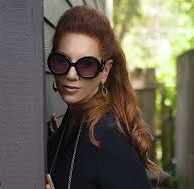
KATHY KOSINS QUARTET
A singular sound in the vocal world, Kosins exemplifies the intersection of jazz and soul. In 2022, Kosins earned several top nominations for her duet with Frank McComb, “I Gotta Pinch Myself”, featuring Najee. The song was nominated in the Song of the Year category at the SoulTracks Readers Choice Awards. She also played to sold-out audiences in Istanbul and the UK. Her latest single with renowned pianist, composer, and producer Bob Baldwin, “Let’s Rewind”, earned her another Number One Spot on the Smooth Jazz charts, the UK Soul Chart Top 30 and the Indie Soul Chart Top 30.
2023 has exciting news for all discerning soul jazz fans: new material with Paul Randolph and the legendary Al Hudson will end up on an EP, due in the first quarter of the new year. And Kosins will also release several tracks she wrote during the making of her now-classic “Uncovered Soul” and its aftermath. Lookout also for more tour dates at home and abroad. Steeped in the jazz tradition as well as all of the energy and intensity of soul, Kosins’s most recent album release, Uncovered Soul, was the natural next step in her prolific career.
After successful engagements at the 2019 Blue Note at Sea Cruise and Blue Note Beijing, the Exit Zero Jazz Festival, a supporting performance for Gregory Porter in Atlanta, an appearance at The Bach Dancing & Dynamite Society’s famed winter jazz series, Detroit Vocalist and ASCAP Award Winning composer Kathy Kosins is thrilled to celebrate the two year-long success that her sixth studio album, Uncovered Soul has gained across commercial radio. The driving, funk-tinged track “Put the Voodoo on Me,” is Kosins’s 4th consecutive Top 20 Smooth Jazz Single and topped the Indie Soul Chart at #1.
More Posts: adventure,album,club,festival,genius,jazz,museum,music,preserving,restaurant,travel
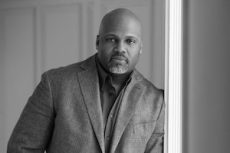
DEMETRIUS NABORS
Pianist, composer, producer and arranger Demetrius “Krayon” Nabors is well known and in demand in the Detroit area and on the national contemporary jazz scene. He is a two-time Detroit Music Award Winner in the Outstanding Gospel/Christian Musician category.
His considerable talents caught the attention of numerous high-profile national artists, including R&B singer KEM, flutist Althea Rene, guitarist Tim Bowman and trumpeter Willie Bradley.Demetrius’ productions for these artists have garnered Billboard chart successes: #1 for KEM’s single “Nobody” (2014), #2 for Willie Bradley’s “It’s On Now” (2020) and #5 for Althea Rene’s “Barbara Mae” (2019). In addition, “Nobody” was nominated for the Best Traditional R&B Performance at the 57th Grammy Awards in 2014. Demetrius’ discography includes four critically acclaimed releases, “The Journey Within Part I” (2011), “Christmas with Krayon” (2012), “The Journey Within Part II” (2014) and “Perseverance” (2021). His latest, “Evolution” is set to be released in September of 2022 and was inspired by his graduate studies at the University of Michigan.
More Posts: adventure,arranger,club,composer,festival,genius,jazz,music,piano,preserving,producer,travel