


BUENA VISTA ALL STARS
Embark on a once-in-a-lifetime journey with Buena Vista All Stars, descendants of the iconic Buena Vista Social Club. This extraordinary ensemble is bringing the vibrant spirit of Havana’s streets to the Arsht Center’s Knight Concert Hall, delivering a mesmerizing blend of time-honored rhythms and narratives.
The lineup features unparalleled talent, including Ibrahim Ferrer Jr., son of golden-voiced Ibrahim Ferrer, who will appear in a sensational holographic projection. Grammy Award winner Juan De Marcos González, lauded virtuoso Barbarito Torres, piano prodigy Rubencito González and four-time Latin Grammy-nominated Danay Suárez join the ensemble, conducted by esteemed musical director Demetrio Muñiz.
Join us for the inaugural performance of the Una Noche en La Habana Tour on August 5. Experience the enduring legacy of Cuba’s musical heritage, artfully preserved and reimagined by Buena Vista All Stars. Secure your tickets now for an unforgettable celebration of Cuban music and culture.
More Posts: adventure,club,ensemble,festival,genius,jazz,music,preserving,travel
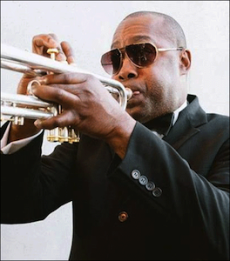
THAD WILSON QUARTET
“My personality is youthful in nature so my audiences should be prepared for a high-energy musical journey. Blues, R&B, Hip Hop, Gospel, and Jazz have always been present in my sound. In my travels, the one thing I’ve discovered is how fragile and beautifully unique the human condition is. When I compose and perform, I base all of my musical ideas on the interconnectedness of that thing we call the human experience.” – Thad
Thad was born in Fort Dix, New Jersey. However, his musical life started as a child living in Montgomery, Alabama. At fifteen, he moved back to New Jersey where he was quickly recognized for his talent and awarded the All-American High School Music Award and a place in New Jersey’s All-State Jazz Ensemble. Shortly after, he began studying privately with Jimmy Owens, former member of Dizzy Gillespie’s Big Band. It was Jimmy who gave Thad a glimpse into the life of a true professional musician. In his early days, he performed at the Village Gate, Blue Note, Visiones, Knitting Factory and many other new york city venues.
While in New York, Thad was a member of Charlie Persip’s Super Band and had a brief stint with Illinois Jacquet. Over his career, Thad has performed alongside James Moody, Benny Golson, Steve Turre, Cecil Bridgewater, Andrew White, Buck Hill, Keter Betts, Johnny O’neal, Russell Malone, Roy Hargrove, Wynton Marsalis and many others. He also lived briefly in Atlanta and made his way on the early hip hop scene performing with Bone Crusher, Khalfani, and many others. Currently, Thad tours with the legendary group, The Blackbyrds. He also composes and performs his live film scores all over the world.
More Posts: adventure,club,genius,jazz,music,preserving,travel,trumpet

Daily Dose Of Jazz…
Gorni Kramer was born Francesco Kramer Gorni on July 22, 1913 in Rivarolo Mantovano, Lombardy, Italy. Learning music at a very young age, thanks to his musician father. The first instrument he learned how to play was the accordion, with which he performed as a child in his father’s band.
He studied double bass at the Conservatory in Parma, Italy and obtained his diploma in 1930. He started working as a musician for dance bands and in 1933 at 20, he formed his own jazz group. This new American musical genre was forbidden by the Italian fascist regime, but Gorni got to know it thanks to some fellow musicians who worked on board the liners connecting Europe and North America.
In the middle of the Thirties he became a successful songwriter, composing hit songs through the Thirties. In spite of his songs’ popularity, Gorni and his orchestra were still ignored by the Italian state radio EIAR, who boycotted them because they played jazz.
During World War II he worked with Natalino Otto, a singer also banned by EIAR because of swing and wrote one of her greatest hits. In 1949 he started working for Garinei and Giovannini, a very famous duo of impresarios who authored and produced musical comedies, an association that lasted ten years.
Kramer debuted on television in 1957 with Il Musichiere music show, composing the show’s theme song with other shows ensued. In the mid-1960s he gradually reduced his public performances, but he continued to work as a music publisher and a TV author.
Songwriter, bassist and bandleader Gorni Kramer transitioned from a heart attack on October 26, 1995 in Milan, Italy.

More Posts: bass,history,instrumental,jazz,music
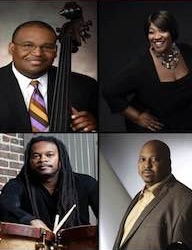
RODNEY JORDAN QUARTET
Rodney is a native of Memphis, Tennessee where he grew up playing the bass in church and with his high school orchestra. He later studied music with Dr. London Branch, Alvin Fielder, and Andy Hardwick at Jackson State University in Jackson, Mississippi. During his college years, Jordan joined the Mississippi Symphony Orchestra where he served as Assistant Principal Bassist. After graduating, he became Chair of the String Department at the Dougherty County Public School and served as Principal Bassist with the Albany Symphony Orchestra in Albany, GA. Teaching has always been an important part of Mr. Jordan’s life and career. In addition to teaching strings in Dougherty County, he also taught in the DeKalb County School Systems.
During his years in Georgia, Jordan served as a bass instructor at Darton College (part of the University System of Georgia) in Albany and at Georgia State University in Atlanta. While living in Atlanta, Jordan became one of the city’s most active jazz bassists, performing and recording with some of America’s finest jazz musicians, including Marcus Printup, Mulgrew Miller, James Williams, Milt Jackson, George Coleman, and Russell Gunn. He joined the faculty in the School of Music at Florida State University in Tallahassee, FL in 2001 where he now holds a rank of Associate Professor of Jazz Studies. Jordan teaches jazz bass, jazz combo playing, music education classes, and a jazz styles class.
Jordan joined the Marcus Roberts Trio in 2009. It was evident during that first official performance of the newly-formed trio at the prestigious Wigmore Hall in London that Jordan thoroughly understood Roberts’ unique trio conception. Rodney Jordan is one of the most versatile jazz bassists on the scene today. His tone is rich and soulful when he plays hauntingly beautiful phrases with the bow. Just as readily, he plays fast virtuosic passages with apparent effortless skill. Jordan’s knowledge of harmony from his classical bass training combined with the relentless feeling of swing in his playing is a perfect fit for the powerful melodic, blues-based, syncopated improvisational sound of the Marcus Roberts Trio. Live from Lincoln Center/ Pivot-Melvin Jones/Turnaround Records.
The Quartet: Rodney Jordan ~ Bass | Avis Berry ~ Vocal | Quentin Baxter ~ Drums | Louis Heriveaux ~ Piano
More Posts: adventure,bass,club,genius,jazz,music,preserving,travel
Daily Dose Of Jazz…
Clifford Arthur Edgehill, originally spelled Edghill, was born July 21, 1926 in Brooklyn, New York. His first professional work was touring with Mercer Ellington in 1948 and by 1953 was touring with Ben Webster. He played with Kenny Dorham’s Jazz Prophets and Gigi Gryce in 1956 and the following year toured with Dinah Washington.
He was a member of the Eddie “Lockjaw” Davis Quartet with George Duvivier and/or Wendell Marshall and Shirley Scott. He appears on several of Scott’s recordings, including her 1958 debut album, Great Scott!. as well as on Very Saxy with Eddie “Lockjaw” Davis, Buddy Tate, Coleman Hawkins, and Arnett Cobb.
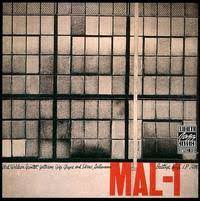
As well as recording he also played in quartets led by Horace Silver, Cecil Payne, Hank Mobley, Doug Watkins, Charlie Parker and Annie Laurie. Edgehill remained active through the 1950s, 1960s and 1970s, appearing on several of the Prestige recordings on Mal Waldron’s 1956 debut album, Mal-1, and with Eddie “Lockjaw” Davis and Shirley Scott.
Drummer Arthur Edgehill retired from music in the Seventies.
More Posts: drums,history,instrumental,jazz,music