

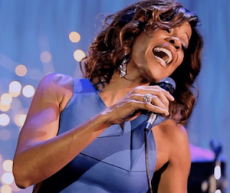
NICOLE HENRY
Since 2004, Nicole Henry’s versatile and emotionally driven performances have wowed audiences in 20 countries. She has established herself among the jazz world’s most acclaimed performers, possessing a potent combination of dynamic vocal abilities, impeccable phrasing, and powerful emotional resonance.
Heralded by The New York Times, Wall Street Journal, The Japan Times, El Pais, Jazz Times, Essence and more, Ms. Henry tells real stories through peerless interpretations of repertoire from the American Songbook, classic and contemporary jazz, popular standards, blues and originals.
Among her numerous accolades, Henry’s passionate, soulful voice and heartfelt charisma have earned her a Soul Train Award for “Best Traditional Jazz Performance,” “Best New Jazz Artist” by HMV Japan, “Best Solo Musician” by her hometown Miami New Times, and was hailed as “One of Eight Black Artists Making Waves in 2024” by Symphonic Distribution.
She has enjoyed four Top 10 CDs including her latest album “Time to Love Again” which reached #4 on the U.S. jazz radio chart, remaining in the Top 40 for 20 weeks. “Time to Love Again” also reached #6 on UK’s Sweet Rhythms chart and continues to enjoy worldwide play on both Sirius XM’s Real Jazz & Watercolors stations. These successes were supplemented by a 36-city national tour.
Band Members:
Vocals: Nicole Henry
Piano: Pete Wallace
Drums: TBD
Trumpet: Jean Caze
Bass: Jamese McCoy
Tickets: $60.50 ~ $65.50
More Posts: adventure,bandleader,club,genius,instrumental,jazz,music,preserving,travel,vocal
Requisites
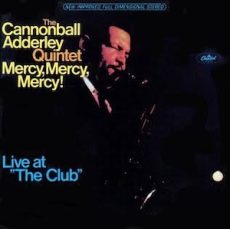
Mercy, Mercy, Mercy! ~ The Cannonball Adderley Quintet | By Eddie Carter
Have you ever heard a record so good it literally got into your head and stayed there forever? This morning’s album is one of those for me. Mercy, Mercy, Mercy! (Capitol Records T 2663/ST 2663) is a live album by the Cannonball Adderley Quintet. It was initially said to have been recorded in 1966 at The Club in Chicago. But it was actually recorded at the Capitol Records Tower with an invited audience and an open bar. The discrepancy arose because Adderley and the clUB’s new manager were friends, and the saxophonist offered the club free publicity. That aside, it’s a terrific album that’s worth the money if you enjoy live jazz.
The quintet consists of Nat Adderley on cornet, Cannonball Adderley on alto saxophone, Joe Zawinul on piano (tracks: A2, A3, B1 to B3) and electric piano (A4), Vic Gatsky on bass, and Roy McCurdy on drums. I own the 1967 U.S. Mono release. The announcer’s introduction sets the stage for Fun, the first of two tunes by Nat Adderley that immediately energizes the audience with the quintet’s lively melody. Cannonball’s brisk lines soar effortlessly in the opening statement, Nat’s spirited response adds warmth, and Joe’s vigorous interpretation ties it all together, showcasing their tight musical chemistry and improvisational skill that truly captures the audience’s excitement.
Cannonball announces the song title to the audience, then notes that their next tune is titled Games, which kicks off with the quintet’s upbeat introduction and theme. Cannonball opens with one of his most inventive solos, then Nat settles into an effervescent groove perfect for finger-popping and toe-tapping. Joe responds with a marvelous interpretation that builds to a satisfying finale. Joe switches to the electric piano as the rhythm section provides a warm backdrop for Cannonball’s intro to the album’s defining moment, Joe Zawinul’s Mercy, Mercy, Mercy. The quintet’s memorable theme and Joe’s soulful solo make this track a highlight, inviting listeners to experience the album’s emotional depth firsthand.
Sticks by Julian Adderley shifts the album into a finger-snapping tempo, opening the second side with the quintet’s danceable melody. Nat takes the lead with an energetic reading, leaving room for his brother to soar next. Joe comes in last and adds an indelible contribution before the ensemble’s theme restates and ends firmly. Hipadelphia by JosefZawinul begins with the ensemble’s relaxed melody. Cannonball has the first say and moves comfortably through the rhythm section with an easy-flowing stream of ideas. Nat rocks the second reading with a light, airy sound. Joe wraps up everything smoothly in the closer before the horns return to take the song out.
The set wraps up with Cannonball’s warm introduction to his tune, Sack O’ Woe. The rhythm section softly sets the mood for the quintet’s lively melody, a heartfelt blend of blues and church influences. Cannonball takes the spotlight first with a soulful sermon. Nat brings everyone to their feet with his finger-snapping, toe-tapping performance. Joe adds emotional intensity in his turn, and Vic finishes off ahead of the ensemble, bringing it all together in the closing chorus. David Alexrod produced Mercy, Mercy, Mercy, while the recording engineer remains a mystery. The album’s sound quality is excellent, making you feel like you're right there in the studio audience, sharing in the joy of the music as it happens.
Mercy, Mercy, Mercy truly shines as a jazz album that is both beautifully crafted and immediately captivating. The quintet’s arrangements and performances flow together smoothly, letting each musician shine and filling the album with warmth and vibrant energy. The title track really highlights what makes this album so special, while the other songs show that Cannonball Adderley and his band could groove in many different ways. I’m sure those in attendance walked away feeling like they had experienced something truly memorable. If you’re already a fan of the Cannonball Adderley Quintet or discovering their music for the first time, I encourage you to pick up Mercy, Mercy, Mercy on your next record shopping trip. It’s a lively and cohesive album that’s perfect for focused listening and relaxing enjoyment!
© 2026 by Edward Thomas Carter

More Posts: choice,classic,collectible,collector,history,instrumental,jazz,music,saxophone

CINDY BLACKMAN SANTANA
Cindy Blackman Santana celebrates the release of her new album Coherence, a once-in-a-lifetime journey combining jazz, rock, fusion, & spirituality. As a virtuoso drummer, bandleader, musician, and the new face of NFL Monday Night Football, Cindy is a sound innovator with a passion for pushing creative boundaries and exploring movement and change. She is as known for the nuances and colors she brings to her beats and fills as she is for the sheer power of her soulful playing. “Some drummers act, some react. Some keep time, others create it. Cindy Blackman Santana is among the few who can,” writes Mike Zwerin of the International Herald Tribune.
Cindy has been creating magnificent musical time and space since the beginning of her career as a busking street performer in New York City in the ’80s through the present day, touring the globe and making albums at the top of her game—including the critically acclaimed Another Lifetime (2010). In addition to collaborating onstage and in-studio with her own group—also known as Another Lifetime—she has toured and recorded with artists including Pharoah Sanders, Cassandra Wilson, Bill Laswell, Joss Stone, Joe Henderson, Buckethead, Don Pullen, Hugh Masakela, and Angela Bofill.
From 1992 to 2007 and again in 2014 & 2015 she was the drummer in Lenny Kravitz’s band, performing through multiple world tours and hit albums. In 2010, she was part of the all-star line-up performing “Bitches Brew,” a tribute to Miles Davis’ seminal album staged at the San Francisco Jazz Festival and NYC Winter JazzFest.
The Band:
Cindy Blackman Santana ~ DrumsK
Aurelien Budynek ~ Guitar
Benny Rietveld ~ Bass
Zaccai Curtis ~ Keyboard
Special Guest Ravi Coltrane ~ Saxophone
Cover: $45.00 ~ $55.00 | $4.16 – $4.86 fees
Streaming: $15.00 + $2.05 fee
More Posts: adventure,bandleader,club,drums,genius,instrumental,jazz,music,preserving,travel
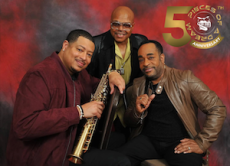
PIECES OF A DREAM
Celebrating their 50th anniversary this October, Pieces of a Dream has built an impressive legacy of innovation and eclecticism – talents that have kept them fresh and authentic in a jazz world that’s ever-changing. The story of Pieces Of A Dream, who has opened for such luminaries as Miles Davis, Count Basie and James Brown, is a tale of destiny and brotherhood. Dubbed a “tough act to follow” by the legendary Count Basie, the band will bring their trademark catchy riffs, infectious grooves and compelling vocals to Keystone Korner Baltimore!
The Band:
Curtis Harmon ~ drums
James Lloyd ~ keyboards
Tony Watson ~ saxophone
Elec Simon ~ percussion
Stacey Richardson ~ vocals
Carolyn Brewer ~ keyboards & vocals
John Hall ~ bass
Cover: $65.00 ~ $75.00 | $5.56 – $6.26 fees
Streaming: $15.00 + $2.05 fee
More Posts: adventure,bandleader,bass,club,drums,genius,instrumental,jazz,music,percussion,piano,preserving,saxophone,travel,vocal
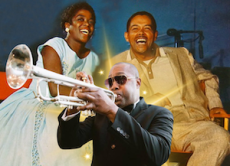
THAD WILSON JAZZ ORCHESTRA
The Thad Wilson Jazz Orchestra performs a special tribute to two of jazz’s most beloved vocal legends, Billy Eckstine and Sarah Vaughan. Led by acclaimed trumpeter, composer, and arranger Thad Wilson, the orchestra brings together some of the finest musicians in the DMV for an evening celebrating the elegance, swing, and sophistication of these iconic artists.
Featuring special guest vocalists Alison Crockett and Steve Washington—two of the region’s most respected and in-demand jazz performers—the concert will showcase classic standards, romantic ballads, and swinging favorites associated with Eckstine and Vaughan. With lush big band arrangements, inspired improvisation, and unforgettable vocal performances, this tribute honors the enduring legacy of two voices that helped shape the sound of jazz, while offering fresh interpretations for today’s audiences.
Cover: $45.00 ~ $55.00 | $4.16 – $4.86 Fees
More Posts: adventure,bandleader,club,genius,history,instrumental,jazz,music,preserving,travel,trumpet,vocal