

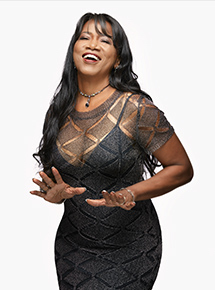
EUGENIE JONES
Singer/Songwriter Eugenie Jones is an exceptional vocalist and cleverly gifted lyricist who has released highly praised, primarily original, vocal projects. Her current release – Players – was a Best Jazz Vocal Album Grammy contender and internationally ranked #7 on Jazz Week’s top 50 charts. Jones is additionally an Earshot Jazz Vocalist of the Year award recipient and the first vocal recording artist to receive Earshot’s Recording of the Year Golden Ear award.
SEATING TIMES:
Friday – Saturday | 2 Seatings
1st Seating: 6:00pm-8:00pm
Band Performs: 6:30pm-7:30pm
2nd Seating: 8:30pm-10:30pm
Band Performs: 9:00pm-10:00pm
More Posts: adventure,album,club,festival,genius,jazz,museum,music,preserving,restaurant,travel,vocal

The Jazz Voyager
This week the Jazz Voyager is on his way to landing in Kansas City, Missouri and going to Liberty, Missouri to experience the ambience of Johnnie’s Jazz Bar and Grille. Named after the owner’s daughter, who wanted a son, she was always the life of the party, selling tickets at the theater they owned and loved playing bridge.
The venue offers pub eats, ample bourbons and live music in a cozy club setting named for a female piano player. Johnnie, so named, by the way, since her father had selected Johnny as a boy’s name, was playing at The Lyric Theater in Salisbury, Missouri when Elmer Bills bought the location in 1924. Smitten by her natural charm, love of life, and youthful exuberance, Elmer fell in love and the two married a few years later. Their son Elmer Bills, Jr. would join forces with Sterling Bagby to formally create B&B Theatres.
This week I’ll be listening to a talented saxophonist by the name Herschel McWilliams who grew up and is a lifelong resident of Kansas City, Kansas. The son of musicians, a drummer father and pianist mother, he was introduced to many musical influences at an early age. He started learning piano at 8 and alto saxophone when he was ten years old. He serves on the Board of Directors for Kansas City Jazz Ambassadors as well as running his own jazz website LiveJazzKC.com.
The club is located at 1903 Victory Drive, Liberty, MO 64068 and the number is 816-792-2675. For more info visit notoriousjazz.com/event/herschel-mcwilliams-trio.

More Posts: adventure,album,club,festival,genius,jazz,museum,music,preserving,restaurant,saxophone,travel
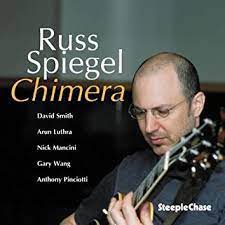
Daily Dose Of Jazz…
Russ Spiegel was born March 30, 1962 in Los Angeles, California, and raised in Santa Monica, California. His family was musical as he has an older sister who plays the bluegrass fiddle, a pianist and composer brother and a father who is an avid amateur jazz trumpeter.
A fan of pop radio as a youngster, Russ discovered rock music as he entered his teens. Picking up the electric guitar he took lessons at a local music store, eventually buying a Fender Stratocaster. He started jamming with area musicians, which led to forming a rock cover band. Finishing high school in Frankfurt, Germany he enrolled in the University of Maryland that had a campus in Munich, Germany. While there, he formed a progressive-rock band, joined a local R&B and soul unit, and began learning jazz standards. In 1982 Spiegel returned to the U.S. to complete his bachelor’s degree at the University of Michigan, in Ann Arbor, earning a degree in philosophy.
In 1986 had Spiegel in Boston, Massachusetts on scholarship at Berklee College of Music. Upon completion of his studies, he relocated to Germany in 1988 where he gradually made contacts in the music world. He began playing on military bases and at local jazz clubs and festivals. During a stint in Paris, France he formed a quartet called Guitar Hell, which toured widely in France and Germany. He soon found himself in demand as a guitarist and electric bassist with various European big bands, jazz ensembles, and blues groups.
Around the same time, Russ joined the band of German jazz organist Barbara Dennerlein and toured Europe with her before receiving the coveted Jazz Scholarship by the city of Frankfurt for his contributions to the city’s artistic scene.
In 2001 Spiegel returned to the U.S. settled in New York City and studied under teachers Adam Rogers, Paul Bollenback, Ben Monder and John Patitucci, receiving his master’s degree in jazz performance from the City College of New York.
In 2008 his Jazz/North Indian classical fusion ensemble, Sundar Shor, undertook a tour of India under the auspices of the American Center, and it has toured widely in Europe as well. Guitarist Russ Spiegel continues to perform and record.
More Posts: bandleader,guitar,history,instrumental,jazz,music
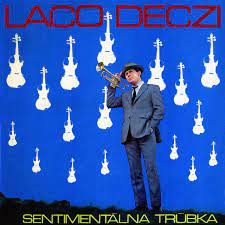
Daily Dose Of Jazz…
Ladislav Déczi was born on March 29, 1938 in Bernolákovo, Czechoslovakia and showed an interest in the trumpet while in elementary school. He went through several music ensembles in high school and during his military service performed in Prague, Czechoslovakia. After his discharge he remained in Prague and started performing with the Rokoko Theater Sextet and then with the Jazz Outsiders. He then went on to work with Karel Velebny’s S+HQ and as the frontman for the Reduta Quartet.
By the mid-Sixties he founded Jazz Celulla, joined the Czechoslovak All Star Band, the Jazz Orchestra of the Czechoslovak Radio, and the Dance Orchestra of the Czechoslovak Radio. He recorded several solo albums, composed orchestral compositions.
Emigrating to America in 1986 he again took the frontman space for Celula New York. He performed with Elvin Jones, Bill Watrous, Junior Cook, Dave Weckl and Sonny Costanzo. He recorded several duo albums with Sarka Dvorak and composed an abundance of music for film and television productions. He has won several awards during his career and has toured Eastern Europe especially his homeland, Germany and Austria.
Trumpeter, composer, and bandleader Laco Déczi, who also paints, continues to perform, compose and record.
More Posts: composer,history,instrumental,jazz,music,trumpet
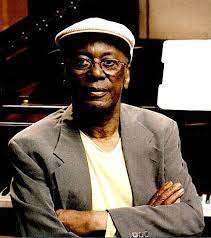
Three Wishes
Nica threw out the question to Andrew Hill what his three wishes would be and after careful thought replied:
- “To be able to take care of my family the way I want to be able to take care of them.”
- “To be able to play six months out of the year, and to be able to woodshed six months out of the year..”
- “To learn how to be a man.”
*Excerpt from Three Wishes: An Intimate Look at Jazz Greats ~ Compiled and Photographed by Pannonica de Koenigswarter

More Posts: baroness,composer,history,instrumental,jazz,music,pannonica,piano,three,wishes