


Daily Dose Of Jazz…
Julian Fuhs was born on November 20, 1891 in Berlin, Germany. After attending the Stern Conservatory he emigrated to the United States in 1910 and got his American citizenship in 1916. Returning to Berlin in 1924 he put together his Follies Band, whose American-influenced jazz and light music was extremely successful.
He made a significant contribution to the establishment of jazz in Germany in the 1920s. Fuhs was the first to use a three-part saxophone section and was considered the German counterpart to Paul Whiteman after his recording of George Gershwin ‘s Rhapsody in Blue. Fuhs was the first to record it in Europe.
In 1931, as a result of the global economic crisis, he was forced to disband his orchestra and earn his living as the owner of a bar. In 1933 he was repeatedly the victim of violent attacks because of his Jewish origins. He emigrated first to Austria, then to Czechoslovakia and France. In 1937 he returned to America, where he worked as a salesman.
Pianist and bandleader Julian Fuhs transitioned in poverty on February 4, 1975 in Miami, Florida.

More Posts: bandleader,history,instrumental,jazz,music,piano
Daily Dose Of Jazz…
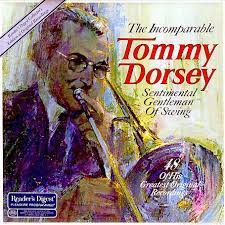
Thomas Francis Dorsey Jr. was born November 19, 1905 in Mahanoy Plane, Pennsylvania, the second of four children born to bandleader Thomas Francis Dorsey Sr. He studied the trumpet with his father but later switched to trombone. At age 15, Jimmy recommended him to replace Russ Morgan in the Scranton Sirens, a territory band in the 1920s. He worked in bands led by Tal Henry, Rudy Vallee, Vincent Lopez, and Nathaniel Shilkret. In 1923 he went to Detroit to play in Jean Goldkette’s band but returned to New York in 1925 to play with the California Ramblers. Two years later he joined Paul Whiteman, then in 1929, the Dorsey Brothers had their first hit with Coquette for OKeh Records.
In 1934, as the Dorsey Brothers, the band signed with Decca, having a hit with I Believe in Miracles. However, acrimony between the brothers led to Tommy walking out and forming his own band in 1935 and having a hit with Every Little Moment. His orchestra rendered ballads at dance tempos and frequently featured singers Jack Leonard and Frank Sinatra. The band was popular almost from the moment it signed with RCA Victor for “On Treasure Island”, the first of four hits in 1935.
He would go on to have a Dixieland group called Clambake Seven, co-host The Raleigh-Kool Program on the radio and hire arranger Sy Oliver away from Jimmie Lunceford to put more jazz into his pop music. Hiring Sinatra from Harry James helped people the singer to fame and learned breath control from the trombonist. Dorsey’s staff of arrangers included Axel Stordahl, Nelson Riddle, Paul Weston, and Bill Finegan.
Throughout the course of the bands life Bunny Berigan, Doc Severinsen, and Charlie Shavers, Buddy DeFranco, Peanuts Hucko, Buddy Rich, Louie Bellson, Dave Tough, Edythe Wright, Jo Stafford with the Pied Pipers, Gene Krupa, Dick Haymes, Connie Haines, and The Clark Sisters all worked with Tommy.
Dorsey owned two music publishing companies, a ballroom, trade magazine, sponsored other bands, and disbanded the orchestra afte World War II. Teaming up with his brother once more, the took the unit on tour and onto their own television show, Stage Show, from 1954 to 1956. In January 1956, they made rock music history introducing Elvis Presley on his national television debut. Tommy Dorsey, who had a run of 286 Billboard chart hits, of which were seventeen number-one hits with his orchestra transitioned on November 26, 1956 at his home in Greenwich, Connecticut, a week after his 51st birthday. He had begun taking sleeping pills regularly at this time, causing him to become heavily sedated; he choked to death in his sleep after having eaten a large meal.
More Posts: bandleader,history,instrumental,jazz,music,trombone
BILL FRISELL FIVE
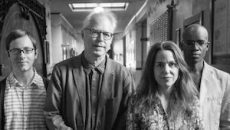
Featuring Thomas Morgan, Rudy Royston, Tony Scherr, Kenny Wollesen. Recognized as one of America’s 21 most vital and productive performing artists, Bill Frisell was named an inaugural Doris Duke Artist in 2012. He is also a recipient of grants from United States Artists, Meet the Composer among others. In 2016, he was a beneficiary of the first FreshGrass Composition commission to preserve and support innovative grassroots music. Upon San Francisco Jazz opening their doors in 2013, he served as one of their Resident Artistic Directors. Bill is also the subject of a new documentary film by director Emma Franz, entitled Bill Frisell: A Portrait, which examines his creative process in depth.
$5 Minimum Per Person, Full Bar & Dinner Menu | NO REFUNDS OR EXCHANGES.
All seating is first come, first served. Table Seating is all ages, Bar Area is 21+. Bar Area tickets for patrons under 21 will not be honored. Group Reservations: Groups larger than 10 must purchase a group package at club@bluenote.net, or by calling 212.475.8592. Groups larger than 10 without a group package will be subject to group surcharges added to your bill. Groups arriving late or separately are not guaranteed to be seated together. All seating is first come, first served. Arrive early for best seats.
Through December 4 | Bill Frisell ~ 12/1 | Bill Frisell Trio ~ 12/2~12/4
More Posts: adventure,album,club,festival,genius,guitar,jazz,museum,music,preserving,restaurant,travel
ED PALERMO BIG BAND
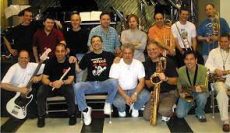
The Ed Palermo Big Band is a New York City-based ensemble that has been active since the late 70’s, playing the compositions and arrangements of their leader, New Jersey born saxophonist Ed Palermo. The band is best known for Palermo’s arrangements of the music of Frank Zappa, but they also perform and record compositions by Todd Rundgren, The Beatles, Miles Davis, Wayne Shorter, The Rolling Stones, Blodwyn Pig, King Crimson, Jethro Tull and many, many other composers from a wide range of genres.
More Posts: adventure,album,big band,club,festival,genius,jazz,museum,music,preserving,restaurant,travel
DIZZY GILLESPIE AFRO~LATIN EXPERIENCE
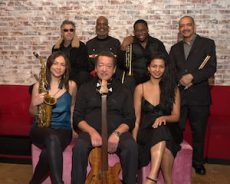
Dizzy Gillespie Afro-Latin Experience
$5 Minimum. Full Bar & Dinner Menu Available. NO REFUNDS OR EXCHANGES
Seating is First Come, First Served. Parties arriving separately or late are not gauranteed to be sat at the same table.Table Seating is All-Ages, Bar Area is 21+. Bar Area tickets for patrons under 21 will not be honored.
More Posts: adventure,album,club,festival,genius,jazz,museum,music,preserving,restaurant,travel