

Requisites
Full House ~ Wes Montgomery | By Eddie Carter
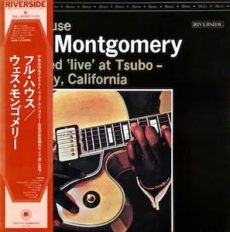
In a game of poker, a full house is a five-card hand containing three-of-a-kind and a pair of another. The three-of-a-kind in this morning’s discussion to begin April is a brilliant trio that at the time was Miles Davis’ rhythm section but also a spectacular group in their own right. The pair is a little giant who was diminutive only in height but possessed a robust sound and an extraordinary guitarist who’d taken the jazz world by storm with his playing. Full House (Riverside RLP 434/RS 9434) is a 1962 live date by Wes Montgomery performed with a world-class quartet, Johnny Griffin on tenor sax, Wynton Kelly on piano, Paul Chambers on bass, and Jimmy Cobb on drums. My copy used in this report is the 1974 Victor Musical Industries Japanese Stereo reissue (Riverside SMJ-6069).
The opener, Full House is an original by Wes welcoming everyone inside the club with the quintet’s festive theme. The leader cooks on the first solo with an infectiously happy groove. Johnny comes in next, swinging strongly on the second reading. We’re then treated to a rollicking finale by Wynton punctuated by the rhythm section’s groundwork leading to the climax. I’ve Grown Accustomed To Her Face by Frederick Loewe and Alan Jay Lerner made its debut in the musical, My Fair Lady (1956). This is a trio tune with Wes supported only by Paul and Jimmy. The guitarist approaches the melody and song’s only solo with an intimate beauty and graceful lyricism that’s gorgeously rendered culminating in a tender finale receiving appreciative applause from the crowd.
Blue ‘N’ Boogie by Dizzy Gillespie and Frank Paparelli begins with the ensemble’s vigorous melody. Montgomery begins in good spirits with a lively opening statement, then Kelly shows a masterful hand on the keys. Griffin thrills the listener with utter delight on the next interpretation. Cobb shares an energetic exchange with Wes, Johnny, and Wynton before taking the spotlight himself leading to the ensemble’s reprise and exit. Cariba, the guitarist’s second tune opens Side Two with a positively tropical flavor in the quintet’s theme. Paul lays down some bluesy bass lines on the first solo. Wynton opens the second presentation with exceptionally smooth execution. Griff delivers a good deal of happy excitement in the third reading. Wes adds a pleasant punctuation with a light-hearted, friendly finale.
Come Rain or Come Shine by Harold Arlen and Johnny Mercer premiered in the Broadway musical, St. Louis Woman (1946). Montgomery and the trio pick up the tempo on the introduction and theme. Johnny kicks things off with some exciting blowing. Wes propels the second solo with tasteful playing, and Wynton closes with an eminently enjoyable interpretation before the song’s conclusion. This delightful set concludes with an uptempo cooker by Wes, S.O.S. The ensemble soars collectively in the opening chorus, then Griffin delivers the first solo with a fiery passion. Wes follows with an equally assertive second statement. Wynton adds a bit of effervescent energy to the third reading. Jimmy provides the final fireworks in a conversation with Griff and Wes into the group’s finish.
A few months after the quintet recorded Full House, Tsubo closed, later reopening as The Jabberwock, offering its patrons folk music. It remained open a few more years until the doors closed for good in 1967. This album was produced by Orrin Keepnews and Wally Heider was the recording engineer. Victor Musical Industries has done a fantastic job with the mastering because this reissue sounds incredible with an outstanding soundstage placing the listener in the club with exceptional clarity. If you’re a fan of Wes Montgomery, Johnny Griffin, or Wynton Kelly, I offer for your consideration on your next vinyl expedition, Full House. The music throughout is excellent and there’s superb playing from all hands, making this a perfect title for any jazz library!
~ Come Rain or Come Shine – Source: JazzStandards.com
~ Blue ‘N’ Boogie, I’ve Grown Accustomed To Her Face, The Jabberwock – Source: Wikipedia.org © 2022 by Edward Thomas Carter

More Posts: choice,classic,collectible,collector,guitar,history,instrumental,jazz,music
Daily Dose Of Jazz…
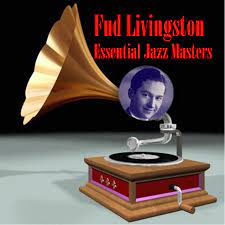
Joseph Anthony Livingston, better known by his peers as Fud, was born April 10, 1906 in Charleston, South Carolina and started out on accordion and piano before settling on saxophone. At seventeen he was playing with Tal Henry in Greensboro, North Carolina in 1923, then worked with Ben Pollack, the California Ramblers, Jean Goldkette, Nat Shilkret, Don Voorhees, and Jan Garber. He recorded freelance with musicians such as Joe Venuti, Red Nichols, and Miff Mole.
He did some arrangement work for Frankie Trumbauer and Bix Beiderbecke, including the nursery rhyme Humpty Dumpty. Livingston played on the 1928 Brunswick recording of “Room 1411” as a member of Bennie Goodman and His Boys, which also featured Glenn Miller, Jimmy McPartland, Bud Freeman, and Ben Pollack.
A stint in London,England in 1929 had him working with Fred Elizalde, then returned to New York City to play with Paul Whiteman. His time with Whiteman lasted from 1930 to 1933, and was mainly as an arranger, though he played occasionally. By the mid 1930s he worked with Benny Goodman, Jimmy Dorsey, Bob Zurke, and Pinky Tomlin as the country entered into the Forties. Essentially stopping his writing and arranging at this point, Fud would occasionally perform in small-time venues in New York in the 1950s.
His compositions included Feelin’ No Pain, Imagination, Humpty Dumpty, Harlem Twist, Sax Appeal, are well known but the jazz standard, I’m Thru With Love, written with Matty Malneck and Gus Kahn, has been recorded by over sixty musicians and vocalists, but a short list is Bing Crosby, Dizzy Gillespie, Arthur Prysock, Coleman Hawkins, Lorez Alexandria, John Pizzarelli, Joe Williams Marilyn Monroe, Maxine Sullivan and Steve Tyrell.
It has been sung in the films Everyone Says I Love You, Some Like It Hot, The Affairs Of Dobie Gillis and Spider~Man 3. Even Alfalfa from The Little Rascals had added it to his repertoire.
Clarinetist, saxophonist, arranger, and composer Fud Livingston, who never recorded as a leader, transitioned on March 25, 1957 in New York City.
More Posts: arranger,clarinet,composer,history,instrumental,jazz,music,saxophone
Review: Nicole Henry | Time To Love Again
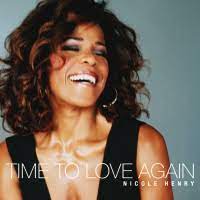
There is nothing more explosive or exciting than being a part of the audience when Nicole Henry takes the stage to give us a part of her. For the initiate, be clear, I take nothing from her recordings, but they are merely a great introduction to the strength and boldness of her performance. Always in command, be it stage or studio, she interprets every song with passion. Last night was one of those nights where one felt the electricity surging throughout the room as she unveiled her latest release, Time To Love Again. To say I was engaged and enthralled is an understatement!
Choosing nine songs to cover from across the decades and musical landscape, she tapped Anthony Newley & Leslie Bricusse, David Nichtern, Sade, Buffy St. Marie, James Taylor, Joan Armatrading, Dimitri Tiomkin & Ned Washington, Richard Rodgers & Lorenz Hart, and Stevie Wonder to be her muses. Once again Nicole emerges triumphant, illuminating another facet of her immense talent. Here she blends rock, R&B and jazz standards, taking us on a spiritual journey to soothe our savage beast and releases us calmly back into the world with grace.
Those of us who came of age during the original release of these songs, will instantly recognize their purveyor, be it Nina Simone, Maria Muldaur, Elvis Presley, Johnny Mathis, Roberta Flack or Newley. Regardless of the version that stokes your memory, there is no comparison as her individuality remains above reproach and the roar of applause. Feeling Good introduces the album as it opens your heart. In between she imbues us with wonderful arrangements of Midnight At The Oasis, Your Smiling Face, and I Didn’t Know What Time It Was. The lineup is impeccable as she continues with Is It A Crime, Until It’s Time For You To Go, Wild As The Wind and Love and Affection. As the set is near completion, Nicole leaves us Overjoyed with the experience of her. For those of us who have forsaken the beat in our chest for other pastures, this is a modest reminder to unlock our hearts and embrace it’s Time To Love Again.
If you fall in love with her on record, leave the world behind, submerge yourself in the music and take serious stock of this lady who transcends that very high bar set years ago. She will make you dance and shout and move your body to the groove, or simply sit and ponder the lyrics as you hear it through a different filter. She will evoke emotions you’ve forgotten and erupt memories you hold close. These select composers and lyricists have added to the canon of great American songs, and it is evident that her innovative arrangements and delivery bestows upon her the privilege to stand shoulder to shoulder with her peers. I implore you to see Nicole Henry live and be amazed by this beautiful force of nature.
carl anthony | notorious jazz | 3.12.22
Give A Gift Of Jazz ~ Share 
#preserving genius
More Posts: bandleader,history,instrumental,jazz,music,review,vocal
Daily Dose Of Jazz…
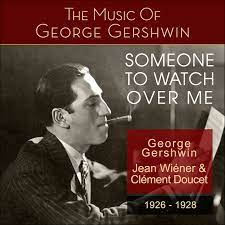
Léon Clément Doucet was born on April 9, 1895 in Brussels, Belgium. For a time he studied at the city’s Conservatoire under Arthur De Greef, who had been a pupil of Franz Liszt.
His formal training was classical, though as he traveled to the United States where he gained some influence from jazz. Some of his arrangements are still played today, including Chopinata, a jazz tribute to several works by Frédéric Chopin.
After returning to Europe, Clément became the house pianist at the Parisian cabaret Le Boeuf sur le Toit, succeeding Jean Wiéner. He and Wiéner formed a piano duo that spanned 15 years from 1924 to 1939. They performed over 2000 concerts and made over 100 recordings of jazz, blues, and classical music.
They also made a small number of recordings in which they accompanied French chansonniers. These include ten sides with Maurice Chevalier, Édith Piaf, Yvonne George, Jean Sablon and Germaine Sablon and others.
Pianist Clément Doucet transitioned at the age of 55 on October 15, 1950 in his hometown.
More Posts: bandleader,history,instrumental,jazz,music,piano
Daily Dose Of Jazz…
Phillip Robert Lee was born on April 8, 1943 in London, England and studied guitar with Ike Isaacs as a teenager. He was a member of the National Youth Jazz Orchestra, and performed at the 1960 Antibes Jazz Festival.
Later in the 1960s he played with John Williams and Graham Collier, as well as in a band with Bob Stuckey, Dudu Pukwana, and John Marshall.
During the 1970s, Phil moved into jazz-rock playing in bands such as Gilgamesh and Axel with Tony Coe and with Michael Garrick, Henry Lowther, and John Stevens.
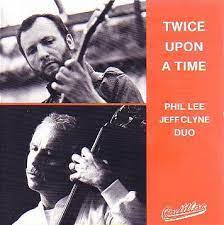
Lee recorded Twice Upon a Time in 1987) with Jeff Clyne. Later in his career he worked with Gordon Beck, Andres Boiarsky, Benny Goodman, Lena Horne, Marian Montgomery, Annie Ross, and the London Jazz Orchestra.
Guitarist Phil Lee continues his exploration of jazz music.
More Posts: bandleader,guitar,history,instrumental,jazz,music