

Daily Dose Of Jazz…
Bob Shoffner was born on April 4, 1900 in St. Louis, Missouri. Growing up he played drums and bugle before settling on trumpet at age eleven. Playing trumpet in a military band, he served in the U.S. Army from 1917-1919, and after his discharge he played with Charlie Creath and Tommy Parker in territory bands.
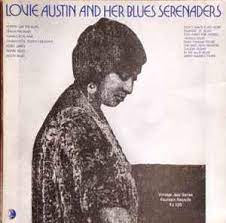
Relocating to Chicago, Illinois in 1921, Bob played with John H. Wickcliffe, Everett Robbins, and Mae Brady. He returned to St. Louis, served briefly under Creath before heading back to Chicago to play with Honore Dutrey. Then, in 1924,he replaced Louis Armstrong in King Oliver’s Creole Jazzband, playing with Oliver until 1927. He went on to spend time with Dave Peyton and Lottie Hightower during this time as well, and recorded with Lovie Austin, Jimmy O’Bryant, Ida Cox, and Luis Russell.
Shoffner suffered a lip ailment in 1927, but returned after a few months to hit with Charles Elgar in 1928, Erskine Tate, Jerome Carrington, McKinney’s Cotton Pickers in 1931, and Frankie Jaxon in ‘32. A move to New York City in 1934, had him with Fess Williams, Fletcher Henderson, and Hot Lips Page towards the end of the decade..
Around 1940 he returned once more to Chicago and took a job working for the state but recorded with Richard M. Jones in the middle of the 1940s. Taking a hiatus from music until 1957he came back to play with Franz Jackson’s Original Jazz All-Stars from 1957 to 1963.
Health concerns forced him into semi-retirement after this time. Trumpeter Bob Shoffner transitioned on March 5, 1983.
Requisites
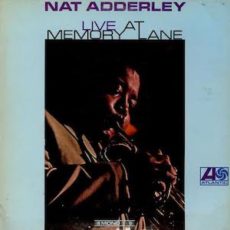
Live at Memory Lane ~ Nat Adderley | By Eddie Carter
This morning’s choice from the library is one of my favorite records that always takes me back to my childhood each time it’s on the turntable. Live at Memory Lane (Atlantic 1474/SD 1474) by Nat Adderley is a 1966 release recorded on Halloween night before an enthusiastic audience. Nat is featured on trumpet exclusively with a stellar supporting cast including his brother Cannonball’s rhythm section. Joe Henderson (tracks: A2 to B3) on tenor sax, Joe Zawinul on piano, Victor Gaskin on bass, and Roy McCurdy on drums complete the ensemble. I was thirteen when I first heard it at Record Rendezvous in Cleveland, Ohio and it still delivers all treats and no tricks. My copy used in this report is the original US Mono album.
Side One starts with On My Journey Now, an original by Nat Adderley endowed with the spirit of a sanctified church song. The leader kicks off the melody with a lively energy advancing to an uplifting opening statement. Zawinul follows with an extremely funky performance that’s sure to get your foot stomping to the rhythm section’s contagious beat preceding Nat leading the congregation out. Adderley’s second composition, Fun, is exactly that. It first appeared on Mercy, Mercy, Mercy (1967) with the trio anchoring both brothers. The group heats up the opening chorus, then Joe steps up first to cook with a fiery passion. Nat speaks with bright and brassy enthusiasm next. Zawinul follows with a feisty attack on the closer before the ensemble’s theme comes to a standstill.
Good Old Summertime by George Evans and Ren Shields is a pretty song from Tin Pan Alley. Nat begins the mid tempo melody on mute accompanied by the trio, then continues floating like a cloud over a picturesque landscape with a discretely rich tone. Henderson is equally enchanting on the second statement, and Joe unfolds a simply gorgeous interpretation ahead of Nat’s tender muted climax. Side Two opens with the first of two from Joe Zawinul’s pen, Lavender Woman. Nat begins with a brief introduction, then picks up the pace for the ensemble’s theme. Henderson takes the lead and swings adventurously. Adderley comes after him and perks up our ears on the second solo. Zawinul soars to great heights on an imaginatively conceived and executed finale into the theme’s return.
Painted Desert is simply breathtaking in its lyrical beauty and the ensemble opens with a gorgeous theme. Henderson is in the spotlight first and delivers an exquisitely beautiful reading. Adderley takes the reins next for an emotionally charged interpretation. Zawinul approaches the finish line with a degree of sensitivity that segues into a vivacious presentation, then the quintet reassembles for a final word. Theme by Nat Adderley and Joe Zawinul brings the set and album to an upbeat close. The group takes off on the opening chorus and Henderson, Adderley, and Gaskin (in his only solo) each take a turn to cook. Nat adds the exclamation mark by acknowledging his bandmates and thanking the audience during the closing chorus.
Nesuhi Ertegun supervised Live at Memory Lane and Wally Heider was the recording engineer for the ensemble’s performance. The sound quality is excellent for a fifty-five-year-old release surrounding your sweet spot with great music that’s a fantastic listen. This was Nat’s first live album leading his own group and I wish he’d recorded more as a leader. The quintet swings like crazy with superb musicianship that makes the listener feel he or she is part of the audience enjoying the music. If you’re a fan of live jazz, just becoming acquainted with the music of Nat Adderley, or only know of his work with Cannonball, I invite you to check out Live at Memory Lane on your next viny hunt. It’s a thoroughly enjoyable album deserving of reaching a wider audience!
~ Mercy, Mercy, Mercy (Capitol Records T 2663/ST 2663) – Source: Discogs.com ~ In The Good Old Summertime – Source: Wikipedia.org © 2022 by Edward Thomas Carter

More Posts: choice,classic,collectible,collector,history,instrumental,jazz,music,trumpet
Daily Dose Of Jazz…
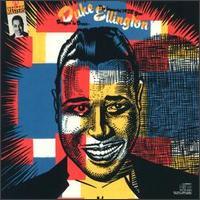
William Taylor Sr. was born Washington, D.C. on April 3, 1906 and began his musical education first on the tuba but later picked up the bass alongside it. After moving to New York City in 1924, at 18 he initially played with Elmer Snowden, then Willie Gant and Arthur Gibbs, followed by two stints with Charlie Johnson closing out the Twenties and reuniting in the early Thirties. He would go on to perform with Duke Ellington, McKinney’s Cotton Pickers, Fats Waller, and Fletcher Henderson.
He recorded with Jelly Roll Morton on three sessions in 1930. From 1935 to 1940, he again played with Ellington, and it is for this association that he is best remembered, often playing at times with bassists Hayes Alvis or Jimmie Blanton. During that time he recorded with Cootie Williams and Johnny Hodges.
The Forties saw him playing with Coleman Hawkins, Red Allen, Joe Sullivan, Raymond Scott, Cootie Williams, Barney Bigard, Benny Morton, and Cozy Cole. Later in the decade he freelanced in New York before moving back to D.C. in 1949.
Bassist Billy Taylor Sr., who led his own ensemble for Keynote Records in 1944, transitioned on September 2, 1986 in Fairfax, Virginia.
More Posts: bandleader,bass,history,instrumental,jazz,music
Daily Dose Of Jazz…
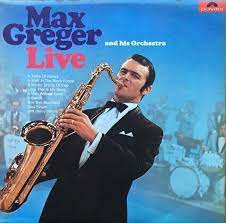
Max Greger was born on April 2, 1926 in Munich, Germany. In 1948 at 22 he founded his first sextet with acclaimed musicians, including Hugo Strasser. By 1959 he became the first western orchestra to tour the Soviet Union.
1963 saw Max putting together a top orchestra for ZDF, which for years supported all the major TV shows. He was honored with the Officers Cross of the Order of Merit of the Federal Republic of Germany, the Bavarian Order of Merit, and has a memorial plaque with his handprints and signature in Berlin-Mitte.
Saxophonist, conductor and big bandleader Max Greger, who recorded over 150 records in jazz and pop music, transitioned on August 15, 2015 in his hometown.
More Posts: bandleader,conductor,history,instrumental,jazz,music,saxophone
Daily Dose Of Jazz…
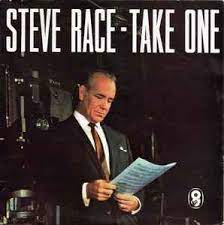
Stephen Russell Race was born April 1, 1921 in Lincoln, England and learned the piano from the age of five. His education from 1932 to 1937 was at Lincoln School, where he formed his first jazz group. At sixteen, he attended the Royal Academy of Music, studying composition under Harry Farjeon and William Alwyn. After leaving the academy, he wrote occasional dance band reviews for Melody Maker and, in 1939, joined the Harry Leader dance band as pianist, succeeding Norrie Paramor.
Race joined the Royal Air Force in 1941, and formed a jazz/dance quintet. After World War II, he began a long and productive career with the BBC, where his ready wit, musicianship and broad musical knowledge made him a much sought after musical accompanist for panel games and magazine shows, such as Whirligig and Many a Slip.
Simultaneously he played in the Lew Stone and Cyril Stapleton bands, and arranged material for Ted Heath. By 1949 The Steve Race Bop Group recorded some of the first British bebop records for the Paxton label. These included four sides with Leon Calvert, Johnny Dankworth, Peter Chilver, Norman Burns, Jack Fulton. He also developed a sideline arranging player piano rolls for the Artona company.
the 1950s to the 1980s, he presented numerous music programs on radio and television. Steve was the chairman of the long-running light-hearted radio and TV panel game My Music which ran for 520 episodes from 1967 to 1994. He also presented Jazz For Moderns and Jazz 625 for the BBC in the 1960s.
As a composer, he produced a number of pieces in the jazz, classical and popular idioms. Blue Acara, Esteban Cera, Faraway Music, Nicola, Ring Ding and Pied Piper aer just a few of his well known compositions. He appeared as pianist/bandleader in the 1948 film Calling Paul Temple and with Sid Colin wrote two of the songs performed by Celia Lipton. He also wrote other scores for films. His autobiography, Musician at Large, was published in 1979, and was inducted into the Order of the British Empire (OBE). Pianist, composer, radio and television presenter Steve Race had his first heart attack in 1965 and transitioned from a second attack at his home in Great Missenden, Buckinghamshire, on June 22, 2009.
More Posts: bandleader,composer,history,instrumental,jazz,music,piano