


Daily Dose Of Jazz…
Clarence Profit was born on June 26, 1912 in New York City. Coming from a musical family, he began studying piano at the age of three and led a ten-piece band in New York City in his teens.
A visit to his grandparents in Antigua resulted in his staying in the Caribbean for five years. He also led a group in Bermuda. Returning to the States, Clarence led a trio. He co-composed Lullaby In Rhythm with Edgar Sampson. He was respected in his era, but after his early death he fell into obscurity. He was born, and died, in New York City.
Pianist and composer Clarence Profit, closely associated with the swing era, passed away in New York City on October 22, 1944.

More Posts: bandleader,composer,history,instrumental,jazz,music,piano

Daily Dose Of Jazz…
Ellen Radka Toneff was born on June 25, 1952 in Oslo, Norway. She was the daughter of the Bulgarian folk singer, pilot and radio technician Toni Toneff, and grew up in Lambertseter and Kolbotn. She studied music at Oslo Musikkonservatorium (1971–75), combined with playing in the jazz rock band Unis.
From 1975 to 1980 she led her own Radka Toneff Quintet, with a changing lineup including musicians like Arild Andersen, Jon Balke, Jon Eberson and Jon Christensen, among others. From 1979 she cooperated with Steve Dobrogosz, and in 1980 she participated in the Norwegian national final of the Eurovision Song Contest with the song Parken by Ole Paus.
Toneff was awarded the Spellemannsprisen 1977 in the category best vocal for the album Winter Poem, and posthumously received the Norwegian Jazz Association’s Buddypris in 1982. The Radka Toneff Memorial Award is funded with royalties from the albums Fairytales and Live in Hamburg. A biography of her life was published in 2008.
Her 1982 album Fairytales was voted the best Norwegian album of all time. Vocalist Radka Toneff, considered one of Norway’s greatest jazz singers, committed suicide with an overdose of sleeping pills and was found in the woods of Bygdøy outside Oslo on October 21, 1982.
More Posts: history,instrumental,jazz,music,vocal
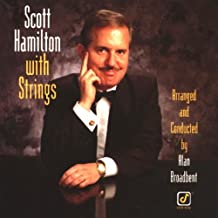
The Quarantined Jazz Voyager
It amazes me how many people want to get back to the old normal so quickly that they are walking around without any protection. Honor is rare in America, so that system is flawed. However, I remain vigilant with my safety and health as governors across the country are removing mandatory masking and social distancing.
So in light of those decisions, I have chosen from my collection the 1993 Concord Records album by one of the industry’s most seasoned musicians. The album Scott Hamilton With Strings paired the tenor saxophonist with pianist Alan Broadbent, who served as musical director, conductor, and arranger for the session. Throw in a 20-piece string orchestra and you have the makings of an enjoyable listening experience.
The recording sessions were done October 5, 1992 & October 6, 1992 at Group IV Recording Studios, Hollywood, California. The photography was taken by David Lubarsky, the art direction by Kent Judkins, and the liner notes were written by Peter Straub. The recording and remix engineer was Phil Edwards, and the assistant recording engineer was Dann Thompson. The album was mastered by George Horn. The producer on the recording dates was Carl E. Jefferson along with his assistant producers, Elizabeth Bell and Nick Phillips.
Track List | 57:54- My Foolish Heart (Ned Washington, Victor Young) ~ 5:28
- Goodbye Mr. Evans (Phil Woods) ~ 7:29
- The Shining Sea (Peggy Lee, Johnny Mandel) ~ 6:07
- Angel Eyes (Ned Brent, Matt Dennis) ~ 6:09
- Heart’s Desire (Alan Broadbent, Dave Frishberg) ~ 5:27
- The Look Of Love (Burt Bacharach, Hall David) ~ 5:15
- Nancy(With The Laughing Face) (James Van Heusen, Phil Silvers) ~ 4:21
- Young And Foolish (Albert Hague, Arnold B. Horwitt) ~ 5:26
- I Concentrate On You (Cole Porter) ~ 6:48
- Tonight I Shall Sleep (With A Smile On My Face) (Duke Ellington, Mercer Ellington, Irving Gordon) ~ 5:24
- Scott Hamilton ~ tenor saxophone
- Alan Broadbent ~ piano,
- Bob Maize ~ bass
- Roy McCurdy ~ drums
- Cello ~ Dennis Karmazyn, Fred Seykora, Jodi Burnett, Paula Hochhalter, Ray Kramer*
- Viola ~ Carole Mukogawa, Dan Neufeld, Harry Shirinian, Maria Newman, Pamela Goldsmith
- Violin ~ Bonnie Douglas, Darius Campo, Endre Granat, Gordon Marron, Haim Shtrum, Harris Goldman, Henry Ferber, Israel Baker, James Getzoff, John Wittenberg, Juliann French, Ken Yerke*, Mari Tsumura-Botnick, Paul Shure, Robert Brosseau
- Violin, Concertmaster ~ Murray Adler

More Posts: adventure,album,club,genius,jazz,museum,music,organ,preserving,restaurant,travel
Daily Dose Of Jazz…
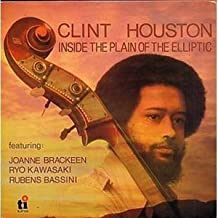
Clinton Joseph Houston was born on June 24, 1946 in New Orleans, Louisiana and spent his early childhood in Washington, D.C. before spending his adolescence in Queens, New York. At the age of 10, he began piano lessons and started playing jazz in his early teens after hearing Cannonball Adderley on the radio. After being turned down for a pianist role in his high school band, he switched to the double bass.
He began playing in bands outside of high school, with Lenny White, George Cables, Billy Cobham, Steve Grossman and Charles Sullivan, all of whom grew up in the same neighborhood. In his early years, he played in a band called the Jazz Samaritans, playing Latin-style music at local parties and drawing inspiration from Art Blakey. At the age of 19, Clint won a Jazz Interactions competition, leading to an encounter with Paul Chambers who encouraged him to pursue his music further.
After high school, he went to the Pratt Institute, then transferred to Queen’s College to study music before eventually obtaining a degree in Graphic Art from the Cooper Union. During his higher education, on weekends he played alongside Cables and White at Slugs’ matinées. This led to them playing extensively with better-known artists. A founding member of musical co-operative Free Life Communications, Clint performed alongside Dave Liebman, becoming more immersed in the loft jazz scene of 1970s New York.
By 1972, Houston was playing alongside Joanne Brackeen in Stan Getz’ band. Their collaborations continued playing in New York clubs recording on many of Brackeen’s early records. He went on to play with Roy Ayers, George Cables, Lenny White, Nina Simone, Roy Haynes, Sonny Greenwich, Don Thompson, Charles Tolliver, Woody Shaw, Pepper Adams, Slide Hampton, Frank Foster, and Roland Hanna. Bassist Clint Houston passed away on June 7, 2000.
More Posts: bandleader,bass,history,instrumental,jazz,music
Daily Dose Of Jazz…
Eli Robinson was born on June 23, 1908 in Greenville, Georgia. After working in Cincinnati, Ohio in bands led by Speed Webb, Zack Whyte and also worked with McKinney’s Cotton Pickers. In 1935 he made his first recordings with Blanche Calloway.
1936 saw Eli moving to New York City, where he became a member of the Teddy Hill and Willie Bryant big bands and the Mills Blue Rhythm Band. Three years later he played with Roy Eldridge and joined the big band of Lucky Millinder.
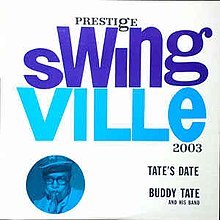
Beginning in 1941, he spent several years as a member of the Count Basie Orchestra. He returned to working with Millinder, then joined Buddy Tate in 1954.
Trombonist and arranger Eli Robinson never recorded as a leader, and passed away on December 24, 1972 in New York City.
More Posts: arranger,history,instrumental,jazz,music,trombone