

Three Wishes
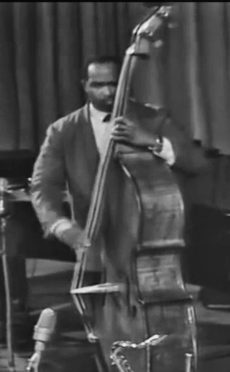
Inquisitive as the Baroness was when she asked Eddie Jones what his three wishes were he told her:
- “I would wish for better health for my daughter. That is really my only wish.”
- “Well, maybe there is one other: more willpower.”
*Excerpt from Three Wishes: An Intimate Look at Jazz Greats ~ Compiled and Photographed by Pannonica de Koenigswarter

More Posts: baroness,bass,history,instrumental,jazz,lyricist,music,pannonica,piano,three
Daily Dose Of Jazz…
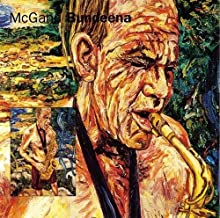
Bernard Francis McGann was born June 22, 1937 in Granville, Sydney, Australia. He first came to prominence as part of a loose alliance of modern jazz musicians who performed at the El Rocco Jazz Cellar in Kings Cross, Sydney in the late 1950s and early 1960s. He had an enduring collaboration with drummer John Pochee.
During the 1960s McGann performed with rock and pop groups and as a session musician. In the 1970s he was a member of the Sydney rock-soul band Southern Comfort, and in 1974, he was a founding member of jazz group, The Last Straw. Between 1980 and 1982, he played with visiting US jazz artists, including Freddie Hubbard, Lester Bowie, and Dave Liebman.
Studying in New York on a grant from The Australia Council in 1983, Bernie went on to tour in 1988 both Australia and the USA with the Australian Jazz Orchestra, and was a featured artist in award-winning documentary film Beyond El Rocco.
Alto saxophonist Bernie McGann, who won several awards including four ARIA Music Awards between 1993 and 2001, passed away on September 17, 2013, following complications from heart surgery. He was 76.
More Posts: bandleader,history,instrumental,jazz,music,saxophone
Daily Dose Of Jazz…
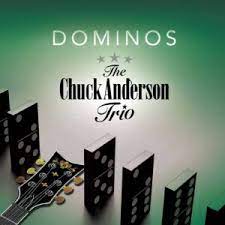
Chuck Anderson was born in Chicago, Illinois on June 21, 1947. He began guitar lessons at the age of 14 and by 1963, he was teaching guitar and playing in a band.
At the age of 19, he began studies with Dennis Sandole, who was notable for his association with John Coltrane, James Moody, Michael Brecker, Pat Martino and Jim Hall.
In 1969, Anderson was offered the staff guitar job at the Latin Casino in Cherry Hill, New Jersey. The Latin was a popular venue before gambling came to Atlantic City. During that period, he accompanied and performed with Bobby Darin, Billy Eckstine, and Peggy Lee, playing fourteen shows a week.
By 1973 Chuck had returned to jazz and formed the Chuck Anderson Trio with Al Stauffer on bass and Ray Deeley on drums. Four years later, he was the staff guitar job at Valley Forge Music Fair in Devon, Pennsylvania.
During the years leading up to the Eighties he worked with Nancy Wilson, Michel LeGrand, and Anthony Newley. In the years that followed, he concentrated on teaching, composing, and session work.
He has written a column, The Art and Science of Jazz, for the web magazine All About Jazz. Guitarist, educator, composer, and author Chuck Anderson continues his career in music.
More Posts: author,composer,educator,guitar,history,instrumental,jazz,music
Requisites
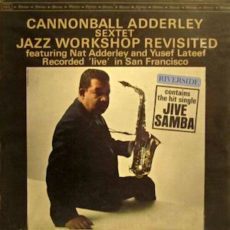
Jazz Workshop Revisited ~ Cannonball Adderley Sextet | By Eddie Carter
The Cannonball Adderley Sextet steps into the spotlight with a favorite album from my childhood that takes us to The Jazz Workshop. Three years earlier, the group made their first trip to the renowned club, and The Cannonball Adderley Quintet In San Francisco was released to rave reviews. This morning’s choice from the library, Jazz Workshop Revisited (Riverside RLP 444/RS 9444) was released in 1963 documenting their return to the venue, this time as a sextet. Nat Adderley on cornet, Cannonball Adderley (tracks: A1 to A3, B1, B3) on alto sax, Yusef Lateef (tracks: A1, B1, B2) on flute, (track: A1) on oboe, (tracks: A2, A3) on tenor sax, Joe Zawinul on piano, Sam Jones on bass, and Louis Hayes on drums. My copy used in this report is the 1965 US Stereo reissue.
Side One starts with an opening comment by Cannonball introducing the first tune, an original titled Primitivo. Yusef and the trio set the mood perfectly in the introduction. Cannonball states the haunting melody, segueing into a tenderly expressed first solo. Yusef follows on oboe with a tantalizingly seductive statement. Nat gives a passionate performance next, and Joe puts an elegant touch on the finale before the ensemble’s gentle closing chorus. The group invites us to celebrate Jessica’s Birthday by Quincy Jones with a festive melody to begin the party. Cannonball leads the solos with zestful energy on the opening statement. Nat bristles with joyful creativity on an exciting reading next, then Lateef blazes into the third interpretation with incandescent energy. Joe swings to an enthusiastic groove on the closer.
Marney by Donald Byrd builds to a brisk melody in unison. Cannonball steps up first to give a vivaciously spirited opening solo. Nat breathes fire on the next interpretation, then Yusef dispenses ferocious energy into the third reading. Joe keeps things cooking on the closer and Sam and Louis don’t pull any punches in their support. The altoist starts Side Two with another few words before the sextet dives into Nat Adderley’s bossa nova hit, The Jive Samba. The trio starts with a danceable introduction ahead of the ensemble’s captivating melody. Cannonball is especially funky on the opening statement, then Nat rocks the second reading with some spicy soul food. Lateef answers with a light and airy sound that swings. Zawinul shines brilliantly on an effervescent performance and Jones increases the finger-popping during the theme’s reprise with a concise comment.
Lillie by Sam Jones is a beautiful ballad that’s a showcase for Nat as the primary soloist. Yusef backs him on the flute during the opening and ending theme. Nat begins with a gracefully beautiful first reading and Joe has an alluring moment before the close. Yusef Lateef’s Mellow Bruno begins with a brisk theme stated by Cannonball who takes charge on the first solo with some spirited blowing. Nat applies some energetic exuberance to the second statement. Lateef provides plenty of infectious enthusiasm next. Zawinul wraps up this stellar session with a short performance before Cannonball takes the song out. Afterward, he lets the crowd know that it’s time to go – really! Wally Heider is the man behind the dials on Jazz Workshop Revisited. The soundstage is stunning and places you in the club among the crowd to enjoy the group at their best.
One of the things I always loved about Cannonball’s live performances is his rapport with an audience. In my opinion, Jazz Workshop Revisited is a great live album that perfectly complements his other two West Coast releases. If you’re a fan of his earlier Riverside records, I offer for your consideration on your next vinyl hunt, Jazz Workshop Revisited by The Cannonball Adderley Sextet. It doesn’t disappoint on any level and is essential listening for any jazz lover!
~ The Cannonball Adderley Quintet at The Lighthouse (Riverside RLP 344/RS 9344), The Cannonball Adderley Quintet In San Francisco (Riverside RLP 12-311/RLP 1157) – Source: Discogs.com
~ © 2021 by Edward Thomas Carter

More Posts: choice,classic,collectible,collector,history,instrumental,jazz,music,saxophone
Daily Dose Of Jazz…
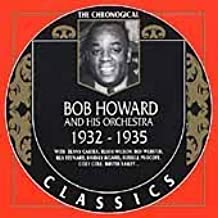
Bob Howard was born Howard Joyner on June 20, 1906 in Newton, Massachusetts, He began singing in New York City night clubs in the mid-1920s and began recording in 1931 under his real name for Columbia Records.
Under the name Bob Howard, he played New York’s Park Central Hotel, Famous Door, Hickory House and other clubs as well as theaters. Signed to Decca Records in 1934 he recorded a series of hot small group swing records between 1935 and 1938. His studio groups included Benny Carter, Buster Bailey, Rex Stewart, Ben Webster, Teddy Wilson, Russell Procope, Cecil Scott, Cozy Cole, Bunny Berigan, Artie Shaw, and Babe Russin among others. Unfortunately on these Decca recording sessions he did not play piano, only sang.
Embarking on several European tours as a solo performer in the middle and late 1930s, Bob also had his own radio series in New York. From 1936 to 1947 he performed in a handful of short films, and 1959 saw him acting in an episode of Perry Mason.
In 1948, Howard hosted The Bob Howard Show on CBS, making him the first Black man to host a regularly broadcast network TV show. The program was cancelled after 13 episodes. He also was a regular performer on Sing It Again on CBS-TV in 1950 – 1951.
Relocating to Las Vegas, Nevada and Los Angeles, California for a time, he returned East. Pianist and vocalist Bob Howard passed away on December 3, 1986 in the Bronx, New York.
More Posts: bandleader,history,instrumental,jazz,music,vocal