

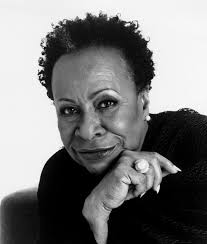
Three Wishes
Speaking with Betty Carter, Baroness Pannonica inquired as to what she would wish for if given three and she responded by telling her:
- “Health. Without that you don’t have anything.”
- “To be recognized as an individual all the way.”
- “Happiness for my son.”
*Excerpt from Three Wishes: An Intimate Look at Jazz Greats ~ Compiled and Photographed by Pannonica de Koenigswarter

More Posts: baroness,history,instrumental,jazz,music,pannonica,three,vocal,wishes

Daily Dose Of Jazz…
Victor Ash was born in East London, England on March 9, 1930, of Jewish ancestry and began playing professionally in 1951 when, with Tubby Hayes, he joined the band of Kenny Baker, with whom he played until 1953. Following this association, Ash played with Vic Lewis from 1953–56, then accompanied Hoagy Carmichael and Cab Calloway on their English tours.
Leading his own group, he became a favourite in the Melody Maker fan polls of the 1950s. Concurrently he had a radio program called Sunday Break, which discussed jazz and religion. In 1954, the Vic Ash Quartet recorded with US singer Maxine Sullivan in London. Ash toured the U.S. in 1957 and returned to play with Lewis in 1959. That same year his ensemble was the only one representing British jazz at the Newport Jazz Festival.
Ash remained a mainstay on the British jazz scene for decades, playing in small and large ensembles including the BBC Big Band. He accompanied Frank Sinatra on his tours in Europe and the Middle East, from 1970 until Sinatra’s death.
He released many albums for Pye, Nixa and MGM, mostly in the mainstream jazz tradition. Saxophonist and clarinetist Vic Ash, who co-authored his autobiography I Blew It My Way in 2006, passed away on October 24, 2014.

More Posts: bandleader,clarinet,history,instrumental,jazz,music,saxophone
Daily Dose Of Jazz…
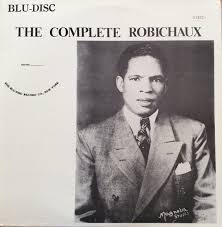
Joseph Robichaux was born on March 8, 1900 in New Orleans, Louisiana and played piano from a young age and studied at New Orleans University. After working in the O.J. Beatty Carnival, he played with Tig Chambers briefly in 1918, then returned to New Orleans where he played with Oscar Celestin, Earl Humphrey, Lee Collins, and The Black Eagles.
Arranging for the Jones-Collins Astoria Hot Eight in 1929, Joe also recorded with them. He accompanied Christina Gray on record that year. In 1931 he formed his own ensemble, which featured Eugene Ware on trumpet, Alfred Guichard on clarinet and alto saxophone, Gene Porter on tenor sax, and Ward Crosby on drums.
The group journeyed to New York City to record for Vocalion in August 1933, laying down twenty-two mostly stomping, uptempo sides and two alternate takes in a marathon five day recording schedule which included Rene Hall on tenor banjo. Vocalion issued ten records over the next year and two tracks with Chick Bullock vocals were issued under his name on Banner, Domino, Oriole, Perfect, and Romeo.
Working and recording during the height of Jim Crow, problems arose with the musicians’ union in New York that prevented the group from playing live there, so they returned to New Orleans not long after recording. Robichaux expanded the size of his ensemble over the course of the 1930s, with Earl Bostic was among those who joined its ranks.
Touring Cuba in the mid-1930s, the band also recorded for Decca Records in 1936, recording 4 sides in New Orleans, but unfortunately they were all rejected. By 1939 Robichaux’s ensemble disbanded and he found work as a solo performer, mostly in New Orleans. During the 1950s he recorded on R&B recordings and played with Lizzie Miles.
From the late 1950s to the mid Sixties he played with George Lewis, Peter Bocage; and performed at Preservation Hall. Pianist Joe Robichaux passed away of a heart attack at the age of 64 on January 17, 1965 in his hometown.
More Posts: bandleader,history,instrumental,jazz,music,piano
Requisites
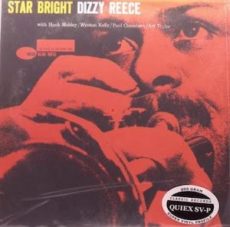
Star Bright ~ Dizzy Reece | By Eddie Carter 3.7.21
This morning’s choice from the library comes from a young man from Kingston, Jamaica. Alphonso Son Reece attended the Alpha Boys School where he began playing the baritone sax before switching to the trumpet at age fourteen. It’s also during this time where he got his nickname Dizzy, which had nothing to do with Dizzy Gillespie. He became a professional musician at sixteen and has played with some of the greatest jazz musicians in England, France, and the United States. Star Bright (Blue Note BLP 4023/BST 84023) was released in 1959 and is his third album as a leader following Progress Report (1957), and Blues In Trinity (1958). He’s backed on this date by three musicians he only knew from their records, Hank Mobley on tenor sax, Wynton Kelly on piano, and Paul Chambers on bass. Completing the quintet is Art Taylor on drums who played with Dizzy on Blues In Trinity. My copy used in this report is the 2003 Classic Records Mono audiophile reissue (BLP 4023 – BN 4023).
Side One starts at a relaxed tempo with The Rake, one of four tunes Reece composed for the 1958 British film, Nowhere To Go. The quintet opens with a laid-back stroll through the melody, and Dizzy lays down an easy-going opening solo. Hank follows with a reading so comfortable and cozy, you almost feel his warm personality coming from your speakers. Wynton glides into the closing statement gracefully with Paul and Art backing him leading to the reprise.
The pace picks up for the 1945 tune, I’ll Close My Eyes by Billy Reid and Buddy Kaye. Reid originally wrote this song as one of regret and remorse, but Kaye updated the lyrics, making the song upbeat. The trio creates the down-home atmosphere for the leader’s perfectly crafted opening chorus. Mobley begins with a stirring performance, followed by a spirited statement by Reece. Kelly achieves a wonderful groove on the next reading and Chambers walks with passionate precision on the climax.
The quintet takes a trip to Groovesville next, an impromptu blues by Dizzy beginning with the first of two statements by Wynton. The pianist opens this happy swinger with a blues-rooted energy that’s highly contagious. Dizzy takes charge next with a cheerfully buoyant interpretation, then Hank expresses his excitement on the third reading. Wynton picks up where he left off with a second clever statement preceding the front line splitting the closing chorus and the coda.
Side Two gets underway with Dizzy’s The Rebound, a medium-fast original that commences with the ensemble stating the melody collectively. Reece kicks things off with a feisty first reading, then Mobley takes the next spot, his tenor sax soaring with a soulful charm. Kelly answers enthusiastically with a high-spirited interpretation, and Chambers makes the final solo sparkle with a concise contribution before the ensemble takes the song out.
I Wished On The Moon was written in 1935 by Dorothy Parker and Ralph Rainger. It would become a big hit for Bing Crosby who recorded it that year with The Dorsey Brothers Orchestra. The group’s approach to this familiar evergreen is laid-back with Dizzy leading the trio through the carefree theme and finale with inspired interpretations by Dizzy, Hank, and Wynton who make it look so easy. Dizzy’s A Variation on Monk sets off at a brisk uptempo pace by Kelly, and the rhythm section evolves into a vigorous collective opening chorus. Mobley charges into the lead solo with an invigorating performance, then comes Reece who’s firing on all cylinders with an exhilarating statement. Kelly matches the front line’s intensity with a marvelous presentation that’s over too quickly. Taylor begins his only solo opportunity with an exchange of ideas between himself and both horns, then gives the final statement some vigorous brushwork ahead of the closing chorus.
A lot of thought and care went into the remastering of Rudy Van Gelder’s original tapes by Bernie Grundman of Bernie Grundman Mastering. The music is superbly recorded with a breathtaking soundstage and the instruments emerging from your speakers as if the musicians are playing right in front of you. The record was pressed on 200–gram Quiex SV–P Audiophile Vinyl with a flat–edge and deep groove on the label. It’s silent until the music begins. If you’re a fan of Hard-Bop from that magic year of 1959 and aren’t familiar with Dizzy Reece, I offer for your consideration, Star Bright, a stellar album that’s one of the brightest stars in his discography and one I can happily recommend for your library!
~ Blues In Trinity (BLP 4006/BST 84006), I Wished on The Moon (Decca 39857), Progress Report (Tempo Records TAP 9) – Source: Discogs.com ~ Alphonso Son Reece, I’ll Close My Eyes, I Wished on The Moon – Source: Wikipedia.org © 2021 by Edward Thomas Carter
More Posts: choice,classic,collectible,collector,history,instrumental,jazz,music,trumpet
Daily Dose Of Jazz…
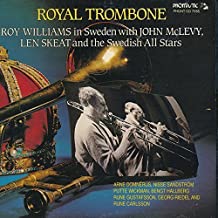
Roy Williams was born on March 7, 1937 in Salford, England and learned piano as a youth, He did not play the trombone until he was 18. After serving his National Service in the military in the late 1950s, he joined the trad jazz group of trumpeter Mike Peters and worked with Terry Lightfoot in the early 1960s.
In 1965 he became a member of Alex Welsh’s band, which accompanied Ruby Braff, Wild Bill Davison, and Bud Freeman. Roy remained with Welsh until 1978, while also collaborating with bandmate John Barnes in a side ensemble. He went on to work with Humphrey Lyttelton from 1978 to 1983), and in 1980 played with the Pizza Express All Stars and Benny Waters.
Leaving Lyttelton’s ensemble in 1983 gave him the opportunity to work as a regular performer at festivals during the 1980s and 1990s. He was a sideman for Doc Cheatham, Jim Galloway, Buddy Tate, the Harlem Blues and Jazz Band, the World’s Greatest Jazz Band, Peanuts Hucko, Bent Persson, Bob Rosengarden, Stan Barker, Bob Wilber, Digby Fairweather, Pete Strange, and Keith Smith.
He co-led a swing-oriented quintet in 1998 with saxophonist Danny Moss. Their musical collaboration produced Steamers! for the Nagel-Heyer Records label.
Trombonist Roy Williams was appointed Member of the Order of the British Empire (MBE) in the 2020 Birthday Honours for services to jazz and continues to perform to this day.
More Posts: history,instrumental,jazz,music,trombone