

The Quarantined Jazz Voyager
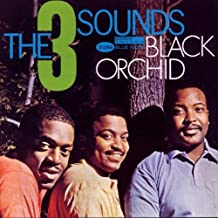
The Quarantined Jazz Voyager is pulling off the shelf for your listening pleasure comes from Black Orchid. It’s an album by jazz group The Three Sounds featuring performances recorded on March 7, 1962 (1-4, 6) and March 8, 1962 (5, 7-8) at Rudy Van Gelder Studios in Englewood Cliffs, New Jersey. It was released on the Blue Note label in 1964. The session was produced by Alfred Lion.
A 1998 reissue on compact disc added seven additional songs and as you listen to the below recording you will hear all fifteen compositions.
Track Listing | 42:37
- Black Orchid (Cal Tjader) – Erroneously credited to (Neal Hefti) – 5:25
- A Foggy Day (Gershwin, Gershwin) – 6:46
- For All We Know (Coots, Lewis) – 5:31
- Oh Well, Oh Well – 3:45
- At Last (Gordon, Warren) – 5:37
- Secret Love (Sammy Fain, Paul Francis Webster) – 5:44
- Don’t Go, Don’t Go – 5:08
- Saucer Eyes (Randy Weston) – 4:41
Personnel
- Gene Harris – piano
- Andrew Simpkins – bass
- Bill Dowdy – drums
Remain diligent my fellow voyagers in staying healthy, continue practicing social distancing, and don’t be so anxious to rush back to the new normal. It has been said that music soothes the savage beast, so listen to great music. I share that music to give you a little insight into the choices this voyager has made over the years during this sabbatical from jet setting investigations of jazz around the globe.

More Posts: adventure,bass,club,genius,jazz,museum,music,piano,preserving,restaurant,travel,voyager
Daily Dose Of Jazz…
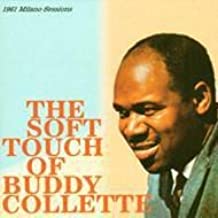
William Marcel “Buddy” Collette was born in Los Angeles, California on August 6, 1921. Raised in the Central Gardens area of Watts in a house his father built, he was surrounded by people of all different ethnicities. His father played piano, his mother sang and the melting pot of Watts framed the way he saw his position as a black man in the future.
He began playing piano at age ten, in middle school, the saxophone. That same year, he formed his first band with Charlie Martin, Vernon Slater, Crosby Lewis, and Minor Robinson. The following year, Collette started a band with Ralph Bledsoe and Raleigh Bledsoe, then started a third group which eventually included bassist Charles Mingus. Becoming very good friends, Collette helped Mingus find his less wild, more reserved side. When he was fifteen, Collette became a part of the Woodman brothers’ band, along with Joe Comfort, George Reed, and Jessie Sailes.
While in high school, Buddy began traveling to Los Angeles, competed in a battle of the band and lost to a band that included Jackie Kelson, Chico Hamilton, and Al Adams. However, afterward, he was asked to join the winning band, and later, Charles Mingus joined this band. By 19, he started taking music lessons from Lloyd Reese, who taught him and the other musicians how to manage themselves in the music world.
After serving as a U.S. Navy band leader, he played with the Stars of Swing with Woodman, Mingus, Lucky Thompson, Louis Jordan, and Benny Carter. In 1949, he was the only black member of the band for You Bet Your Life, a TV and radio show hosted by Groucho Marx. In the 1950s, he worked as a studio musician with Frank Sinatra, Ella Fitzgerald, Duke Ellington, Count Basie, Nat King Cole, and Nelson Riddle.
In 1955 he was a founding member of the Chico Hamilton Quintet, playing chamber jazz flute with guitarist Jim Hall, cellist Fred Katz, and bassist Carson Smith. He was also an educator teaching Mingus, James Newton, Eric Dolphy, Charles Lloyd, and Frank Morgan. He helped merge an all-black musicians’ union with an all-white musicians’ union.
Flutist, saxophonist, and clarinetist Buddy Collette, 1994 co-founder of the JazzAmerica program, a non-profit organization that aims at bringing jazz into classrooms in middle school and high schools in the greater Los Angeles area tuition-free, passed away in his beloved hometown on September 19, 2010.

More Posts: bandleader,history,instrumental,jazz,music,trumpet
Hollywood On 52nd Street
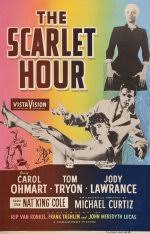
Never Let Me Go is a song composed and written by Jay Livingston and Ray Evans, that was performed by Nat King Cole in the 1956 American crime drama film, The Scarlet Hour. The movie was directed and produced by Michael Curtiz. The film stars Carol Ohmart, Tom Tryon, Jody Lawrance and Elaine Stritch. The screenplay was based on the story “The Kiss Off” by Frank Tashlin.
The Story
E. V. Marshall, known to all as “Marsh,” works for wealthy real-estate businessman Ralph Nevins and is having an affair with Ralph’s unhappy wife, Paulie. Not wanting to struggle Paulie refuses Marsh’s plea to get a divorce and live without her husband’s money.
Overhearing thieves planning a jewelry heist of the home of a doctor named Lynbury, Paulie pleads with Marsh to rob the jewels from the thieves as they leave the doctor’s house. Suspicious of his wife, Nevins follows, catches them in the act, and gets shot by Paulie. However, Marsh thinks that the thieves shot Nevins.
The police investigation reveals that Dr. Lynbury masterminded the burglary of his own home to collect insurance money after having replaced his wife’s jewels with worthless fakes. Police eventually place Lynbury under arrest and Paulie as well, with Marsh’s cooperation.

Daily Dose Of Jazz…
Don Albert was born Albert Anité Dominique, on August 5, 1908 in New Orleans, Louisiana. His uncle was Natty Dominique, and he was also a relative of Barney Bigard. He got his start playing in parade brass bands in New Orleans at the beginning of the 1920s. He toured with the territory band of Alphonse Trent through the Southwest United States in 1925, then played with Troy Floyd at the Shadowland Ballroom in San Antonio from 1926 to 1929.
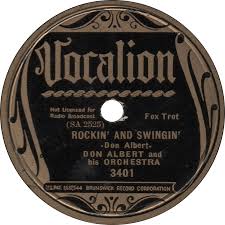
Leading his own territory bands out of Texas in the 1930s and 1940s, Albert had in his band sidemen that included Alvin Alcorn, Louis Cottrell, Jr., and Herb Hall. After 1932 he acted more in a manager’s capacity than as a performer. His bands played in Mexico, Canada, and New York City in 1937 and won rave reviews from newspapers, but the band only recorded eight sides for Vocalion Records.
Disbanding this group around 1939 due to economic conditions, Don found work in civil service and managing a San Antonio nightclub in the early to mid-1940s, only to be shut down in 1948 by local authorities. By 1949 his group played the Palace Theater in New York.
The 1950s saw him returning to active performance, playing with Buddy Tate in 1966, the New Orleans Jazz Festival in ‘69, and in small groups through the 1970s. Trumpeter and bandleader Don Albert passed away on March 4, 1980 in San Antonio, Texas.
More Posts: bandleader,history,instrumental,jazz,music,trumpet
Three Wishes
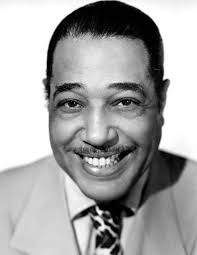
Duke Ellington easily and succinctly responded to the inquiry of three wishes by the Baroness with one answer:
-
-
“My wishes are simple. I want nothing but the best.”
-
*Excerpt from Three Wishes: An Intimate Look at Jazz Greats ~ Compiled and Photographed by Pannonica de Koenigswarter
More Posts: baroness,history,instrumental,jazz,music,pannonica,piano,three,wishes