

Daily Dose Of Jazz…
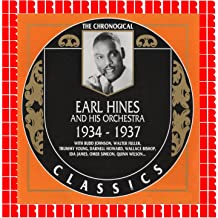
Charlie Allen was born in Jackson, Mississippi on September 25, 1908 and grew up in Chicago, Illinois. He began playing in the early 1920s just out of high school and through the decade worked as a member of the bands of Hugh Swift, Dave Peyton, Doc Cook, Clifford King, and Johnny Long.
Allen worked with Earl Hines from 1931 to 1934, then did a short stint in Duke Ellington’s orchestra in 1935, though he never recorded any solos with Ellington. He played with Fletcher Butler in 1936 and then returned to play with Hines again in 1937.
He played in various groups in Chicago in the 1940s and 1950s. Later in his life he became a music educator, worked in the Chicago Musicians’ Union, and designed custom trumpet mouthpieces, used by Cat Anderson, among others.
Trumpeter Charlie Allen passed away on November 19, 1972 in Chicago.

More Posts: history,instrumental,jazz,music,trumpet
Daily Dose Of Jazz…
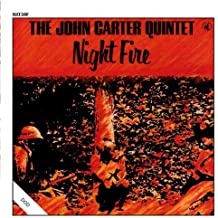
John Wallace Carter was born on September 24, 1929 in Fort Worth, Texas and attended I.M. Terrell High School, and played music with schoolmates Ornette Coleman and Charles Moffett in the 1940s. Earning a Bachelor of Arts from Lincoln University in Jefferson, Missouri in 1949 and a Master of Arts from the University of Colorado in 1956. He also studied at the North Texas State and University of California at Los Angeles, California.
From 1961, Carter was based mainly on the West Coast. There he met Bobby Bradford in 1965, with whom he subsequently worked on a number of projects, notably the New Jazz Art Ensemble. He also played with Hampton Hawes and Harold Land. In the 1970s Carter became well known on the basis of his solo concerts.
At the New Jazz Festival Moers in 1979, he and the German clarinet player Theo Jörgensmann performed for three days. Carter received complimentary reviews and wide recognition from around the world. He and Jörgensmann met again in 1984, and played the Berlin JazzFest, both as a soloist and in duo.
Between 1982 and 1990, John composed and recorded Roots and Folklore: Episodes in the Development of American Folk Music. It was a five album set that focused on African Americans and their history, and was acclaimed by jazz critics as containing some of the best releases of the 1980s.
He recorded seventeen albums as a leader and thirteen albums with Tim Berne, Clarinet Summit, Vinny Golia, Richard Grossman, John Lindberg, James Newton and Horace Tapscott. Carter planned a clarinet quartet with Perry Robinson, Jörgensmann and Eckard Koltermann was planned for 1991, but it never came to fruition.
Clarinetist, saxophonist, and flutist John Carter passed away from a non-malignant tumor on March 31, 1991. Later that year he was inducted into the Down Beat Jazz Hall of Fame.
More Posts: clarinet,flute,history,instrumental,jazz,music,saxophone
The Quarantined Jazz Voyager
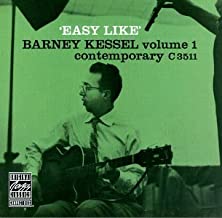
To maintain my health during this variant period of the pandemic I am continuing to listen to great music as I remain socially distant. This week I am pulling out from my shelves the album Easy Like, Volume 1 by guitarist Barney Kessel.
The album was released by Contemporary Records in 1956. Eight songs were released on the 10-inch album Barney Kessel which were recorded on November 14, and December 19, 1953, while other songs were recorded on February 23, 1956. It was recorded at Contemporary Records Studio in Los Angeles, California. The album was produced by Lester Koenig.
Track Listing | 46:04All tracks are written by Barney Kessel except where noted.
- Easy Like ~ 4:04
- Tenderly (Walter Gross/Jack Lawrence) ~ 4:06
- Lullaby of Birdland (George Shearing/George David Weiss) ~ 3:16
- What Is There to Say? (Vernon Duke/Yip Harburg) ~ 3:10
- Bernardo ~ 3:34
- Vicky’s Dream ~ 2:37
- Salute to Charlie Christian ~ 2:52
- That’s All (Alan Brandt/Bob Haymes) ~ 3:18
- I Let a Song Go Out of My Heart (Duke Ellington/Irving Mills/Henry Nemo/John Redmond) ~ 4:12
- Just Squeeze Me (But Please Don’t Tease Me) (Ellington/Lee Gaines) ~ 3:41
- April in Paris (Duke/Harburg) ~ 3:00
- North of the Border ~ 2:46
- Barney Kessel ~ guitar
- Buddy Collette ~ alto saxophone, flute
- Bud Shank ~ alto saxophone, flute
- Arnold Ross ~ piano
- Claude Williamson ~ piano
- Harry Babasin ~ double bass
- Red Mitchell ~ double bass
- Shelly Manne ~ drums

More Posts: adventure,album,club,genius,guitar,jazz,museum,music,preserving,restaurant,travel
Daily Dose Of Jazz…
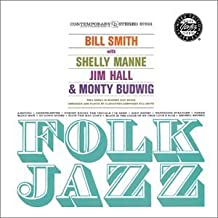
William Overton Smith was born on September 22, 1926 in Sacramento, California. He grew up in Oakland, California where he began playing clarinet at the age of ten. At 13 he put together a jazz group to play for dances and at the age of 15 he joined the Oakland Symphony. After high school, a brief cross-country tour with a dance band led to his giving two weeks notice for the best education he could, and he headed to New York City.
Studying at the Juilliard School of Music by day, he played in the city’s jazz clubs at night. The Juilliard faculty doing nothing for him, Bill returned home and attended Mills College in Oakland where he met pianist Dave Brubeck. He went on to study composition with Roger Sessions at the University of California, Berkeley, where he graduated with a bachelor’s and a master’s degree.
A win of the Prix de Paris gave Bill two years of study at the Paris Conservatory, and in 1957, he was awarded the prestigious Prix de Rome and spent six years in that city. After teaching at the University of Southern California, he then spent thirty years teaching at the University of Washington School of Music in Seattle, Washington, and co-led the Contemporary Group.
Smith investigated and cataloged a wide range of extended techniques on the clarinet, including the use of two clarinets simultaneously by a single performer, and compiled the first comprehensive catalogue of fingerings for clarinet multiphonics. He was among the early composers interested in electronic music, and as a performer he continued to experiment with amplified clarinet and electronic delays.
He remained active nationally, internationally, and on the local Seattle music scene until well into his 90s. Clarinetist and composer Bill Smith, who played in various Brubeck groups and who composed, recorded and premiered his jazz opera Space in the Heart, passed away at age 93 in his home from complications of prostate cancer on February 29, 2020.
More Posts: bandleader,clarinet,history,instrumental,jazz,music

Three Wishes
Duke Jordan was asked by the Baroness, if given three wishes, what he would he wish for and he told her:
-
- “I want to master my instrument.”
- “I’d like the world to be happy.”
- “I’d like to, some kind of how, come into some money and be happy with it.”

More Posts: baroness,history,instrumental,jazz,music,pannonica,piano,three,wishes