


Daily Dose Of Jazz…
Fats Waller was born Thomas Wright Waller on May 21, 1904 in New York City. He started playing the piano when he was six and graduated to the organ in his father’s church four years later. At the age of fourteen he was playing the organ at the Lincoln Theater in Harlem. Within twelve months he had composed his first rag, and recorded his first piano solos “Muscle Shoals Blues” and “Birmingham Blues” in 1922 when he was 18 years old.
The prize pupil, friend and colleague of stride pianist James P. Johnson, he became one of the most popular performers of his era, finding critical and commercial success at home and Europe. Waller was a prolific songwriter, composing hundreds with his closest collaborator Andy Razaf and many became standards such as Honeysuckle Rose, Ain’t Misbehavin’ and Squeeze Me. He recorded profusely for RCA, Victor and EMI and performed and recorded with Gene Austin, Billy Banks, Adelaide Hall, Erskine Tate, Bill Coleman, Al Casey, Rudy Powell and Jack Teagarden among others.
Waller was kidnapped in Chicago leaving a performance in 1926, taken to the Hawthorne Inn, and upon insistence at gunpoint became the surprise guest at Al Capone’s birthday. Rumored he played three nights but when he left he was drunk, tired and thousands of dollars richer. He appeared on one of the first BBC radio broadcasts, influenced many pre-bop pianists such as Count Basie and Erroll Garner and was first to play syncopated jazz compositions were performed on a full sized church organ.
He received a Grammy Lifetime Achievement Award and was inducted into the Grammy Hall of Fame, Gennett Records Walk of Fame, Jazz At Lincoln Center: Nesuhi Ertegun Jazz Hall Of Fame, Big Band and Jazz Hall of Fame and the Songwriters Hall of Fame. Pianist, organist, composer, singer and comedic entertainer Fats Waller, passed away of pneumonia in Kansas City, Missouri on December 15, 1943.
Daily Dose Of Jazz…
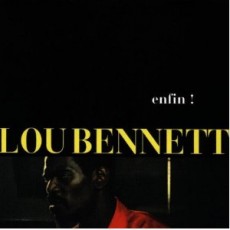
Lou Bennett was born May 18, 1926 in Philadelphia, Pennsylvania and first learned to play the piano before switching to the organ. It wasn’t until hearing Jimmy Smith play, that Bennett chose to stop playing bebop piano and make this instrument his professional calling.
Lou toured the U.S. with an organ trio between 1957 and 1959, and then moved to Paris in 1960. There he recorded and performed at the Blue Note with Jimmy Gourley, Kenny Clarke, Philip Catherine, Franco Manzecchi and Rene Thomas. He returned to America only once, for the 1964 Newport Jazz Festival.
By the 1980s he played in his own quintet and during this period toured extensively throughout Spain. As a leader he recorded twelve albums for RCA, Impulse, BelAir, Fonatana, Vogue and other labels into the Nineties. Jazz organist Lou Bennett passed away on February 10, 1997 in Paris, France.
More Posts: bandleader,instrumental,jazz,music,organ

Daily Dose Of Jazz…
Reuben Wilson was born April 9, 1935 in Mounds, Oklahoma but grew up in Pasadena, California from age five when his family moved. While in his teenage years he taught himself to play piano, but boxing diverted his attention. When he was 17, he moved to Los Angeles, married a nightclub singer, met a number of professional musicians and returned to music. Instead of pursuing the piano, he decided to take up the organ, and it wasn’t long before he became a regular at the Caribbean club.
Reuben played the L.A. circuit for several years before trying his luck unsuccessfully in Las Vegas. Returning to L.A. he struck up a friendship with Richard “Groove” Holmes, an organist who would greatly influence his own style. In 1966 he moved to New York City, formed the soul-jazz group Wildare Express and began concentrating more on hard bop and soul-jazz. This proved fortuitous as Grant Green, Roy Haynes and Sam Rivers among others took notice and began to perform with him.
Two years later Wilson began recording a series of five albums for Blue Note Records, his debut being On Broadway. Throughout the 70s he recorded sporadically, eventually retired from music in the early 80s and but by the end of the decade a rediscovery of his music by fans, saw his music sampled by A Tribe Called Quest, Brand New Heavies and Nas.
He returned to music in the 90s writing new material, performing and recording in new groups, including combos he led himself. Over the course of his career organist Reuben Wilson has recorded 16 albums as a leader and eight as a sideman working with Grant Green Jr., Bernard Purdie, Melvin Sparks and Willis Jackson. He currently resides in New York City and continues to pursue new directions in jazz.
More Posts: organ
Requisites
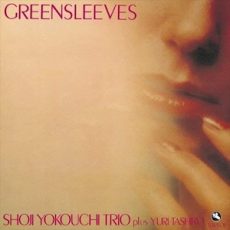
Greensleeves ~ Shoji Yokouchi Trio plus Yuri Tashiro | By Eddie Carter
I was looking for something interesting to play at the start of my Tuesday morning when I came across an album by the Shoji Yokouchi Trio and Yuri Tashiro. Greensleeves (Three Blind Mice TBM-5011) is a 1978 release with a program of four jazz standards and three creative originals. The personnel consists of Yuri Tashiro on Hammond organ (tracks A1 to A4, B3), Shoji Yokouchi on folk guitar (tracks A1, A2), electric guitar (tracks A4, B1, B2), and gut guitar (tracks A3, B3), Kunimitsu Inaba on bass, and Hajime Ishimatsu on drums. The copy I own is the 2017 Impex Records U.S. Limited Edition stereo audiophile reissue, sharing the original catalog number. No. 2581 of 3000.
Side One opens with Willow Weep For Me by Ann Ronnell. Shoji’s gentle introduction gets things off to a good start for the quartet’s slow-paced melody. Shoji has the first say and tenderly embraces the opening solo. Yuri follows with a thoughtfully passionate reading, while Kunimitsu and Hajime complement both elegantly into the theme’s reprise and finale. Bobby Timmons’ Moanin’ affords everyone solo space beginning with the quartet’s happy, upbeat theme. Shoji takes the song’s first lively reading, then Yuri makes her presence felt with skillful assurance. Kunimitsu follows with a brief statement, and Shoji and Hajime share a short exchange, preceding the closing chorus and vibrant climax.
Misty by Erroll Garner and Johnny Burke begins with Shoji setting the stage as he leads the ensemble through the gorgeous theme. He continues to reveal his lyrical side in a delicate opening statement. Yuri then enhances the song’s charm with a graceful interpretation. Kunimitsu and Hajime contribute the romantic, disciplined accompaniment, leading into the reprise and a soothing finale. The first of three compositions by Shoji Yokouchi, Drink Up, Vodka Martini, features the guitarist in a playful mood throughout the introduction and melody. As the song’s only soloist, Shoji conveys a driving vitality that bounces along, and the band’s chemistry shines, supporting him ahead of the melody’s restatement.
New Orleans Sunday is a trio performance featuring Shoji, Kunimitsu and Hajime. The trio puts the song through its paces with a catchy melody out of the gate. Shoji launches the opening with a driving rhythm, then Kunimitsu mines a vein of unsuspected riches in the following solo. Shoji and Hajime add a tasty treat in a short conversation before the trio’s reprise and conclusion. Greensleeves begins with a haunting intro, before picking up pace for the trio’s theme. Shoji takes the lead solo in a series of infectiously propulsive choruses. Kunimitsu goes for a lightly swinging walk next, then Hajime enters the spotlight to give a brief workout, leading back to the ending theme and soft summation.
Your Watch Is Ten Minutes Slow picks up the tempo one final time to wrap up the album. The quartet’s agile melody starts things off, then Shoji gets down to business on the opening solo. Yuri responds with a spirited reading ahead of the foursome’s return to the theme and close. Takeshi Fujii produced the initial session, and Yoshihiko Kannari managed the recording console. Bernie Grundman mastered this audiophile reissue, and Chris Bellman engineered it. The reissue features a thick cardboard cover; the sound quality is excellent, with a spacious, clear, and detailed soundstage. The record was pressed on 180-gram audiophile vinyl and is silent until the music begins.
Shoji Yokouchi recorded 46 albums over his career, and Yuri Tashiro released 51 titles over her career. If you’re in the mood for an album that weaves together beloved jazz standards with fresh, creative compositions, I invite you to check out Greensleeves by the Shoji Yokouchi Trio and Yuri Tashiro, the next time you’re out record-shopping. It’s an excellent place to start discovering the music of both artists. A delightful album that’s perfect for late-night listening and is sure to please any jazz enthusiast and fans of guitar and organ-centered ensembles!
~Misty, Moanin’, Willow Weep For Me – Source: JazzStandards.com ~ Greensleeves – Source: Wikipedia.org © 2026 by Edward Thomas Carter

More Posts: choice,classic,collectible,collector,guitar,history,instrumental,jazz,music,organ
Requisites
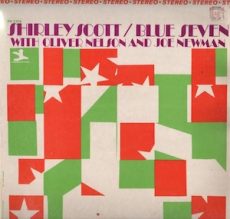
Blue Seven ~ Shirley Scott With Joe Newman and Oliver Nelson | By Eddie Carter
I was still in a jazz organ mindset after listening to Jimmy Smith when I decided to explore a lesser-known, underappreciated gem by Shirley Scott. Blue Seven (Prestige PR 7376/PRST 7376) was recorded in 1961, yet remained on the shelf until its 1965 release. For her fourteenth album, Shirley’s working with an outstanding ensemble: Joe Newman on trumpet, Oliver Nelson on tenor sax, George Tucker on bass, and Roy Brooks on drums. Together, they create a jazz session that’s laid-back and refined, filled with understated groove and energy. Unlike some organists who favor a bold, party-heavy approach, Shirley brings a softer, blues-influenced touch, letting her organ blend with the ensemble rather than dominating it. My copy of this album is the 1965 U.S. stereo release.
Side One opens with the title tune, Blue Seven by Sonny Rollins. George and Roy’s soulful, bluesy introduction eases into the quintet’s mellow theme. Joe opens gently and evolves into a warm, inviting interpretation. Oliver explores intriguing avenues in the following reading. Shirley showcases her expressive touch and impressive technique until the group returns for the finale. Don’t Worry ‘Bout It Baby, Here I Am by Shirley Scott starts on a bright note with the horns merging into the rhythm section’s cheerful melody. Scott opens the first solo with some good, honest soul. Nelson follows with a relaxing performance, then Newman delivers a soothing interpretation that gradually builds to a few final thoughts by Scott before the song ends.
Nancy (With The Laughing Face) by Phil Silvers and Jimmy Van Heusen gently shifts the album’s pace to a tender ballad. Shirley’s delicately gentle melody creates a soft, inviting backdrop for both horns. She then caresses each note of the song’s only solo with elegance and deep emotion, leading to the ensemble’s touching ending. Wagon Wheels by Billy Hill and Peter DeRose was the title tune of the 1934 Western film. Newman steps forward with his muted trumpet, guiding the ensemble through the easygoing melody. Nelson makes a brief, tasteful entrance before Newman continues the mellow mood. Nelson follows with smooth, unhurried lines, then Scott delivers a reading as comforting as a hearty, satisfying meal, before the quintet returns for the closing chorus and gentle fadeout.
The album closer is Give Me The Simple Life, by Rube Bloom and Harry Ruby, kicking off with the quintet’s bright, upbeat melody. Oliver steps forward first to deliver a spirited and swinging interpretation. Joe maintains the momentum in an energetic statement, and then Shirley’s robust performance leaves a lasting impression. All three soloists trade upbeat ideas, leading to the ensemble’s closing chorus. Esmond Edwards supervised the album, and Rudy Van Gelder was behind the dials. The album’s excellent sound quality transports the listener into the heart of the quintet’s lively interaction, with warm, crystal clear acoustics that create the sensation of a live performance happening right in your listening room.
If you love jazz groups that feature the Hammond organ up front and blend the lively drive of hard bop with the soulful rhythms of soul jazz, I offer for your consideration, Shirley Scott’s Blue Seven, the next time you’re out record shopping. This album is a delightful listen, filled with inventive solos and tight group interplay. You’ll experience everything from the upbeat energy of Don’t Worry ‘Bout It Baby, Here I Am and Give Me The Simple Life, to the relaxed swing of Blue Seven and Wagon Wheels, as well as the tender emotion of Nancy (With The Laughing Face). After you spin it on the turntable, it’s likely to earn a permanent spot among the favorites in your library, encouraging you to return to it again and again!
~ Give Me The Simple Life, Nancy (With The Laughing Face), Wagon Wheels – Source: Wikipedia.org
p>© 2025 by Edward Thomas Carter

More Posts: choice,classic,collectible,collector,history,instrumental,jazz,music,organ,saxophone,trumpet