


MATTHEW KAMINSKI
Multi-talented Matthew Kaminiski and his quartet will wind up the first season of Jazz at All Saints’. And “wind up,” he will, for Matthew is the crowd-pleasing organist of the Atlanta Braves, cited by envying broadcasters as “the coolest guy in the world.” Versatile on accordion and piano as well as organ, Matthew is a member of a variety of musical groups—a western swing band, a polka band, and the Latin salsa orchestra Orquesta McCuba. He also writes music for plays and sings in a rock band. You can be sure that fan-favorite ballpark songs as well as jazz classics will highlight the evening’s offerings.
The Band: Matthew Kaminski on Hammond organ | Will Scruggs on saxophone | Justin Chesarek on drums | Ben Weatherford on guitar
Tickets: $25.00 General Admission | $15.00 Student
More Posts: adventure,bandleader,genius,instrumental,music,organ,preserving,travel
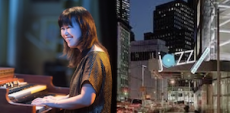
AKIKO TSURUGA
Akiko Tsuruga is a jazz composer, Hammond B-3 organist and pianist from Osaka, Japan. She was born in Osaka. Her parents bought her a small organ when she was three and she started learning to play standards.
After landing in the mecca for jazz, New York City, it didn’t take long for Akiko to make her mark – It was during these early years that she had the great pleasure of sitting in, playing gigs, and eventually recording with jazz greats such as Frank Wess, Jimmy Cobb, Grady Tate and other top NY musicians. Her reputation ultimately drew attention of Lou Donaldson as he chose her in 2006 as his quartet’s organist.
But it was the meeting of organ legend Dr. Lonnie Smith that proved to have the greatest impact on Akiko’s musical development and career. He became an important mentor to Akiko, and she considers him her greatest influence. She flourished and continued to be a constant draw on the NY jazz scene.
Performance Lineup:
Akiko Tsuruga, organ
Joe Magnarelli, trumpet
Myron Walden, tenor & baritone?saxophone, flute
Byron Landham, drums
Charlie Sigler, guitar
Tickets: $20.00 ~$50.00
More Posts: adventure,bandleader,club,genius,instrumental,jazz,music,organ,preserving,travel

Daily Dose Of Jazz…
Clarence Lacquese Penn born on March 2, 1968 in Detroit, Michigan and started playing the drums at around eigh years old. In 1986, while still at high school, he attended the Interlochen Arts Academy. He started studying at the University of Miami in Florida that same year, but transferred to Virginia Commonwealth University.
At Virginia Commonwealth he studied with Ellis Marsalis, and played in the pianist’s trio from 1987 to 1991, including for a tour of Japan in 1990. Penn graduated in classical percussion in 1991 and was part of vocalist Betty Carter’s trio from until 1993.
Penn later went on to work with David Sanchez, Jimmy Smith, Slide Hampton, Jimmy Scott, Greg Hatza, Stanley Clarke, Tim Warfield, Bob Berg, Diana Krall, Cyrus Chestnut, and Stephen Scott.
He recorded his debut album, Penn’s Landing, for Criss Cross Jazz in 1997 with some of the tracks he composed. His sophomore album as leader, Play-Penn, was recorded four years later, followed by a third the following year. He took a nine year hiatus from recording then recorded three more albums.
Drummer Clarence Penn, who also plays organ and rhodes, continues to perform and record.

More Posts: bandleader,drums,history,instrumental,jazz,music,organ,rhodes
Daily Dose Of Jazz…
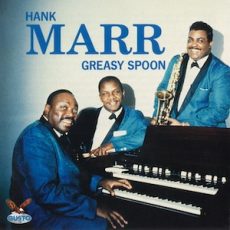
Hank Marr was born January 30, 1927 in Columbus, Ohio. He and tenor saxophonist Rusty Bryant co-led a group that toured for several years, beginning in 1958. During the early 1960s Hank worked with guitarist Freddie King and recorded and worked with Wilbert Longmire for a couple of years starting in 1963.
The late 1960s saw Marr performing in a duo with guitarist Floyd Smith in Atlantic City, New Jersey and a duo album with Frank Foster. He had two minor U.S. hit singles, The Greasy Spoon which hit No. 101 in 1964 and Silver Spoon #134 in 1965.
He recorded eight albums as a leader, and 19 singles for Wingate, King and Federal record labels. Hammond B-3 organist Hank Marr died at age 77 on March 16, 2004.
Get a dose of the musicians and vocalists who were members of a global society integral in the making and preservation of jazz for over a hundred and twenty-five years…

More Posts: history,instrumental,jazz,music,organ

The Jazz Voyager
New York is beckoning the Jazz Voyager to leave the cold of the Midwest to experience the familiar cold of the Big Apple for two new events. The first is a visit to a fresh old fashioned haunt that’s tucked away in Lefferts Garden called Bar Bayeux. Though it may be familiar, I’m desirous of warmer southern temperatures but the jazz and new adventures never stop.
The second event has me in the company of international recording pianist, organist, and accordionist Gary Versace who is one of the busiest and most versatile musicians on the international jazz scene. Leading this quartet date, he has been featured in bands of John Scofield, Maria Schneider, John Abercrombie, Anat Cohen, Al Foster, Regina Carter, Kurt Elling, Madeleine Peyroux, Matt Wilson, Ingrid Jensen and many others.
Bar Bayeux is located at 1066 Nostrand Avenue, Brooklyn, NY 11225. For more information visit https://www.barbayeux.com. No cover, one drink minimum but tips for musicians are encouraged.
More Posts: accordion,adventure,club,genius,jazz,music,organ,piano,preserving,travel