

Requisites
Smokin’ In Seattle: Live at The Penthouse ~ Wynton Kelly Trio and Wes Montgomery | By Eddie Carter
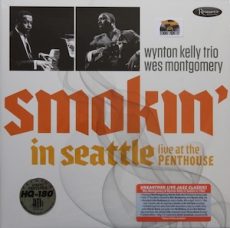
I’ve been a fan of The Wynton Kelly Trio and Wes Montgomery since I was eleven and first heard Full House and Smokin’ at The Half Note. So, I was extremely happy to pick up a copy of Smokin’ In Seattle-Live at The Penthouse (Resonance Records HLP-9029), their 1966 live date over two nights from the Seattle, Washington jazz club. Jim Wilke of radio station KING-FM hosted a weekly half-hour program from The Penthouse, and he’s our Master of Ceremonies for the two sessions. The personnel for both dates are Wynton Kelly on piano, Wes Montgomery (tracks: A3 to A5, B3 to B5) on guitar, Ron McClure on bass, and Jimmy Cobb on drums. My copy is the 2017 US Mono audiophile release.
Jim Wilke kicks off Side One by welcoming the crowd and introducing the trio who opens with There Is No Greater Love by Isham Jones and Marty Symes. The group swings effortlessly through the melody, setting up Wynton’s spirited first solo. Ron comes in next for a lively presentation. Wynton and Jimmy share a brisk conversation in the closing statement leading to the song’s climax. Not a Tear by Rudy Stevenson begins deceptively like a ballad before the beat moves upward to an aggressive theme. Kelly has the song’s only solo and stretches out in a marvelous interpretation preceding the theme’s restatement.
Wes Montgomery joins the group on his original tune, Jingles. The quartet takes off on an upbeat theme. Wes goes right to work on an enthusiastic interpretation that bounces along into the foursome’s energetic finale. Up next is the poignantly beautiful standard by Bob Haggart and Johnny Burke, What’s New? The group also gives a pretty rendition of this tune on Smokin’ at The Half Note. Kelly begins with a politely touching introduction, segueing into the song’s gorgeous melody. Montgomery delivers a very personal performance in the song’s only solo ahead of the foursome’s gentle ending.
The first side ends on an upbeat note with the guitarist’s Blues In F. The group lays an impressive blueprint on the opening chorus. Wes has the solo spotlight to himself and delivers an exciting flow of ideas that sadly fade out due to the program’s time constraints. Mr. Wilke starts Side Two with his introduction to The Wynton Kelly Trio, who play The Theme, briefly starting their first number, Sir John, by Blue Mitchell. After the trio states the melody, Kelly gets his teeth into a brilliant opening statement. McClure lets his bass do the talking in the following solo before the pianist makes a few final comments, leading to the theme’s reprise.
If You Could See Me Now by Tadd Dameron and Carl Sigman is also on Smokin’ at The Half Note. The trio works together beautifully from the start of Wynton’s lush introduction. As the song’s only soloist, Kelly reveals the warmth and tenderness anchored by Ron’s and Jimmy’s support. West Coast Blues is a Montgomery original from Movin’ Wes. It comes to life with the guitarist’s introduction, segueing into the foursome’s easygoing theme. The song’s only solo belongs to Wes, and he delivers the goods to an infectious beat that is sure to have the listener tapping their feet ahead of the close.
O Morro Não Tem Vez by Antonio Carlos Jobim and Vinícius De Moraes is a beautiful Brazilian song and a highlight of the album Goin’ Out of My Head. Jimmy gets things going with a percussion introduction that blossoms into a lovely melody. Wes gets to stretch out and delivers a gorgeous performance preceding the foursome’s return for the theme’s restatement and climax. The album and set concludes with Oleo by Sonny Rollins. The ensemble starts things off with a zesty melody, then steps aside for Wes to take charge of the song’s only statement that concludes with a slow dissolve into nothingness.
Zev Feldman and George Klabin produced Smokin’ In Seattle. Jim Wilke was the original recording engineer, and Bernie Grundman mastered the album. The record was pressed on 180 grams of audiophile vinyl, and the album’s sound quality is quite good for a sixties live recording. The listener is transported to the club audience as the musicians are performing. The record is also incredibly quiet until Jim Wilke speaks. If you’re a fan of The Wynton Kelly Trio and Wes Montgomery, I offer, for your consideration, Smokin’ In Seattle the next time you’re out record-shopping. The music is simply amazing, and this is an album you shouldn’t miss for a spot in your library!
~ Full House (Riverside RLP 434/RS 9434), Goin’ Out of My Head (Verve Records V-8642/V6-8642), Movin’ Wes (Verve Records V-8610/V6-8610), Smokin’ at The Half Note (Verve Records V-8633/V6-8633) – Source: Discogs.com ~ If You Could See Me Now, Oleo, There Is No Greater Love, What’s New? – Source: JazzStandards.com
© 2023 by Edward Thomas Carter
More Posts: choice,classic,collectible,collector,history,instrumental,jazz,music,piano
LISA HILTON
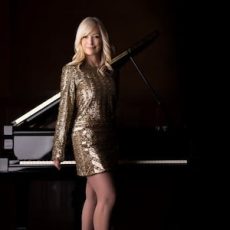
Award-winning composer and critically acclaimed pianist Lisa Hilton comes to Weill Recital Hall accompanied by her quartet for an evening that features uplifting new music from the group’s latest release, Coincidental Moment. A prolific composer inspired by the soundscape of jazz and blues, Hilton will share stories behind the creative process from the stage.
The Lisa Hilton Quartet
~Lisa Hilton, Piano
~ Igmar Thomas, Trumpet
~ Luques Curtis, Bass
~ Rudy Royston, Drums
Tickets have $9.00 fee
More Posts: adventure,club,genius,jazz,music,piano,preserving,travel
JASON MORAN
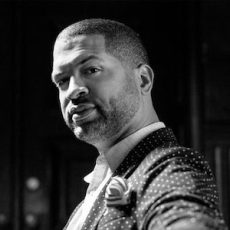
James Reese Europe and the Harlem Hellfighters: From the Dancehall to the Battlefield
More Posts: adventure,club,genius,jazz,music,piano,preserving,travel
KANDACE SPRINGS
More Posts: adventure,club,genius,jazz,music,piano,preserving,travel,vocal
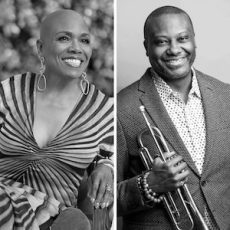
DEE DEE BRIDGEWATER WITH SEAN JONES
NEA Jazz Master Dee Dee Bridgewater with bandleader and trumpeter Sean Jones and the NYO Jazz All-Star Big Band. The program consists of:
Feldman | Fitzgerald ~ “A-Tisket, A-Tasket” (arr. Slide Hampton)
Santamaría ~ “Afro Blue” (arr. John Clayton)
Ellington ~ “Cotton Tail” (arr. Slide Hampton)
Newley | Bricusse ~ “Feeling Good / I Got You (I Feel Good)” (arr. Emily L. Fredrickson)
John Beasley ~ “Fête dans la tête” (World Premiere, commissioned by Carnegie Hall)
Holiday | Herzog Jr. ~ “God Bless the Child” (arr. Edsel Gomez and Cecil Bridgewater)
Higginbotham | Drake | Fisher ~ “Good Morning Heartache” (arr. Edsel Gomez and Cecil Bridgewater)
John Clayton ~ “I Be Serious ‘Bout Dem Blues”
Nichols | Holiday ~ “Lady Sings the Blues” (arr. Edsel Gomez and Cecil Bridgewater)
Bley ~ “Lawns” (arr. Javier Nero)
Lee | Goodman ~ “Let the Good Times Roll” (arr. Frank Foster)
Sean Jones ~ “Touch and Go” (arr. Dave Morgan)
More Posts: adventure,club,genius,jazz,music,piano,preserving,travel,trumpet,vocal