

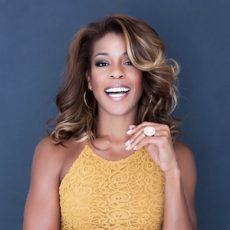
NICOLE HENRY
Set For The Season
Songstress Nicole Henry returns to St. Louis! Nicole possesses a potent combination of dynamic vocal abilities, impeccable phrasing, and powerful emotional resonance. Her passionate, soulful voice and heart-felt charisma continue to win over fans worldwide.
Since her debut in 2004, Nicole Henry has established herself as one of the jazz world’s most acclaimed vocalists. Ms. Henry possesses a potent combination of dynamic vocal abilities, impeccable phrasing, and powerful emotional resonance. Her passionate, soulful voice and heart-felt charisma have earned her a 2013 Soul Train Award for “Best Traditional Jazz Performance,” three Top-10 U.S. Billboard and HMV Japan jazz CDs, and rave reviews by The New York Times, Wall Street Journal, The Japan Times, El Pais, Jazz Times, Essence and many more.
More Posts: adventure,club,genius,jazz,music,piano,preserving,travel,vocal
Daily Dose Of Jazz…
Fate Marable was born on December 2, 1890 in Paducah, Kentucky. His mother was a piano teacher who gave her son music lessons, both in reading music and playing piano. At the age of 17 he began playing on the Mississippi River steamboats. John and Joseph Streckfus hired him to replace their piano player, Charles Mills, who had accepted an engagement in New York City.
Later in 1907 he became bandleader for a paddlewheeler on the Streckfus Line running between New Orleans, Louisiana and St. Paul, Minnesota, a position he retained for 33 years. Later he spent late nights in New Orleans’ clubs scouting for talent and playing at jam sessions. There he discovered Louis Armstrong blowing cornet, and recruited him to play for his band on evening riverboat excursions cruising around the Crescent City.
As a bandleader, Marable shared the lessons from his mother with his musicians as many of the musicians he hired played by ear. He augmented their skills by teaching them to read music, and expected them all to learn how to play from sheet music on sight. His training boosted many of the musician’s careers when they were ready to move on. They went on to play with bandleaders such as Cab Calloway, Count Basie, Duke Ellington, Jimmie Lunceford, Fats Waller, and Chick Webb.
Members of Marable’s bands were expected to be able to play a wide variety of music, from hot numbers to light classics, playing by memory or ear, and from sheet music. As a strict bandleader he demanded musical proficiency and rigid discipline from all his band members as they developed their individual strong points. His band served as an early musical education for many other players who would later become prominent in jazz, including Red Allen, Baby Dodds, Johnny Dodds, Pops Foster, Erroll Garner, Narvin Kimball, Al Morgan, Jimmy Blanton, Elbert Pee Wee Claybrook, Joe Poston, and Zutty Singleton.
Pianist and bandleader Fate Marable, who published the only original composition of his career, Barrell House Rag, co-written with Clarence Williams in 1916, transitioned from pneumonia in St. Louis, Missouri on January 16, 1947 at 56 years old.

More Posts: bandleader,history,instrumental,jazz,music,piano
The Jazz Voyager
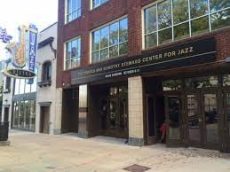
Taking a flight from Laguardia to Lambert International to take a seat in the Harold & Dorothy Steward Center For Jazz this week. Formerly known as Jazz at the Bistro, in 2014 along with the building next door was renovated into a two hundred and twenty seat venue that was renamed as the center. Located at 3536 Washington Avenue, St. Louis, MO 63103 it has become a renowned venue for performance, education and community engagement.
The Jazz Voyager will be occupying one of the seats to witness the talents of trombonist Wycliffe Gordon. Known affectionately as “Pinecone,” the Georgia-born trombonist also sings and plays didgeridoo, trumpet, soprano trombone, tuba, and piano. In 1995, Gordon arranged and orchestrated the theme song for NPR’s All Things Considered.
For more information you can visit https://notoriousjazz.com/event/wycliffe-gordon.

More Posts: adventure,club,genius,jazz,music,piano,preserving,travel,trombone
Daily Dose Of Jazz…
Lyle David Mays was born November 27, 1953 in Wausaukee, Wisconsin. While growing up he had four main interests: chess, mathematics, architecture, and music. His mother played piano and organ, and his father taught himself to play guitar by ear. His teacher allowed him to practice improvisation after the structured elements of each lesson were completed. At the age of nine, he played the organ at a family member’s wedding, and fourteen he began to play in church. During his senior year of high school he was introduced to jazz pianist Marian McPartland.
He attended the University of North Texas where he composed and arranged for the One O’Clock Lab Band and was the composer and arranger for the Grammy Award-nominated album Lab 75. After leaving the University of North Texas, Mays toured the US and Europe with Woody Herman’s Thundering Herd.
In 1975 he met Pat Metheny at the Wichita Jazz Festival, with whom he soon co-founded the Pat Metheny Group. Mays had an extraordinary career as a core musical architect and sound designer of the group for more than three decades. The group had 23 Grammy nominations, winning the award 11 times.
In 2010 Lyle decided to retire from public music performance and became a software development manager because of changes in the music industry. He composed and recorded children’s audiobooks, composed several contemporary classical pieces and formed his own band.
As an amateur architect, he was influenced by fellow Wisconsinian, Frank Lloyd Wright and designed his own house, home studio, and his sister’s house. Mays brought intellectual and organic architectural concepts in his music and sound design based on the innovative integration of many different sources to create a completely new soundscape.
He recorded seven as a leader, two as member of the One O’Clock Lab Band and 14 with the Pat Metheny Band, and as a sideman, seventeen. Mays won eleven Grammys as a member of the Pat Metheny Group and whose important influences were the 1968 recordings of Bill Evans at the Montreux Jazz Festival and Filles de Kilimanjaro by Miles Davis
Pianist and composer Lyle Mays, who was posthumously awarded the Grammy Award for Best Instrumental Composition in 2022 for his composition Eberhard, transitioned in Los Angeles, California on February 10, 2020 at age 66.

More Posts: bandleader,composer,history,instrumental,jazz,music,piano

The Jazz Voyager
The Jazz Voyager is hitting the friendly skies in Ohio and heading to the Big Apple to go to the Village Vanguard. Located in lower Manhattan at 178 7th Avenue S, New York City 10014. The small room with low ceilings and remarkable acoustics has staged more than 100 live commercial recordings, several of which are essential works in the history of jazz on record. The venue, open since 1935, is the oldest continuously operated jazz club in the world.
So tonight I will be enjoying pianist Jason Moran and Bandwagon with double bassist Tarus Mateen and drummer Nasheet Waits. Moran has worked with Greg Osby in his New Directions group and out of that band the trio formed The Bandwagon. The trio performs many compositions of Moran’s and some by Mateen.
For more information you can visit https://notoriousjazz.com/event/jason-moran-the-bandwagon
More Posts: adventure,club,genius,jazz,music,piano,preserving,travel