

Daily Dose Of Jazz…
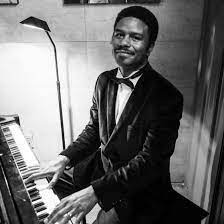
Alfred Williams was born December 17, 1919 in Memphis, Tennessee but moved as a young child with his family to Chicago, Illinois. He studied classical piano and worked as a professional pianist from the age of 16, initially as leader of a 12-piece dance orchestra in local venues. In 1942, he formed a trio, the Three Dudes, and also played with trumpeter Henry “Red” Allen, clarinetist Jimmie Noone, and violinist Erskine Tate. He wrote arrangements for many Chicago bands.
His marriage to singer Audrey Hobbs brought about the couple performing together in the late 1940s as Alfred and Audrey. From the early Fifties he performed in New York City at venues including the Savoy Ballroom and the Metropole Cafe. He played in a Dixieland band, and also with Sam “The Man” Taylor, Jimmy Rushing, and others.
As a session musician Al appeared on Langston Hughes’ 1958 album Weary Blues. He toured Europe with Buck Clayton in 1959 and Johnny Hodges in 1961. He also recorded as the leader of a trio, accompanied the 1968 satirical revue The Establishment, and in the 1970s worked as arranger and pianist with the Deep River Boys.
Pianist Al Williams transitioned in New York on November 15, 1998 at the age of 78.

More Posts: history,instrumental,jazz,music,piano
Daily Dose Of Jazz…
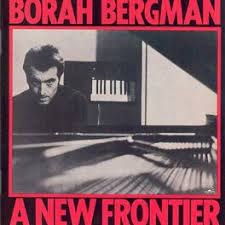
Borah Bergman was born on December 13, 1933 in Brooklyn, New York. He took piano lessons as a child, changed to clarinet, then returned to piano after being discharged from the army. Determining right away that he wanted to develop an individual voice, the right-handed player worked for years in strengthening his left hand. He practiced playing left-handed almost exclusively and eventually as a pianist he became ambidextrous.
Early in his career comparisons arose and though he cited Tristano, Monk, and Powell as influences, his ability as an improvising pianist was so singular. Bergman had the most comprehensive technique of any jazz musician on any instrument. His facility is nonpareil with both hands. He improvised spontaneous free counterpoint at unfathomable speeds and with remarkable precision and no pianist in the history of jazz ever developed more speed and agility in his left hand.
Borah began recording late and his first four albums were solo efforts. His debut album Discovery was released in 1975 on the Chiaroscuro label. Three more would follow through 1984, and in 1992, he began a series of successful duo collaborations with free-bop altoist Thomas Chapin, drummer Andrew Cyrille, and soprano saxophonist Evan Parker. He would go on to record duo/trio albums with saxophonist Roscoe Mitchell and vocalist Thomas Buckner, saxophonists Peter Brotzman and Thomas Borgmann. At the end of the century his recorded output continued to rise substantially, as well as his profile as one of the music’s major contributors.
Pianist Borah Bergman, who performed in the free jazz idiom and recorded thirty albums as a leader or co-leader, transitioned on October 18, 2012 in New York City.
More Posts: bandleader,history,instrumental,jazz,music,piano
CARLA COOK
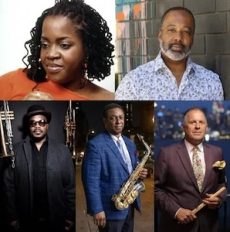
Carla Cook – vocals | Jeremy Pelt – trumpet | Vincent Herring – alto saxophone | Eric Reed – piano | tba – bass | Joe Farnsworth – drums
When Carla Cook sings, she swings. The Washington Post says, “She has sass that enlivens her impeccable diction, and tremendous soul that lets her swagger with gutbucket finesse, but it’s all buttressed with sparkling optimism and innocence.” Her improvisational style is steeped in the swing tradition yet eclectic and brimming with fresh interpretations.
Cook will be joined by Smoke’s Coltrane Festival “Countdown 2024” band, the Eric Reed/Vincent Herring Quintet featuring Jeremy Pelt, and Smoke’s Coltrane Festival “Countdown 2024” core ensemble. JazzTimes reports, “Pelt is a technical marvel. He executes intricate solos with ease, plays gorgeous ballads in a tasteful manner, and never lacks flair or sensitivity.” Audiophile Audition adds he has “the power and range of Lee Morgan and Freddie Hubbard in their seminal years.”
The group is co-led by the perpetually swinging Eric Reed, who All About Jazz says “has fully established himself in the forefront of jazz pianists,” and the fiery Herring who “has firmly established himself as one of his generation’s masters,” adds The New York City Jazz Record. It also includes one of the elite musicians working today, drummer Joe Farnsworth.
7PM Show Details: Your $250 ticket (plus tax & tip) includes a 3-course holiday dinner
9:30PM Show Details: Your $350 ticket (plus tax & tip) includes a 3-course holiday dinner, two shows, a midnight celebration, hats & noise makers
More Posts: adventure,club,genius,jazz,music,piano,preserving,saxophone,travel,vocal
MILESTONES
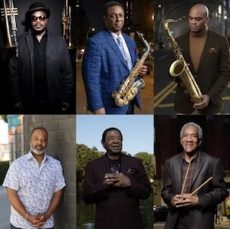
Jeremy Pelt – trumpet | Vincent Herring – alto saxophone | Wayne Escoffery – tenor saxophone | Eric Reed – piano Buster Williams – bass | Al Foster – drums
The two nights before New Year’s Eve are dedicated to Countdown Festival Sextet III, which includes two more special guests who also happen to be two of the all-time greats: Bassist Buster Williams and drummer Al Foster. These two masters join esteemed co-musical directors Eric Reed and Vincent Herring along with the powerful duo of trumpeter Jeremy Pelt and saxophonist Wayne Escoffery. It is a stunning group to close out the year, to say the least. The Guardian calls Williams “one of the great acoustic bassists,” and JazzTimes adds, “Williams’ résumé ranks with that of any bassist in the modern era.” JazzTimes also says that Al Foster—well-known for his work with Miles Davis, McCoy Tyner, Sonny Rollins, and many more—“is a not-so-secret special groove ingredient enlivening performances and sessions by a long list of heavy hitters,”
~ Please Note: All 7PM and 9PM shows at Smoke are Dinner Shows
~ Friday & Saturday Shows Only: 10:30pm
More Posts: adventure,bass,club,genius,jazz,music,piano,preserving,saxophone,travel
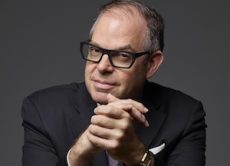
BILL CHARLAP
When Bill Charlap plays standards from bop and jazz, every note is fresh, every note counts. This extraordinary Grammy-winning pianist is known for his vibrant, fluent style, artfully varying his attack, dynamics and phrase-lengths. His interpretations of the great American songwriters are especially acclaimed.
More Posts: adventure,club,genius,jazz,music,piano,preserving,travel