

Daily Dose Of Jazz…
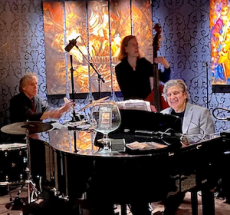
John Bianculli was born on November 20, 1956 in New York City, New York and grew up in Greenwich Village across from the Village Vanguard. A self taught pianist, he received much of his training playing the jazz circuit from New York to Washington D.C.
A versatile musician and composer, his original music is a unique blend of jazz, Latin, Brazilian, rhythm and blues, and world music. John’s song Bittersweet made the Contemporary Jazz Charts top-ten list. He composed the score for the film Lit’l Boy Grown.
Bianculli has held the piano seat in the rhythm section for both Steve Nelson and Jeanie Bryson for over 10 years. He has enjoyed residencies at the Hyatt Regency for 19 years, the New York Hilton for 2 years, as well as numerous clubs, concerts, festivals, television and radio performances.
As a sideman he has worked with Cassandra Wilson, Terence Blanchard, Regina Belle, Christy Baron, Charlie Rouse, Bobby Watson, James Spaulding, Jimmy Ponder, Bill Hardman and Earl May.
Pianist and composer John Bianculli continues to pursue his musical endeavors.

More Posts: bandleader,composer,history,instrumental,jazz,music,piano
Requisites
Blowin’ The Blues Away ~ The Horace Silver Quintet and Trio | By Eddie Carter
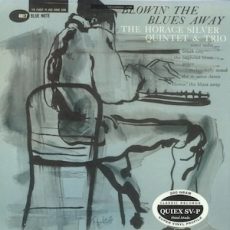
It’s always a pleasure listening to Horace Silver, and one of my favorite albums by the arranger, composer, and pianist became the inspiration for this morning’s discussion. Blowin’ The Blues Away (Blue Note BLP 4017/BST 84017) by The Horace Silver Quintet and Trio is Horace’s ninth album as a leader and one of the best in his extensive discography. He composed all the selections, and his supporting cast on this date are Blue Mitchell on trumpet (tracks: A1, A3, A4, B1, B2), Junior Cook on tenor sax (A1, A3, A4, B1, B2), Eugene Taylor on bass, and Louis Hayes on drums. My copy is the 2008 Classic Records U.S. deep groove Mono audiophile reissue sharing the original catalog number.
Side One is off to the races with the title tune, Blowin’ The Blues Away. The quintet is firing on all cylinders from the start of their lively theme. Junior takes the first solo in high gear. Blue keeps the velocity up in the following reading, and then Horace delivers an exhilarating statement. Both horns add the exclamation point in a vigorous exchange, leading to the ensemble’s closing chorus and quick stop. The trio makes the first of two appearances in The St. Vitus Dance and establishes a happy beat in the melody. Horace radiates an infectious enthusiasm as the song’s only soloist into the reprise and exit.
The quintet takes a quick trip to Break City next, beginning with their swift melody. Junior gets the solos underway with a speedy interpretation. Blue accelerates with riveting urgency in the second statement. Horace rips through the third reading, and Hayes travels toward the song’s brisk conclusion in a conversation with the front line. Peace is a very pretty ballad that opens with the ensemble’s soft, sultry melody. Blue begins with a beautifully tasteful lead statement. Horace completes the solos with a tenderly passionate performance ahead of the group’s gentle theme restatement and climax.
Side Two starts with the ensemble taking us to church to meet Sister Sadie, starting with an infectious theme. Blue gets into a funky groove on the lead solo, followed by Junior, who wails with authority next. Horace captures the song’s pure goodness in the third statement, and the front line’s final sermon leads us out of the church into the closing chorus. Baghdad Blues begins with a Middle Eastern flavor in the introduction before the quintet changes gears for the bluesy melody. Junior has the first say and gives a marvelous interpretation. Blue shares a few thoughts of his own in the second solo, and Horace feels right at home, leading to the reprise and exit.
Melancholy Mood is the album’s second trio number and was first heard on Further Explorations by The Horace Silver Quintet. Like its predecessor, this rendition expresses the pianist’s softer emotions in the gentle melody. Horace gives a poignantly beautiful performance enhanced by the rhythm section’s tender accompaniment ahead of the close. Alfred Lion produced Blowin’ The Blues Away, and Rudy Van Gelder was the recording engineer. Bernie Grundman remastered the Classic Records audiophile reissue, and the record was pressed on 200 grams of Quiex SV-P Handmade Super Vinyl.
The reissue’s sound quality is excellent, with a superb soundstage that brings the musicians to your listening room with stunning definition. Horace Silver spent twenty-five years at Blue Note from 1955 to 1980, and some of his greatest work appears on the label. If you’re a fan of Mr. Silver or are just discovering his music, I offer for your consideration Blowin’ The Blues Away by The Horace Silver Quintet and Trio. It’s a wonderful hard bop album you can enjoy anytime that gets better with repeated listening. I am happy to have it in my library, and I highly recommend it for yours!
~ Further Explorations by The Horace Silver Quintet (Blue Note BLP 1589/BST 81589) – Source: Discogs.com © 2023 by Edward Thomas Carter
More Posts: choice,classic,collectible,collector,history,instrumental,jazz,music,piano
Daily Dose Of Jazz…
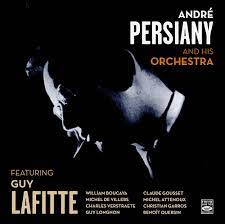
André Persiany was born on November 19, 1927 in Paris, France. His father taught him violin and piano as a child, and by 1945, he had formed his own ensemble. He was a member of the Be Bop Minstrels with Hubert and Raymond Fol in 1947, then played with Michel Attenoux, Eddie Bernard, Bill Coleman, Buck Clayton, Raymond Fonsèque, Lionel Hampton, Guy Lafitte, Mezz Mezzrow, and Tony Proteau.
Relocating to New York City in the mid-1950s, saw him playing at Birdland and working extensively with Jonah Jones. In 1969 he returned to Paris and held a residency as the pianist at Le Furstenberg from 1970 to 1988. His associations in the 1970s included Cat Anderson, Milt Buckner, Eddie Chamblee, Arnett Cobb, Al Grey, Budd Johnson, and Charlie Shavers.
Pianist André Persiany, whose son Stéphane became a double-bassist, transitioned on January 2, 2004 in Paris.
More Posts: bandleader,history,instrumental,jazz,music,piano
Daily Dose Of Jazz…
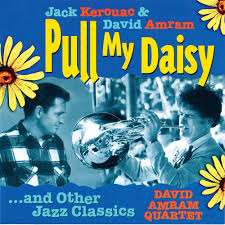
David Werner Amram III was born November 17, 1930 in Philadelphia, Pennsylvania. He studied at the Oberlin Conservatory of Music in 1948–1949, and earned a bachelor’s degree in European history from George Washington University in 1952. In 1955 he enrolled at the Manhattan School of Music, where he studied under Dimitri Mitropoulos, Vittorio Giannini, and Gunther Schuller. Under Schuller he studied French horn.
As a sideman or leader, David has worked with Aaron Copland, Thelonious Monk, Dizzy Gillespie, Charles Mingus, Jack Kerouac, Sonny Rollins, Lionel Hampton, Stan Getz, George Barrow, Jerry Dodgion, Paquito D’Rivera, Pepper Adams, Arturo Sandoval, Oscar Pettiford, Allen Ginsberg, Mary Lou Williams, Kenny Dorham, Ray Barretto, Wynton Marsalis, and others that included a wide range of folk, pop, and country figures.
In 1956, producer Joseph Papp hired Amram to compose scores for the New York Shakespeare Festival, the next year staged one of the first poetry readings with jazz, and in 1966 Leonard Bernstein chose Amram as the New York Philharmonic’s first composer-in-residence.
He went on four international musical tours to Brazil, Kenya, Cuba and the Middle East. He conducted a 15 piece orchestra for Betty Carter’s What Happened To Love? album, became an advocate for music education. He composed scores for the Elia Kazan films Splendor in the Grass, and The Arrangement and for the John Frankenheimer films The Young Savages and The Manchurian Candidate.
French hornist and pianist David Amram, who also plays Spanish guitar, penny whistle, sings and composes, has recorded nineteen albums as a leader and twenty-eight as a sideman.
More Posts: bandleader,composer,french horn,guitar,history,instrumental,jazz,music,penny whistle,piano,vocal

The Jazz Voyager
Saying farewell to DC always gives me a melancholy feeling having spent so many years there having so much fun. This week the Jazz Voyager is heading for a little jazz in the Buckeye State and for those who don’t know I’m talking about Ohio. The city is Cincinnati and it sits at the confluence of Licking and Ohio Rivers, the latter which has the city looking at Kentucky.
The venue is Caffè Vivace, a coffee house by day and a jazz lounge by night. It provides a space for Queen City residents to gather, work, socialize and herald the musical art form of jazz and a destination for jazz lovers. Located in the Walnut Hills neighborhood and has gained a reputation that hosts the area’s finest local jazz musicians, young and old, as well as the occasional regionally or nationally known artists.
So tonight I will be in the audience to check out vocalist Mandy Gaines who has been singing since an early age, getting her initial training school and church. She then continued studies with private vocal instruction and an assortment of workshops that enhanced her skillset. Joining her is pianist Sergio Pamies from Spain who fuses traditional jazz language with flamenco music of his childhood. He has takenhis knowledge and became a college professor at several universities in America, Europe and Asia.
The venue is located at 975 E McMillan Street, 45206 and for more information you can visit https://notoriousjazz.com/event/mandy-gaines-sergio-pamies
More Posts: adventure,club,genius,jazz,music,piano,preserving,travel,vocal