

Daily Dose Of Jazz…
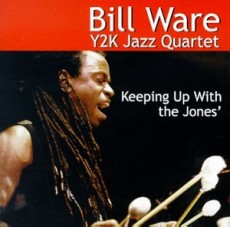
Bill Ware III was born William Anthony Ware III on January 28, 1959 in East Orange, New Jersey. He played bass and piano early in his career at Harlem’s Jazzmobile, prior to choosing vibraphone as his main instrument. After spending several years playing Latin jazz he formed his own Latin Jazz group, AM Sleep.
In 1987 Ware joined saxophonist Roy Nathanson and trombonist Curtis Fowlkes’ Jazz Passengers as a regular memberand by 1990 had put together a group of sidemen as the Club Bird All-Stars, who accompanied him on a tour of Japan. Stretching out to other genres he played with Groove Collective and Steely Dan during the first half Nineties.
Later in the decade Bill teamed up with fellow former Jazz Passengers, Brad Jones and E. J. Rodriguez forming the ensemble Vibes. His 2001 tribute to Duke Ellington was recorded with guitarist Marc Ribot, and Deborah Harry on his 2002 effort Four.
During the mid-2000s, he recorded several projects blending jazz with Western Classical music as well as composing five film scores with Nathanson. He recorded fourteen solo projects as a leader for AM Sleep, Knitting Factory, Cathexis, Wollenware, Random Chance and Pony Canyon record labels. Vibraphonist Bill Ware continues to compose, perform and record.

Give A Gift Of Jazz – Share
More Posts: bass,piano,vibraphone
Daily Dose Of Jazz…
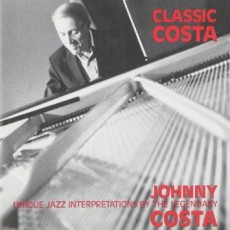
Johnny Costa was born in Arnold, Pennsylvania on January 17, 1922. He learned to play accordion at age 7 and was reading music three years later. He was encouraged by his high school music teacher, Frank Oliver, to learn the piano after discovering he had perfect pitch. Costa graduated from Carnegie Mellon University with degrees in music and education.
After college Johnny began working the same day as the house pianist for a Pittsburgh radio station and television station providing piano and organ music for many programs, eventually teaming with Fred Rogers to arrange and perform the music heard on Mister Rogers’ Neighborhood for which he served as musical director until his death. He insisted on not playing “baby” music, believing children understood good music and each day, his trio, Carl McVicker Jr. on bass and Bobby Rawsthorne on percussion played live in the studio for the taping.
Costa’s debut recording was The Amazing Johnny Costa, on the Savoy label. He gave up his lucrative career and international recognition to stay near family and friends, resigning as musical director of the Mike Douglas Show to perform only in western Pennsylvania for the remainder of his life. Costa appeared along with guitarist Joe Negri on the 1954 Ken Griffin TV series 67 Melody Lane performing After You’ve Gone and Little Brown Jug, with the latter being accompanied by Ken Griffin at the organ.
Pianist Johnny Costa, given the title “The White Tatum” by jazz legend Art Tatum, passed away of anemia on October 11, 1996, at age 74 in Pittsburgh, Pennsylvania. Much of the music heard on Mr. Rogers’ Neighborhood continued to be his and the show’s closing continued to list Costa as its Musical Director.
Give The Gift Of Knowledge
Daily Dose Of Jazz…
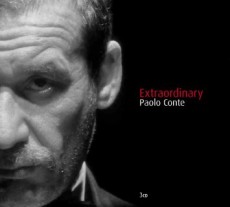
Paolo Conte was born January 6, 1937 in Asti, Piedmont, Italy. He began performing as a vibraphonist in local jazz bands and started songwriting with his brother, guitarist Giorgio, eventually writing songs of his own. As a poet, painter and lawyer as well as a musician, he first earned attention during the late ’60s and early ’70s as the creative force behind hits from Adriano Celentano and Patty Pravo.
Beginning his solo career with a 1974 self-titled LP, with subsequent efforts enjoyed considerable success throughout Europe. His 1998’s Paolo Conte, a greatest-hits collection, was his first U.S. release. He had hits used in movies like I Am David, Mickey Blue Eyes, French Kiss and No Reservations, as well as the Fritz Coca Cola commercial.
Paolo has recorded and released fifteen studio, five live and seven compilation albums, has been honored with handprints on the Rotterdam Walk of Fame, and awarded the Knight Grand Cross of the Order of Merit of the Italian Republic for Outstanding Cultural Achievements. He has been given the Chevalier dans l’Ordre des Arts et des Lettres from France and has received honorary doctorates from several universities. Singer, pianist, and composer Paolo Conte continues to perform, composer, record and tour.
Inspire A Young Mind
Daily Dose Of Jazz…
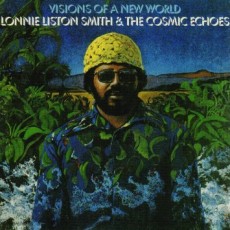
Lonnie Liston Smith, Jr. was born into a musical family on December 28, 1940 in Richmond, Virginia. With his father a member of Richmond Gospel music group The Harmonizing Four, as a child he was privy to groups such as the Swan Silvertones and the Soul Stirrers with a young Sam Cooke at his house. He learned piano, tuba and trumpet in high school and college, graduating from Morgan State University in Baltimore, Maryland with a degree in music education.
Influenced by Charlie Parker, John Coltrane and Miles Davis, while still a teenager at college, Smith became well known locally as a backing vocalist and pianist. He played the Baltimore area with Gary Bartz, Grachan Moncur, Mickey Bass, backed Betty Carter and Ethel Ennis and played in the house band at the Royal Theatre.
1963 saw him moving to New York, once again with Carter for a year followed by Rahsaan Roland Kirk and recording Here Comes The Whistleman. After this stint with Kirk he joined Art Blakey’s Jazz Messengers sharing the piano seat with Mike Nock and Keith Jarrett and then with Max Roach. He would go on to play with Pharoah Sanders improvising and pushing the creative boundaries of free jazz. It is at this point that Smith began experimenting with electric keyboards:
In 1969 Lonnie also backed Sanders vocalist Leon Thomas on his first album Spirits Known and Unknown, played with Gato Barbieri on The Third World, and with Miles Davis for On The Corner. He formed the Cosmic Echoes in 1973 with Cecil McBee, George Barron, Joe Beck, David Lee, James Mtume, Sonny Morgan, Badal Roy and Geeta Vashi. The group blended fusion, soul and funk on several recordings for Flying Dutchman Records over the next twelve years.
After the crossover success of the 1970s, he moved into the smooth jazz format, however, public interest slowly waned. By the mid-Eighties he returned to his acoustic roots with McBee and Al Foster recording a session of standards for Bob Thiele’s Startrak label. But dealing with the labels bottom line he returned to smooth jazz working with Phyllis Hyman and Stanley Turrentine. He also delved into hip-hop working with rapper Guru on his groundbreaking Jazzmatazz, Vol. 1. Pianist and keyboardist Lonnie Liston Smith established his own label Loveland, gathered greater recognition with Sony International distributing his Cosmic Echoes years, and has since continued to compose, record and tour to festivals worldwide.
Take A Dose On The Road
More Posts: piano
Daily Dose Of Jazz…
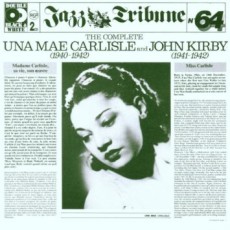
Una Mae Carlisle was born on December 26, 1915 in Zanesville, Ohio and was trained to play the piano by her mother. Performing in public by age three, still a child, she performed regularly on radio station WHIO AM in Dayton, Ohio.
In 1932, while a teenager, Fats Waller discovered Carlisle while she worked as a live local Cincinnati performer live and on radio. Her piano style was much influenced by Waller’s, playing in a boogie-woogie stride style that incorporated humor into her sets. Una Mae played solo from 1937, repeatedly touring Europe and recording with Waller in the late 1930s.
By the 1940s Carlisle recorded as a leader for Bluebird Records with Lester Young, Benny Carter and John Kirby. She had a longtime partnership with producer/publisher/manager Joe Davis, which began after her contract with Bluebird expired. Her records during this period enlisted the talents of Ray Nance, Budd Johnson and Shadow Wilson.
As a songwriter she also found success as Cab Calloway and Peggy Lee were just two among those who covered her tunes. She had her own radio and television programs in the late 1940s Una Mae recorded her last session for Columbia Records with Don Redman early in the 1950s.
With her suffering from chronic mastoiditis that required repeated surgeries and hospitalizations, the vocalist was forced her to retire in 1952. Pianist and songwriter Una Mae Carlisle passed away of pneumonia in a Harlem hospital on November 7, 1956.
Give The Gift Of Knowledge