

Daily Dose Of Jazz…
George Letellier was born October 11, 1957 in the United States. After attending Berklee College of Music in Boston, Massachusetts in 1975, the following year he wrote his first compositions and arrangements. He began as a pianist playing in warm-up bands for artists such as Phil Woods, Gary Burton, and Steve Swallow. Returning to Berklee in 1983, he graduated two years later with a Superior Prix in Film Music Composition.
Moving to San Francisco, California he worked as a freelance pianist in the jazz and salsa genre from 1986 until 1990. His successful session work attracted film executives and he was hired to compose music for films and corporate videos. In 1987 George served as a music editor on the Academy Award-nominated short film Liru, and in 1988 in Oakland, California, established a film production company where he worked not only as a composer but a producer.
In 1991, Letellier moved to Portugal, accepting a job offer as a professor of composition in Porto, Portugal. There he composed two ballets and was a session musician. He collaborated with saxophonist Mario Santos and formed the George Letellier Quartet which toured all across Portugal.
By 1995 he relocated to Luxembourg and began working as a music composer, session musician and taught private lessons. With the Opus 78 Big Band, he collaborated in arranging the tunes of Frank Sinatra and turning them into large philharmonic ensembles for performing.
From 1997 until 2003, he went into education serving as Director of Jazz Studies at the Esch Conservatoire, wrote three publications on jazz theory and formed the original Consabora Salsa Orchestra with Harri Jokiharra. Since 2001, Letellier has taught jazz at L’Ecole de Musique in Echternach, Luxembourg.
Pianist, composer, and educator George Letellier continues to function as a session pianist, and has performed in hundreds of jazz concerts and theatrical productions in Luxembourg, the United States, Europe, and India.

More Posts: bandleader,composer,educator,history,instrumental,jazz,music,piano
The Jazz Voyager
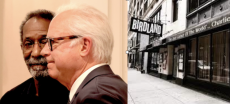
With so much good music in the city the Jazz Voyager is remaining but this time to midtown on the West Side to 44th between 8th and 9th Avenues. There resides the second iteration of the historic venue Birdland. The original venue was located on 52nd Street off 7th Avenue that was named after Charlie Parker and hosted the greatest names in jazz.
From trio to big band, Ron Carter is among the most original, prolific and influential bassists in jazz with more than 2,000 albums to his credit. Beginning his career in the 1960s with Jaki Byard and Eric Dolphy, Cannonball Adderley, the Miles Davis’ Quintet, Bill Evans, B.B. King, and Dexter Gordon.
Bill Frisell’s career as a guitarist and composer has spanned more than 40 years and many celebrated recordings, whose catalog has been cited by Downbeat as “the best recorded output of the decade.”
Tickets: $45.76 ~ $61.21

More Posts: adventure,club,ensembles,genius,jazz,music,piano,preserving,travel

The Jazz Voyager
There’s nothing like New York City anytime of year but autumn is one of the best. The Jazz Voyager is staying put this week in the Village at the Washington Square Hotel. Just a short walk from the hotel is the legendary Village Vanguard, home to their long-running orchestra which was started by Thad Wilson and Mel Lewis, the iconic basement location that has hosted decades of the greatest and up and coming jazz musicians and vocalists.
Ethan Iverson is holding down the piano bench for this week’s entertainment along with saxophonist Sam Newsome, trumpeter Johnathan Finlayson, Jacob Garchik on trombone, bassist Peter Washington and drummer. His residency lasts through Sunday, October 5th with two sets each night. As usual I’ll be at the second seating.
Cover: $40.00
More Posts: adventure,club,ensembles,genius,jazz,music,piano,preserving,travel
Daily Dose Of Jazz…
Paolo Ricca was born on October 2, 1963 in Turin, Italy and began studying classical piano at an early age. After school, he continued his studies and expanded into the realm of jazz performance and composition at CPM Music Institute in Milan, Italy where he graduated, under the tutelage of Franco D’Andrea.
The early 1980’s saw the beginning of his professional career performing for live audiences. A few years later Paolo performed in over 3000 concerts and festivals all over Europe, while simultaneously building a solid reputation as a studio musician. He has collaborated with John Etheridge, Soft Machine, Stèphane Grappelli, John Williams, Lee Brown, La Verne Jackson, Mokhtar Samba ( Joe Zawinul’s Sindycate, Jaco Pastorius, Carlos Santana, M. Orza, Dee D. Jackson, Haddaway and many others.
He ventured into music technology, computers, sequencers, looping, and sampling. Ricca began studio work with engineering, recording, as well as arranging and composing. He has worked for major recording companies, producing music on both a national and an international level.
Pianist Paolo Ricca, whose 2023 release, My Italian Piano Songbook, won First Prize for Best CD at the prestigious Swiss International Music Competition, continues to perform, tour and record as a leading voice in contemporary international piano music.
More Posts: arranger,bandleader,history,instrumental,jazz,music,piano
RONNIE SCOTT’S ALL STARS
It has been named jazz’s greatest year. There was definitely something in the air in 1959, and it wasn’t just NASA: Castro took over Cuba, Buddy Holly died in a plane crash, Pan Am started regular flights around the world, and NASA sent 7 astronauts into space.
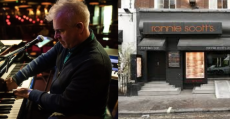
Ronnie Scott’s, of course, was founded in 1959. The idea of opening a jazz club along the lines of the intimate and bustling venues of New York’s 52nd Street was hatched by two ardent jazz fans who happened to be very much part of a burgeoning modern jazz movement of the late fifties: tenor saxophonist Ronnie Scott who had since the late forties, wowed the bebop brigade in a series of bands commencing with the nine-piece which featured his business partner to be and fellow saxophonist Pete King.
Three greats of jazz died – Lester Young, Billie Holiday and Sidney Bechet but born out of so much world turmoil were a spate of jazz masterpieces.
In March, Miles Davis created the definitive jazz album in A Kind of Blue. In May, Charles Mingus released an album called Mingus Ah Um – possibly his definitive album. Also in May, Ornette Coleman’s album The Shape of Jazz To Come became ‘the genesis of avant-garde jazz’, and John Coltrane recorded Giant Steps from May to December.
What Miles did for harmonic shifts, The Dave Brubeck Quartet did for rhythmic innovations with Time Out, challenging the acceptable 4/4 and 3/4 time signatures and even creating the hit Take Five with their 5/4 time signature.
Having spent eight months in the Miles Davis Quintet, Bill Evans released Portrait in Jazz in December with Paul Motian and Scott LaFaro, often regarded as one of the greatest jazz trios.
In the show, you can expect to hear a sample of music from all of these genre-defining jazz classics performed by the unmatched Ronnie Scott’s All Stars.
Line-up
Freddie Gavita ~ trumpet
Alex Garnett ~ saxophone
James Pearson ~ piano
Sam Burgess ~ bass
Sebastian de Krom ~ drums
Tickets: £35 ~ £55 | $40.96 ~ $64.36
More Posts: adventure,bandleader,bass,club,drums,genius,instrumental,jazz,music,piano,preserving,saxophone,travel,trumpet