

GAFIEIRA RIO MIAMI
Special concert to celebrate the release of their debut album, Bring Back Samba.
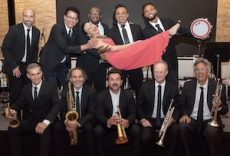
Imagine Count Basie went down to Rio de Janeiro and combined his big band with a samba school. This is Gafieira Rio Miami, a one-of-a-kind, 11-piece Brazilian band created by bassist and Latin Grammy winner Diogo Brown. One of the most in-demand bass players in the industry, Brown has worked with renowned artists such as Laura Pausini, Buika, Nouvelle Vague and Gloria Estefan.
To put together this samba-jazz big band, he called on Latin Grammy-nominated saxophonist Dr. Pablo Gil and Pedro Carrero, former principal trombonist of the Simón Bolívar Symphony Orchestra. With a powerful five-piece horn section, plus bass, guitar, drums, percussion and the lovely vocals of Isa Duarte, Gafieira Rio Miami fuses samba, jazz and soul inspired by the 20th century Rio de Janeiro ballroom dance music known as samba de gafieira.
The group’s repertoire includes gorgeous arrangements of classics by Gilberto Gil, Djavan, Alcione, Moacir Santos and others. Get ready to experience the joyous energy of Gafieira Rio Miami!
Live on the Plaza is a series of outdoor concerts on our Parker and Vann Thomson Plaza for the Arts.
Please note: Tables can be purchased for 1, 2, 3 or 4 guests. Ticket prices are per person. Locations are assigned in the order of purchase in parties of up to four guests based on reservation type.
Doors open at 6 p.m. with light bites and beverage service.
Happy hour pricing available until 7 p.m.
Performance starts at 7:30 p.m.
More Posts: adventure,album,club,festival,genius,jazz,museum,music,preserving,restaurant,saxophone,travel,trombone,vocal
Daily Dose Of Jazz…
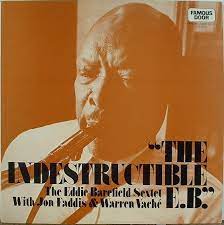
Edward Emanuel Barefield was born on December 12, 1909 in Scandia, Iowa, and grew up in Des Moines, Iowa. His father was a guitarist, his mother a pianist. He began playing the saxophone at the age of twelve when his mother bought him the instrument as a Christmas gift, and he took it apart to see how it worked.
He started playing throughout the Midwest, and gained his first major big-band experience with the Bennie Moten Orchestra of 1932. This led to work with Zach Whyte’s band and at 24 was offered a position in Cab Calloway’s orchestra in 1933. Eddie arranged and wrote music for Calloway for over 40 years.
Barefield conducted the orchestra for Ella Fitzgerald after Chick Webb passed away in 1939. In addition, he performed with McKinney’s Cotton Pickers, Les Hite, Fletcher Henderson, Don Redman, and Benny Carter. After the end of the big band era he continued to work by conducting shows, free-lancing, and playing in Europe.
He was the musical director for the original Broadway production of Streetcar Named Desire in 1947. He spent a decade in the band of the Ringling Brothers and Barnum & Bailey Circus, and composed and arranged for Benny Goodman, Glenn Miller, Paul Whiteman, and Jimmy Dorsey. Later in his life, Barefield worked with the Illinois Jacquet big band. Eddie appeared in films, including Cab Calloway’s Hi-De-Ho, Al Jolson’s The Singing Kid, Every Day’s a Holiday, and The Night They Raided Minsky’s.
Saxophonist, clarinetist and arranger Eddie Barefield, who arranged for the ABC Orchestra, transitioned from a heart attack at Mount Sinai Hospital in New York on January 4, 1991.

More Posts: arranger,bandleader,clarinet,history,instrumental,jazz,music,saxophone
TRIBUTE TO MCCOY TYNER
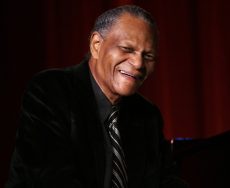
Opening night of this week celebrating the 10th anniversary of the SFJAZZ Center honors the life, music, and legacy of the late pianist and composer McCoy Tyner, featuring a stellar lineup of musicians who recorded and performed with him. As part of the 10 anniversary celebration of SFJAZZ, and honored to be part of this wonderful show with Joe Lovano (Music Director), Gary Bartz, Kenny Barron, Eddie Henderson, Gerald Cannon, and Jeff “Tain” Watts.
From his early work with John Coltrane to his peerless career as a composer and bandleader, Tyner’s impact on jazz has been monumental. He was a major figure in SFJAZZ’s evolution as well, appearing over 10 times on our stages including the historic Opening Night concert at the SFJAZZ Center in January 2013 and his final appearance in June 2016 for an all-star tribute to him featuring Chick Corea, Geri Allen, Kenny Barron, and others.
More Posts: adventure,album,club,festival,genius,jazz,museum,music,piano,preserving,restaurant,saxophone,travel
JOE LOVANO
JOE LOVANO AND FRIENDS: A CELEBRATION OF LIFE AND MUSIC @ BOP STOP
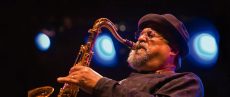
We are excited to close out 2022 with one of Cleveland’s favorite sons, renowned saxophonist Joe Lovano, in a special New Years Eve Eve performance featuring a host of local talent. Join us as we celebrate all that 2022 has taught us, and all that 2023 has to offer. Tickets to this final BOP STOP show of the year are $35. This concert will not be livestreamed.
Featuring:
- Judi Silvano, voice
- Anthony Fuoco, piano
- Aidan Plank, bass
- Carmen Castaldi, drums
- Jamey Haddad, drums
- Gary Jenkins, drums
- Anthony Lovano, drums
- David Thomas, organ
And special guest appearances:
- Ernie Krivda, tenor saxophone
- Dominick Farinacci, trumpet
Hailed by the New York Times as “one of the greatest musicians in jazz history,” Grammy Award winning saxophone giant Joe Lovano has distinguished himself for some three decades as a prescient and path finding force in the arena of creative music. The secret to Lovano’s success is his fearless ability to push the conceptual and thematic choices he has made in his quest to find new modes of artistic expression within the jazz idiom.
Since 2009, Lovano’s main vehicle for his exploration has been Us Five a dynamic young band—which features drummers Otis Brown III and Francisco Mela, bassist Esperanza Spalding, and pianist James Weidman The band’s most recent release – Bird Songs— Lovano’s 22nd album for Blue Note Records (the release of which marked his 20th year on the label) is an exploration of the Charlie Parker songbook that breaks the mold of Bird tribute records. “I didn’t approach this as a tribute record,” states Joe Lovano, dispelling right off the bat any preconception that his latest album is a mere retread. In 2011 the JJA (Jazz Journalist’s Association) named Bird Songs Recording of the the Year and named Us Five Small Ensemble of the Year. It was also the Downbeat Editor’s Pick for Album of the Year. Us Five’s debut recording—2009’s Folk Art—was a wide-ranging set of Lovano’s original compositions that resulted in Us Five being awarded Best Small Ensemble of the Year at the 2010 JJA Jazz Awards and winning the Best Jazz Group of the Year category in the 2010 DownBeat Critics Poll. Lovano completed a double-triple of awards by also winning the JJA’s Musician and Tenor Saxophonist of the Year, and DownBeat’s Jazz Artist and Tenor Saxophonist of the Year.
More Posts: adventure,album,club,festival,genius,jazz,museum,music,preserving,restaurant,saxophone,travel
Requisites
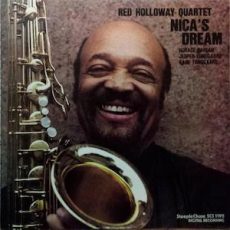
Nica’s Dream ~ Red Holloway Quartet | By Eddie Carter
For my discussion this morning, I’ve chosen a swinging 1984 session by The Red Holloway Quartet. Nica’s Dream (SteepleChase Records SCS 1192) highlights the group in a program of jazz standards and original tunes. Red was born James Wesley Holloway in Helena, Arkansas. He began playing the banjo and harmonica as a child before graduating to the tenor sax at age twelve. In this session, he is equally skilled on the alto sax (tracks: A2, B2, B4) and tenor sax (A1, A3, B1, B3). Red is joined on this date by an excellent rhythm section, Horace Parlan on piano, Jesper Lundgaard on bass, and Aage Tanggard on drums. My copy used in this report is the original Danish Stereo release.
Side One starts with Reshma Rani Barnase, an uptempo original by Red Holloway. Red initiates the song’s lively theme, then gives an enthusiastic opening solo. Horace takes the baton and sprints through the following reading. Jesper does a bit of brisk walking next; afterward, Red returns to add a few more spirited remarks ahead of the finale. The leader switches to the alto for a gorgeous rendition of Lover Man by Jimmy Davis, Roger Ramirez, and Jimmy Sherman. The quartet begins with a lovely melody that leads to a stunning opening statement by Holloway. Parlan demonstrates his affection for this song in the next delicately tender performance. The saxophonist concludes the piece in fine form with a dreamy climax.
Love For Sale by Cole Porter places Red back on tenor for a gentle introduction that climbs to the ensemble’s festive theme. Red opens with a lusty statement that’s full of energy. He shares the next reading with Jesper in a robust exchange before the quartet’s closing chorus fades into nothingness. Side Two starts with Nica’s Dream by Horace Silver. It was composed in honor of Baroness Kathleen Annie Pannonica de Koenigswarter, a friend and patron of jazz musicians. This one starts from the group’s swift melody and does not let up until the final note. Holloway charges into the opening statement with a blazing interpretation. Parlan ignites the second statement with intense heat, and Red and Aage get their licks in an immensely satisfying finale.
Georgia on My Mind by Hoagy Carmichael and Stuart Gorrell gets going with Red back on alto for the medium theme and the tasty treat he delivers with deceptive ease on the opening solo. Horace takes the second spot with an endearing presentation he handles skillfully. Aage gets the last word and strolls in the finale toward the foursome’s closing chorus. Red Holloway’s 369 Blues is a happy groove that commences with the quartet’s collective melody that gets your foot tapping along from the outset. Holloway provides plenty of enjoyment on the opening tenor solo. Parlan steps up next to take a short, exhilarating ride, then Red and Tanggard engage in a delightful conversation ahead of the theme’s return.
Wee by Denzil Best brings the album to a close with the quick notes of the ensemble’s melody. Red takes his final turn on the alto sax and flies furiously through the first solo. Horace continues the aggressive pace on the second interpretation. Red and Aage bring a few more fireworks in a fleet interchange of ideas before the quartet wraps it up. Nils Winther produced Nica’s Dream, and Thomas Brekling was the recording engineer. The sound quality is superb, and the musicians draw the listener into the music. If you’re new to Red Holloway or are a longtime fan, I would like to offer Nica’s Dream by The Red Holloway Quartet for your consideration. It’s an enjoyable album that would make a terrific addition to any library and is worth every penny!
~ Georgia on My Mind, Love For Sale, Lover Man – Source: JazzStandards.com ~ Nica’s Dream, Red Holloway – Source: Wikipedia.org ~ © 2022 by Edward Thomas Carter

More Posts: choice,classic,collectible,collector,history,instrumental,jazz,music,saxophone