

Requisites
The Cannonball Adderley Quintet at The Lighthouse | By Eddie Carter
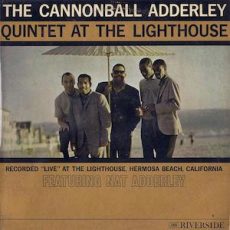
One of the things I’ve always loved about alto saxophonist Cannonball Adderley was his uncanny rapport with an audience during the group’s live performances. Those who were in attendance could feel they were about to hear something special. This morning’s choice from the library is a 1960 album, The Cannonball Adderley Quintet at The Lighthouse (Riverside RLP 344/RLP 9344). It’s the ensemble’s second live album following their successful date in San Francisco a year earlier. Cannonball’s joined on stage by Nat Adderley on cornet, Victor Feldman on piano, Sam Jones on bass, and Louis Hayes on drums. My copy used in this report is the original US deep groove Mono release.
Side One opens with Cannonball’s Sack O’ Woe, a catchy little number that starts this jazz party on the quintet’s infectious theme. The leader takes the first bite of this juicy tune. Nat comes in next, clicking on all cylinders. Victor serves up a solidly swinging solo, then Sam gets into a soulful groove leading to the reprise and fadeout. Big P by Jimmy Heath is dedicated to his big brother, Percy. After Cannon’s introduction, the quintet gets busy with the front line leading the charge on the melody. Cannonball lights a fuse of creative inspiration on the lead solo, then Nat works his magic on the second statement. Victor follows with a reading that’s just plain fun, then the front line speaks in succession ahead of the ensemble’s exit.
The first side finale is Blue Daniel, a pretty waltz by trombonist Frank Rosolino that comes to life with the group’s beautiful theme in unison. Cannonball begins with a charming interpretation of graceful elegance. Nat responds with a wonderful feeling of peaceful serenity. Victor delivers a delicately gentle finale before the ensemble reappears for the ending. Side Two begins on an upbeat note with a tune from the pen of Victor Feldman, Azule Serape. The rhythm section provides a brisk foundation for the front line to state the melody. Cannonball takes flight first with a happy opening statement. Nat’s cornet is right on the money on the following solo. Victor cooks on the climax leading to the closing chorus.
Exodus is credited to Vic Stanley, but it’s Victor Feldman’s tune. It turns the temperature upward a few notches with the ensemble’s spirited theme. Cannonball starts with an enthusiastic opening interpretation. Nat takes the next solo aggressively, and Victor is equal to the task on the closer preceding the quintet’s exit. The set closes on one of Cole Porter’s most recorded songs, What Is This Thing Called Love? The song gets underway with the ensemble’s quick melody. Cannonball kicks off the solos with a rapid reading. Nat shifts into high gear on the second solo. Victor has his say next with an exciting statement of concentrated heat, and Louis shares a lively exchange with Cannonball leading to the climax.
The Cannonball Adderley Quintet at The Lighthouse was produced by Orrin Keepnews. Wally Heider was the recording engineer, and the album was mastered by Jack Matthews. The sound quality is exquisite with an impressive soundstage placing the listener in the club audience as the quintet performs. During his time at Riverside, the quintet and later sextet released three other live albums. All are excellent in my opinion, and if you’re a fan of Cannonball or Nat Adderley, they’re well worth the effort for a spot in your library. If you’re in the mood for a great live album, and only know of their work on Mercy, Mercy, Mercy, I invite you to check out The Cannonball Adderley Quintet at The Lighthouse. It’s a wonderful performance where the band’s on fire and the audience is enjoying every moment!
~ Jazz Workshop Revisited (Riverside RM 444/RS 9444), Mercy, Mercy, Mercy (Capitol Records T 2663/ST 2663), The Cannonball Adderley Sextet In New York (Riverside RLP 404/RLP 9404), The Cannonball Adderley Quintet In San Francisco (Riverside RLP 311/RLP 1157) – Source: Discogs.com ~ What Is This Thing Called Love? – Source: JazzStandards.com © 2022 by Edward Thomas Carter

More Posts: choice,classic,collectible,collector,history,instrumental,jazz,music,saxophone
Daily Dose Of Jazz…
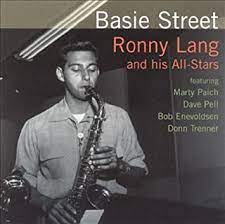
Ronnie Lang was born July 24, 1929 in Chicago, Illinois. Sometimes spelled Ronny, his professional début was with Hoagy Carmichael’s Teenagers. He went on to play for a year with Earle Spencer in 1946, then with Ike Carpenter, and Skinnay Ennis the following year.
Gained attention during his two tenures with Les Brown’s Orchestra between 1949–50 and 1953 to 1956, he recorded with the Dave Pell Octet in the mid-1950s. During this time he moved to California and attended Los Angeles State College of Applied Arts and Sciences studying music and woodwinds.
By 1958 he had become a prolific and busy studio musician in Los Angeles, often employed by Henry Mancini. Ronnie played the iconic sax melodic line in Bernard Herrmann’s score for the 1976 movie Taxi Driver. He also recorded with Pete Rugolo, Bob Thiele, and Peggy Lee.
Alto saxophonist Ronnie Lang, who also played flute and clarinet in the bop, progressive, big band, swing idioms, is now retired at 92.

More Posts: bandleader,clarinet,flute,history,instrumental,jazz,music,saxophone
The Quarantined Jazz Voyager
The pandemic has eased up related to the massive numbers of contractions, hospitalizations, deaths experienced over the past two years. If you’ve been listening and watching you know it is not over. Follow your conscience.
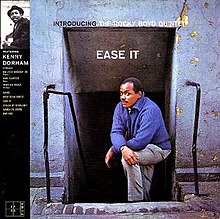
This week I bring you the 1961 album Ease It recorded by the Rocky Boyd Quintet which features trumpeter Kenny Dorham. It is the only known recording by the saxophonist, and was first released by Jazztime Records. It was also released thirteen years later by Muse Records in 1974 as Ease It!.
Once again in 1989 Black Lion released a CD edition retitled West 42nd Street. It was credited to Kenny Dorham and comprised all the takes from the session. Only tracks 1 & 6 have a single take.
Fred Norsworthy was the producer and Bill Stodard the engineer on the recording session that took place on March 13, 1961 at Bell Sound Studios in New York City. The cover photography was taken by Gary Gladstone, the liner notes were written by Don Riches.
Track List | 39:42
- Avars (Boyd) ~ 7:42
- Stella by Starlight (Young, Washington) ~ 5:05
- Why Not? (LaRoca) ~ 7:26
- Ease It (Chambers) ~ 10:35
- Samba De Orfeu (Luiz Bonfá) ~ 4:31
- West 42nd Street (Hardin) ~ 4:23
- Kenny Dorham – trumpet
- Rocky Boyd – tenor sax
- Walter Bishop Jr. – piano
- Ron Carter – bass
- Pete LaRoca – drums

More Posts: adventure,album,club,festival,genius,jazz,museum,music,preserving,restaurant,saxophone,travel
Daily Dose Of Jazz…
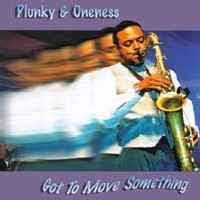
James “Plunky” Branch was born on July 20, 1947 in Richmond, Virginia and educated in the city’s segregated schools. He then attended Columbia University in New York City, but by 1971 he had moved to San Francisco, California. It was here that he formed Juju, a musical group that combined rhythm and blues, jazz, soul, and African musical influences.
He founded the band Plunky & Oneness, which began as Juju in 1971 which he renamed twice, Oneness of Juju and Plunky & the Oneness of Juju, before it was given its current name in 1988. One of Plunky & Oneness’ songs, Every Way But Loose, is featured on the video game Grand Theft Auto: Vice City Stories, playing on fictional radio station Paradise FM.
Branch is the president and founder of the independent record label N.A.M.E. Brand Records, through which he has released 25 albums. As a studio musician Plunky has worked for The Cosby Show and has appeared on several avant-garde jazz albums.
As an educator he has been Director of the Jazz Ensemble at Virginia Union University as well as an instructor of Afro-American Music History at Virginia Commonwealth University.
He has been the recipient of two NEA Jazz Fellowships and was appointed to the Governor’s Task Force for the Promotion of the Arts in Virginia. In 1999 he was recognized by Richmond Magazine as Musician of the Year for 1999. J. Plunky Branch continues to perform, record, compose and produce.
More Posts: bandleader,educator,history,instrumental,jazz,music,producer,saxophone,songwriter
Three Wishes
While hanging out at the Cathouse one evening Pannonica inquired of Rudy Powell as to his three wishes if they could come true and he told her:
- “I’d like to be equipped to further jazz.”
- “Through that I’d be able to promote a spotlight for musicians who’ve never had a chance and deserve some.”
- “I would try to effectuate a way to alleviate the cliques that have been developing through the years, and which have hindered some fine players from exploring their talents.”
*Excerpt from Three Wishes: An Intimate Look at Jazz Greats ~ Compiled and Photographed by Pannonica de Koenigswarter

More Posts: baroness,clarinet,history,instrumental,jazz,music,pannonica,saxophone,three,wishes