

Daily Dose Of Jazz…
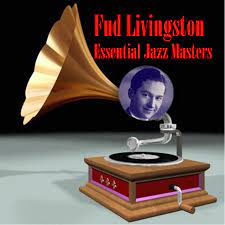
Joseph Anthony Livingston, better known by his peers as Fud, was born April 10, 1906 in Charleston, South Carolina and started out on accordion and piano before settling on saxophone. At seventeen he was playing with Tal Henry in Greensboro, North Carolina in 1923, then worked with Ben Pollack, the California Ramblers, Jean Goldkette, Nat Shilkret, Don Voorhees, and Jan Garber. He recorded freelance with musicians such as Joe Venuti, Red Nichols, and Miff Mole.
He did some arrangement work for Frankie Trumbauer and Bix Beiderbecke, including the nursery rhyme Humpty Dumpty. Livingston played on the 1928 Brunswick recording of “Room 1411” as a member of Bennie Goodman and His Boys, which also featured Glenn Miller, Jimmy McPartland, Bud Freeman, and Ben Pollack.
A stint in London,England in 1929 had him working with Fred Elizalde, then returned to New York City to play with Paul Whiteman. His time with Whiteman lasted from 1930 to 1933, and was mainly as an arranger, though he played occasionally. By the mid 1930s he worked with Benny Goodman, Jimmy Dorsey, Bob Zurke, and Pinky Tomlin as the country entered into the Forties. Essentially stopping his writing and arranging at this point, Fud would occasionally perform in small-time venues in New York in the 1950s.
His compositions included Feelin’ No Pain, Imagination, Humpty Dumpty, Harlem Twist, Sax Appeal, are well known but the jazz standard, I’m Thru With Love, written with Matty Malneck and Gus Kahn, has been recorded by over sixty musicians and vocalists, but a short list is Bing Crosby, Dizzy Gillespie, Arthur Prysock, Coleman Hawkins, Lorez Alexandria, John Pizzarelli, Joe Williams Marilyn Monroe, Maxine Sullivan and Steve Tyrell.
It has been sung in the films Everyone Says I Love You, Some Like It Hot, The Affairs Of Dobie Gillis and Spider~Man 3. Even Alfalfa from The Little Rascals had added it to his repertoire.
Clarinetist, saxophonist, arranger, and composer Fud Livingston, who never recorded as a leader, transitioned on March 25, 1957 in New York City.
More Posts: arranger,clarinet,composer,history,instrumental,jazz,music,saxophone
Daily Dose Of Jazz…
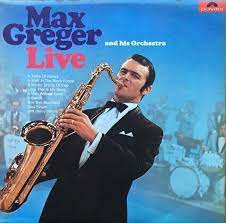
Max Greger was born on April 2, 1926 in Munich, Germany. In 1948 at 22 he founded his first sextet with acclaimed musicians, including Hugo Strasser. By 1959 he became the first western orchestra to tour the Soviet Union.
1963 saw Max putting together a top orchestra for ZDF, which for years supported all the major TV shows. He was honored with the Officers Cross of the Order of Merit of the Federal Republic of Germany, the Bavarian Order of Merit, and has a memorial plaque with his handprints and signature in Berlin-Mitte.
Saxophonist, conductor and big bandleader Max Greger, who recorded over 150 records in jazz and pop music, transitioned on August 15, 2015 in his hometown.
More Posts: bandleader,conductor,history,instrumental,jazz,music,saxophone
Daily Dose Of Jazz…
Andy Raphael Thomas Hamilton was born on March 26, 1918 in Port Maria, Jamaica, and learnt to play saxophone on a bamboo instrument. He formed his first band in 1928 with friends who played oil drums and Hamilton a bamboo saxophone. He was influenced by Duke Ellington and Count Basie and by the Kingston-based bands of Redver Cook and Roy Coburn.
Spending some time in the United States Andy worked as a cook and farm labourer, while having short jazz residencies in Buffalo and Syracuse, New York. Returning to Jamaica he worked as musical arranger for Errol Flynn at his hotel The Titchfield, and on his yacht the Zaka.
Emigrated as a stowaway to the United Kingdom in 1949 and eventually lived and worked in Birmingham, England. By day he worked in a factory, by night he played jazz with his own group, the Blue Notes that included fellow Jamaican pianist Sam Brown. Besides playing mainly local gigs, Hamilton booked an early Steel Pulse and numerous Jamaican bands around town before establishing a regular weekly venue in Bearwood. There he invited visiting musicians such as Joe Newman, Al Casey, Teddy Edwards, Art Farmer, Harry Sweets Edison, and David Murray. He fronted weekly gigs on Thursday nights at Bearwood Corks.
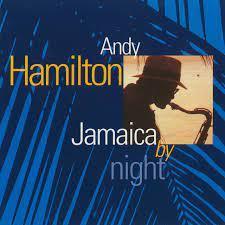
Having recovered from a diabetic coma in 1986, he celebrated his 70th birthday in 1988 playing at his regular venue, The Bear. He performed at the Soho Jazz Festival, and in 1991 at the age of 73, Andy made his first ever recording with Nick Gold, Silvershine on World Circuit Records. It became the biggest selling UK Jazz Album of the Year, The Times Jazz Album of the Year, and one of the 50 Sony Recordings of the Year. It was followed two years later by Jamaica at Night.
He continued to play, teach and promote music even as he approached his 94th birthday. Saxophonist Andy Hamilton, who in 2008 was appointed Member of the Order of the British Empire (MBE), transitioned peacefully on June 3, 2012

More Posts: bandleader,history,instrumental,jazz,music,saxophone

Daily Dose Of Jazz…
Kalaparusha Maurice McIntyre was born on March 24, 1936 in Clarksville, Arkansas but raised in Chicago, Illinois. He studied at the Chicago College of Music, and during the 1960s began playing with musicians such as Malachi Favors, Muhal Richard Abrams, and Roscoe Mitchell. Along with them he became a member of the ensemble Association for the Advancement of Creative Musicians (AACM) in 1965.
He recorded his first solo album in 1969. During this time he recorded as a session musician for Delmark Records, playing with George Freeman, J.B. Hutto, and Little Milton, among others. The same year, Kalaparusha was convicted for drug offences, serving his sentence in Lexington, Kentucky with fellow inmate and friend musician/composer Tadd Dameron.
Moving to New York City in the 1970s, he played at Sam Rivers’s Rivbea Studios and taught at Karl Berger’s Creative Studio. He and Muhal Richard Abrams toured Europe several times. After his 1981 live album, McIntyre recorded very little, playing on the streets and in the subways of New York. His next major appearance on record was not until 1998, with Pheeroan akLaff and Michael Logan. The following year he played with many AACM ensemble members on the album Bright Moments. He continued releasing albums as a leader into the new century.
Free jazz tenor saxophonist Kalaparusha Maurice McIntyre transitioned on November 9, 2013, in The Bronx, New York, at the age of 77.
More Posts: bandleader,history,instrumental,jazz,music,saxophone
Requisites
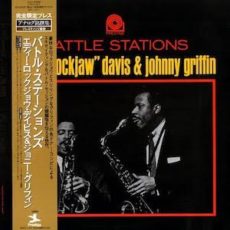
Battle Stations ~ Eddie “Lockjaw” Davis & Johnny Griffin | By Eddie Carter
It happened like this; that same night after I listened to The Happy Blues, I decided to turn up the heat with my next selection. That’s what prompted this morning’s choice from the library by tenor saxophonists, Eddie “Lockjaw” Davis and Johnny Griffin. Battle Stations (Prestige PRLP 7282/PRST 7282), hit the stores in 1963 and both horns are anchored by a smokin’ rhythm section, Norman Simmons on piano, Vic Sproles on bass, and Ben Riley on drums. My copy used in this report is the 1993 Japanese Mono reissue (Prestige VIJJ-30008 – PRLP 7282) by Victor Musical Industries.
Side One takes off at a fast clip on What’s Happening by Fletcher Henderson. The quintet speeds through the melody collectively, then Eddie erupts into an energetic opening statement. Norman steps up next with a spirited performance, then Johnny wails for a bit on the third reading. Both saxes move with considerable agility on a vigorous exchange into the quintet’s speedy ending. Abundance by Norman Connors slows the group’s pace just a few notches with a soulful melody in unison. “Lockjaw” goes first and gives a charming performance. Connors takes the reins next for an easy, flowing solo and Griff extends the mood on the finale with a satisfying statement succeeded by the ensemble’s reprise and climax.
If I Had You by Jimmy Campbell, Reginald Connelly and Ted Shapiro is up next. “Lockjaw” leads the rhythm section at a relaxing tempo on the melody and exhibits a simple beauty in the opening chorus. Norman is simply enchanting on the second reading. Johnny adds a delightful depth of emotion to the closing solo complemented by Vic and Ben’s supplement. Johnny Griffin’s 63rd Street Theme begins Side Two at mid tempo with a Latin flavor established by the rhythm section’s introduction and ensemble’s opening chorus. Davis approaches the lead solo with unhurried pacing and inspired lines. Connors packs plenty of feeling into the second presentation, then Griff is very smooth on the closing statement preceding the finale.
Pull My Coat by Richard Evans is a blues that comes to life with a brief bass introduction by Vic preceding the ensemble’s collective theme. Eddie opens anchored by just bass and drums, segueing into a splendid performance with full rhythm. Norman moves leisurely into the second solo with some down-home cooking. Johnny serves some succulent soul food on the closer. The quintet ends the set with a fun original by Babs Gonzales and James Moody, Hey Jim! Connors and the rhythm section opens with a happy introduction that grows into the ensemble’s unison theme. “Lockjaw” gives the first solo some swinging excitement, then Connors rises to the occasion on the second solo. Griffin follows with a perfectly executed statement, then both horns share a final exchange ahead of the group’s exit.
Battle Stations was produced by Esmond Edwards and Rudy Van Gelder was the man behind the dials of the original album. Victor Musical Industries has done a very good job with the remastering of this reissue. The album has an exquisite soundstage through the treble, midrange, and bass that’s excellent. Griff and “Lockjaw” were brilliant when working together and they’ve recorded several great studio and live albums. If you’re in the mood for some swinging Hard-Bop and are a fan of Eddie “Lockjaw” Davis and Johnny Griffin, I invite you to audition Battle Stations for a spot in your jazz library. It’s forty-two minutes of great music from one of the great tenor sax partnerships that’s sure to become one of your favorites!
~ If I Had You – Source: JazzStandards.com © 2022 by Edward Thomas Carter

More Posts: choice,classic,collectible,collector,history,instrumental,jazz,music,saxophone