

Daily Dose Of Jazz…
James Theodore Powell was born on October 24, 1914. He played on two recording dates with Billie Holiday for Columbia Records, the first in 1940, was with a band comprising of trumpeter Roy Eldridge, alto saxophonists Carl Frye and Powell, tenor saxophonist Kermit Scott, pianist Sonny White, guitarist Lawrence Lucie, bassist John Williams, and Hal West on drums. The second recording session was in 1941, again with Eldridge, Lester Boone, Ernie Powell, and Jimmy Powell on alto saxophones, Eddie Heywood on piano, Paul Chapman on guitar, Grachan Moncur on bass, and drummer Herbert Cowans.
1944 had Jimmy recording with Billy Eckstine and His Orchestra, with Oscar Pettiford, Art Blakey, Dexter Gordon, Gene Ammons, Thomas Crump, Wardell Gray, Dizzy Gillespie, Chippy Outcalt, and Trummie Young, among others. The album was released in 1960 as Mr. B. In 1945, he recorded in New York with Don Byas and Hal Singer.
At the beginning of 1947, Powell was with Illinois Jacquet and his Orchestra, which featured Miles Davis, Marion Hazel, Fats Navarro and Joe Newman on trumpets, Gus Chapwell, Ted Kelly, Eli Robinson and Dickie Wells on trombones, Ray Perry and Powell on alto saxes, Jacquet and Big Nick Nicholas on tenor saxes, Leo Parker on baritone sax, Bill Doggett and Leonard Feather on piano, Al Lucas on bass and Shadow Wilson on drums, together with Tadd Dameron and Jimmy Mundi as arrangers. And again, in April the same year, with a slightly different line-up, this time featuring Russell Jacquet, Navarro and Newman on trumpets, J.J. Johnson on trombone, Powell or Ray Perry on alto, Illinois Jacquet on tenor, Leo Parker on baritone, Sir Charles Thompson on piano, Freddie Green on guitar, Al Lucas on bass and Shadow Wilson on drums.
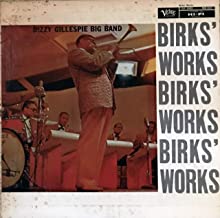
In 1956, Powell was a member of the Dizzy Gillespie Big Band that recorded Groovin’ High live at Birdland with Walter Bishop on piano, Nelson Boyd on bass, Marty Flax on baritone, Gillespie, Quincy Jones, Carl Warwick and Joe Gordon on trumpets, Benny Golson and Ernie Wilkins on tenor, Ernie Henry and Phil Woods on alto saxes, Roy Levitt and Melba Liston on trombones. He went on to record several albums with Gillespie.
Alto saxophonist Jimmy Powell, who never recorded as a leader but as a sideman was part of nine recording sessions, passed away on February 16, 1994.

More Posts: history,instrumental,jazz,music,saxophone

Conversations About Jazz & Other Distractions
Conversations About Jazz
Spotlights The Young Guns on October 15
Hammonds House Digital invites you to join us for Conversations about Jazz & Other Distractions hosted by former jazz radio host and founder of Notorious Jazz, Carl Anthony. Every other Thursday, Carl takes audiences on a unique journey through the world of jazz music with artist talks, workshops, and listening sessions.
On October 15 at 7:30 pm (EST), Conversations about Jazz features some of today’s Young Guns. Carl’s guests will be bassist Endea Owens; and multi-instrumentalist, producer, composer, and engineer Morgan Guerin. This program is for the jazz novice and jazz head alike. It is free and will stream live on Hammonds House Museum’s Facebook and YouTube.
Lincoln Center’s Emerging Artist of 2019, recent graduate of the Julliard School, and Detroit native Endea Owens, is a vibrant up and coming bassist. She has been mentored by the likes of Marcus Belgrave, Rodney Whitaker, and Ron Carter. She has toured and performed with Jennifer Holliday, Rhonda and Diana Ross, Jazzmeia Horn, Dee Dee Bridgewater, Steve Turre, and Lea DeLaria from the Netflix Original Series “Orange is The New Black.’ Endea has performed around the globe including from Europe to India and Australia. She is the house bassist for The Late Show with Stephen Colbert.
New York City-based and New Orleans native multi-instrumentalist, producer, composer, and engineer Morgan Guerin has achieved much in his young, burgeoning career. Dubbed a “wunderkind saxophonist and multi-instrumentalist” by The New York Times, Guerin is skilled in bass, saxophones, electronic wind instrument (EWI), drums, and keys. In 2016, the Huffington Post named his debut album, “The Saga,” one of the best Jazz albums of the year. In 2017, Stereogum highlighted his sophomore album, “The Saga II,” as one of the best new albums. He was featured on Terri Lyne Carrington & Social Science’s award-winning album, “Waiting Game.” He was a songwriter and co-producer of Esperanza Spalding’s 2019 Grammy-winning record, “12 Little Spells.” His third album, “The Saga III,” was released on September 18, 2020.
Hammonds House Museum is generously supported by the Fulton County Board of Commissioners, Fulton County Arts and Culture, the City of Atlanta Mayor’s Office of Cultural Affairs, AT&T and WarnerMedia.
Hammonds House Museum’s mission is to celebrate and share the cultural diversity and important legacy of artists of African descent. The museum is the former residence of the late Dr. Otis Thrash Hammonds, a prominent Atlanta physician and a passionate arts patron. A 501(c)3 organization which opened in 1988, Hammonds House Museum boasts a permanent collection of more than 450 works including art by Romare Bearden, Robert S. Duncanson, Benny Andrews, Elizabeth Catlett, Jacob Lawrence, Hale Woodruff, Amalia Amaki, Radcliffe Bailey and Kojo Griffin. In addition to featuring art from their collection, the museum offers new exhibitions, artist talks, workshops, concerts, poetry readings, arts education programs, and other cultural events throughout the year.
Located in a beautiful Victorian home in Atlanta’s historic West End, Hammonds House Museum is a cultural treasure and a unique venue. During the COVID-19 pandemic, they continue to observe CDC guidelines, but look forward to welcoming in-person visitors soon! For more information about upcoming virtual events, and to see how you can support their mission, visit their website: hammondshouse.org. MEDIA: For more information, contact Karen Hatchett at Hatchett PR, karen@hatchettpr.com
More Posts: bass,conversations,drums,history,instrumental,jazz,musicians,saxophone
Daily Dose Of Jazz…
Scoville “Toby” Browne was born on October 13, 1909 in Atlanta, Georgia and played in the late 1920s with Junie Cobb’s band and the Midnight Ramblers in Chicago, Illinois. From 1931 to 193232 he played saxophone and clarinet for Fred Avendorph. He went on to work with Louis Armstrong from 1933–35, and in the mid- and late Thirties with Jesse Stone, Jack Butler, Claude Hopkins, and Blanche Calloway.
By the end of the decade, he was attending the Chicago College of Music and the 1940s Browne played with Slim Gaillard, Fats Waller, Buddy Johnson, Hot Lips Page, and Eddie Heywood before serving in the U.S. military during World War II. Following his discharge, he played with Hopkins again and with Buck Clayton.
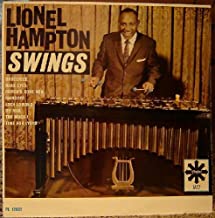
Taken on the role of bandleader on and off in the 1950s, Toby also studied classical music. He was the main clarinet soloist with Lionel Hampton and toured overseas with Muggsy Spanier late in the decade, and appeared in the 1958 photograph A Great Day in Harlem.
Continuing to work with Hopkins well into the Seventies, alto saxophonist and clarinetist Toby Browne who never recorded as a bandleader but only a sideman, passed away on October 3, 1994 in Chicago.
More Posts: bandleader,clarinet,history,instrumental,jazz,music,saxophone
Requisites…
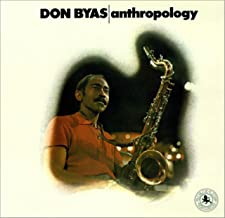
<Anthropology~Don Byas | By Eddie Carter
I begin this morning’s discussion with an album by tenor saxophonist Don Byas, a swing and bebop musician who played in the orchestras of Count Basie, Duke Ellington, and Lionel Hampton. He also worked with Art Blakey, Dizzy Gillespie, Bud Powell, and Ethel Waters among others. Anthropology (Black Lion Records BLP 30126) is a 1963 album that was recorded live at the Jazzhus Montmartre (also known as Café Montmartre). The rhythm section is an outstanding trio of Danish descent, pianist Bent Axen, bassist Niels-Henning Ørsted Pedersen and drummer William Schiöpffe. My copy used in this report is the US Stereo reissue (Black Lion BL-160), the date of release is unknown.
The album opens with Anthropology, a bebop classic written in 1945 by Dizzy Gillespie and Charlie Parker that’s also known as Thriving From a Riff or Thriving on a Riff. Schiöpffe introduces the tune, preceding the leader’s feisty delivery of the melody. Byas takes the lead with a compelling lift to start the soloing, then Axen executes the second reading efficiently. Pedersen turns in a brief presentation closely shadowed by Byas and Schiöpffe ends the readings by exchanging a few splendid phrases with the leader.
Moonlight In Vermont was written in 1944 by John Blackburn and Karl A. Suessdorf. This timeless evergreen provides a perfect backdrop for Byas’ gorgeous melody. The saxophonist continues with a very dreamy interpretation of the slow-paced, serene opening solo. Bent follows, displaying a graceful elegance on the next performance with discreet, perfectly tailored support by Niels-Henning and William. Byas’ closing chorus is lovingly rendered, completing the song with a tender finale that’s gorgeous.
Charlie Parker’s 1945 bebop anthem Billie’s Bounce ends the first side with a spirited rendition by the quartet. Pedersen and Schiöpffe open the song as a duet that becomes a lively theme treatment. Don raises the temperature on the lead solo with an effervescent beat that energizes the trio. Bent takes the spotlight last hitting a perfect groove on a swinging performance preceding the leader’s final remarks, theme’s reprise, and coda.
The gears shift upward for Dizzy Gillespie’s most famous recorded tune, Night In Tunisia was written in 1942 with Frank Paparelli. The rhythm section introduces the song at a speedy velocity proceeding to the aggressively energetic theme by Byas who also rips into the first solo voraciously. Bent takes the reins next zipping along like a whirlwind, then Don returns for a second exhilarating statement with bassist and drummer providing the fuel. NHØP takes over for an abbreviated scorcher, then Schiöpffe speaks last exhibiting mesmerizing brushwork into the invigorating climax.
The finale is the 1932 ballad, Don’t Blame Me, written by Jimmy McHugh and Dorothy Fields. This song made its first appearance on Broadway in the show, Clowns in Clover, and later in two films, The Bad and The Beautiful (1952) and Two Weeks in Another Town (1962). Byas begins with a delicate introduction and heart-warming melody ahead of a sultry first statement that’s exquisite. Axen expresses a gentle affection on the final solo preceding Byas who ends the song and LP with a tender sincerity.
In 1964, Byas was celebrating his third decade as a professional musician. In honor of that achievement, the LP was also released as The Big Sound – Don Byas’ 30th Anniversary Album on Fontana in the Netherlands and Debut Records in Denmark. Two songs on the original LP are omitted on Anthropology, There’ll Never Be Another You by Harry Warren and Mack Gordon and Walkin’ by Richard Carpenter. Don Byas was a masterful musician who was adept at a fast clip or on a romantic ballad.
He lived the last twenty-six years of his life in Europe, working extensively before passing away from lung cancer on August 24, 1972, at the age of fifty-nine. The dialogue between the quartet is fascinating and their music a treat for the Café Montmartre crowd. The album was produced by UK music executive Alan Bates who began Black Lion Records and also re-launched the Candid label in London. The sound quality is excellent, transporting the listener to the club amid the crowd. Though out of print for many years, Anthropology is a remarkable live album by Don Byas that I not only recommend but am sure will become a welcome addition in any library.
~ Alan Bates, The Big Sound – Don Byas’ 30th Anniversary Album (Debut Records DEB-142, Fontana 688 605 ZL) – Source: Discogs.com ~ Moonlight In Vermont, Night In Tunisia – JazzStandards.com ~ Don’t Blame Me – Source: Wikipedia.org © 2020 by Edward Thomas Carter
More Posts: choice,classic,collectible,collector,history,instrumental,jazz,music,saxophone
The Quarantined Jazz Voyager
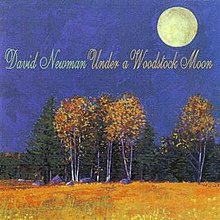
As the nation navigates the re-opening of the country, I am maintaining my social distancing with only minimal outings to the grocers, this Quarantined Jazz Voyager has chosen the perfect album to listen to in autumn. Pulling from the stacks is the 1996 recording by David Newman titled Under A Woodstock Moon.
The album was recorded on June 15~17, 1996 at the Quad Recording Studios in New York City. It was produced by the saxophonist and released on Herbie Mann’s Kokopelli label. David Newman contributed three compositions ~ 2, 9, & 12.
Track Listing | 59:04- Nature Boy (Eden Ahbez) ~ 4:36
- Amandla ~ 5:15
- Up Jumped Spring (Freddie Hubbard) ~ 4:24
- Spring Can Really Hang You up the Most (Tommy Wolf, Fran Landesman) ~ 5:11
- Autumn in New York (Vernon Duke) ~ 4:38
- Sky Blues (David Leonhardt) ~ 2:56
- Another Kentucky Sunset (Leonhardt) ~ 4:58
- Summertime (George Gershwin, DuBose Heyward, Ira Gershwin) ~ 4:56
- Sunrise (Leonhardt, Newman) ~ 5:35
- A Nightingale Sang in Berkeley Square (Manning Sherwin, Eric Maschwitz) ~ 6:14
- Skylark (Hoagy Carmichael, Johnny Mercer) ~ 4:49
- Under a Woodstock Moon ~ 5:32
- David Newman ~ tenor saxophone, alto saxophone, flute
- David Leonhardt ~ piano, arranger
- Bryan Carrott ~ vibraphone
- Steve Novosel ~ bass
- Winard Harper ~ drums
- Strings ~ Charles Libove, Eugene Moye, Matthew Raimondi, Ronald Carbone
- String section conducted by Torrie Zito
- Bob Freedman ~ arranger
As you listen and enjoy this wonderful addition to the jazz catalog, continue to social distance and stay healthy. During this sabbatical from flying and investigating jazz around the globe, enjoy the listen and know that the world and I will be back.
More Posts: adventure,club,genius,jazz,museum,music,preserving,restaurant,saxophone,travel,voyager