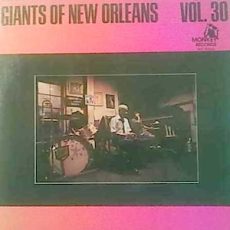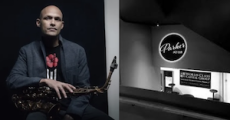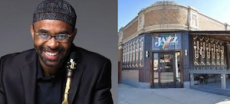
HIDDEN NOMINATION
Hidden Nomination is a genre-defying ensemble that emerged from the lustrous Blue Llama Jazz Club after a particularly electrifying set. The band has quickly become a force to be reckoned with in the Midwest music scene and brings together four exceptionally talented musicians with a shared passion for exploration and innovation.
Their sound is a thrilling fusion of jazz, funk, R&B, gospel, and neo-soul, creating a sonic tapestry that is as soulful as it is dynamic. With high-energy performances and delicate, melodic interplay, Hidden Nomination captivates audiences, taking them on a journey that transcends traditional genre boundaries. The band’s philosophy is rooted in the pursuit of the unseen and the unheard—always searching for what lies hidden beneath the surface of music and emotion.
Recently completing a celebrated residency at Cliff Bell’s, one of Detroit’s most iconic jazz clubs, Hidden Nomination has solidified its reputation as a must-see live act. Their ability to blend technical mastery with raw, heartfelt expression has earned them a dedicated following and critical acclaim. As they prepare to record their debut album in summer of 2025, the band is poised to share their unique sound with an even wider audience.
The Band:
Houston Patton ~ saxophone
Andre Crawford ~ piano
Dylan Sherman ~ bass
Brian Allen ~ drums
Cover: $25.00
More Posts: adventure,bandleader,bass,club,drums,genius,instrumental,jazz,piano,preserving,saxophone,travel

Requisites
Images ~ Ralph Moore | By Eddie Carter
Ralph Moore enters this morning’s spotlight with Images (Landmark Records LLP-1520). He was born in Brixton in South London, England, and took up the trumpet and various instruments at the age of fourteen before deciding on the tenor saxophone. In the early 1970s, he relocated to Santa Maria, California, and later to Boston, Massachusetts, where he began performing locally while studying at Berklee College of Music. Unfortunately, his studies were interrupted by a home invasion that left him seriously injured and unable to complete his degree. Joining him on this date are Terence Blanchard on trumpet (tracks: A1, A3, B1, B3), Benny Green on piano, Peter Washington on bass, Kenny Washington on drums, and Victor See-Yuen on congas (A3). My copy of the album is the 1988 U.S. stereo release.
Side One commences with an energetic trip on the Freeway by Ralph Moore. From the rhythm section’s introduction, the quintet swings with an invigorating theme. Ralph has the first solo spot and swiftly navigates the trio’s interplay to a satisfying conclusion. Terence follows with an energetic interpretation, then Benny dives into a jubilant performance, culminating in the exuberant closing chorus and climax. The mood shifts to a slower tempo for a beautiful quartet rendition of Enigma by J.J. Johnson. Moore exudes grace and politeness in the opening melody, then proceeds with a richly detailed and tender presentation. Green’s short solo is filled with melodious sweetness, like the taste of a well-aged vintage wine before the close.
The trio’s infectious Latin-influenced introduction begins with Episode From a Village Dance by Donald Brown. The quintet’s danceable theme gets things off to a good start. Ralph leads the way with a happy groove. Terence steps up to give a jaunty reading, then Benny adds to the festive mood in the closing interpretation, ahead of the ensemble’s theme reprise and climax. The quintet takes the beat upward to begin the second side with This I Dig of You by Hank Mobley. The rhythm section’s introduction sets up the ensemble’s rhythmic attack in the melody. Blanchard opens the door with a spirited solo, then Moore brings the heat in the second reading. Green soars ahead next, and the front line mixes it up with Washington preceding the quintet’s closing chorus and exit.
Ralph Moore’s Blues For John is his upbeat tribute to John Coltrane. A spirited two-instrument dialogue between Moore and Washington segues into the quartet’s brisk melody. Benny rolls out the opening statement effortlessly, then the leader soars through the following interpretation with terrific momentum. Peter takes his first solo of the date and delivers an inspired reading, leading to a short theme restatement and abrupt stop. The quintet returns to begin Punjab by Joe Henderson with a bluesy introduction and melody. Peter goes for a leisurely stroll in the opening statement. Ralph follows with a delightful interpretation, then Terence steps for a well-crafted solo that’s marvelously executed. Benny has the last word, then hands it over to the ensemble, who close the song as they began.
Elmo Hope’s One Second, Please, raises the intensity one final time for the trio’s introduction, leading to the quartet’s rapid melody. Ralph launches into the opening statement with electrifying energy. Benny succeeds him with a series of exhilarating ideas that flow seamlessly. Ralph and Kenny add a vigorous footnote before the ensemble wraps up the song. Orrin Keepnews produced Images, with Rudy Van Gelder as the recording engineer. George Horn mastered this release, utilizing a Mitsubishi X-80 digital tape recorder, which enabled direct recording and mastering from two-track digital tape. The album’s sound quality is splendid, with a crystal-clear soundstage that not only allows each instrument to shine but also makes it feel as though the musicians are playing right in front of you.
Ralph Moore is a tenor saxophonist whose music, deeply influenced by John Coltrane, is both personal and easily recognizable. His professional journey began with a 1979 tour of Scandinavia. After moving to New York City a year later, he collaborated with numerous musicians, including as a member of Kevin Eubanks’ band on “The Tonight Show.” “Images” is Moore’s fourth album as a leader, and despite his relatively small discography as both a leader and sideman, each album reveals his energetic and vibrant style. For fans of the tenor saxophone, I invite you to consider “Images” by Ralph Moore for a spot in your library on your next record hunt. It’s a terrific album that showcases Moore’s growing mastery and passion for hard bop, and it should not be missed!
© 2025 by Edward Thomas Carter
More Posts: choice,classic,collectible,collector,history,instrumental,jazz,music,saxophone

Daily Dose Of Jazz…
Adrian Francis Rollini was born June 28, 1903 in New York City, New York of French and Swiss extraction. Growing up in Larchmont, New York, he showed musical ability early on and began to take piano lessons at the age of two. Considered a child prodigy, he played a fifteen-minute recital at the Waldorf Astoria Hotel at the age of four. By age 14 he was leading his group composed of neighborhood boys, in which he doubled on piano and xylophone.
Leaving high school in his third year he cut piano rolls for the Aeolian company on their Mel-O-Dee label and the Republic brand in Philadelphia, Pennsyolvania. At 16 he joined Arthur Hand’s California Ramblers and being equally skilled at piano, drums, xylophone, and bass saxophone, gained him Hand’s respect. Hand transferred the band to Rollini when he retired from the music field.
During the 1920s not only was he a member of the California Ramblers with Red Nichols, Jimmy and Tommy Dorsey, he also held membership in The Little Ramblers, The Goofus Five, and The Golden Gate Orchestra. During this time, he managed to lay down hundreds of sessions with Annette Hanshaw, Cliff Edwards, Joe Venuti, Miff Mole, Red Nichols, Bix Beiderbecke, Roger Wolfe Kahn, and Frank Trumbauer.
The 1930s saw him forming the Adrian Rollini Orchestra which recorded on Perfect, Vocalion, Melotone, Banner, and Romeo labels, where he played both bass saxophone and vibraphone. During the early swing era, starting in 1935, he managed Adrian’s Tap Room, owned the Whitby Grill, and opened White Way Musical Products, a store for the sale and repair of musical instruments.
Gradually shifting from the bass saxophone to the vibraphone after popularity of the hot jazz era of the 1920s waned. He went on to play hotels, arranging and writing songs behind the scenes. After an exhaustive career, he made his last recording with his trio in the early 1950s. He relocated to Florida, opened the Eden Roc Hotel in 1955, ran the Driftwood Inn at Tavernier Key and his Driftwood offered deep-sea fishing charters.
Bass saxophonist, pianist, and vibraphonist Adrian Rollini, died under unsolved circumstances on May 15, 1956 at the age of 52 in Homestead, Florida.
More Posts: bandleader,history,instrumental,jazz,music,piano,saxophone,vibraphone

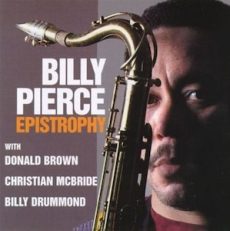
DONALD HARRISON QUARTET
2022 NEA Jazz Master Big Chief Donald Harrison is a musician/composer dedicated to mastering every era of jazz, soul, and funk and composing orchestral classical music. He has been called a “One man music festival” because his performances cover the history of music and show his knowledge of many styles is the basis for his innovations.
According to geniuses Eddie Palmieri, Nicholas Payton, Carl Allen, and Mike Clark, he is a genius. Harrison is the recognized Big Chief of Congo Square in Afro-New Orleans culture, where he keeps alive one of the root contributors cultures to Traditional jazz. Harrison is also the innovator of three influential jazz styles, including a modern jazz twist to New Orleans’ second-line music that blends classic jazz with hip-hop, funk, and soul music, called “Nouveau Swing.”
Big Chief Donald Harrison | also saxophone & vocals
Dan Kaufman | piano
Brian Richburg | drums
Nori Naraoka | bass
Cover: $15.00 ~ $45.00 +fee
More Posts: adventure,bandleader,club,genius,instrumental,jazz,music,preserving,saxophone,travel
Daily Dose Of Jazz…
Terrence Mitchell Riley was born in Colfax, California on June 24, 1935 and grew up in Redding, California. In the 1950s, he began performing as a solo pianist and studied composition at San Francisco State University, the San Francisco Conservatory, and the University of California Berkeley, studying with Seymour Shifrin and Robert Erickson.
Befriending minimalist omposer La Monte Young, together they performed Riley’s improvisatory composition Concert for Two Pianists and Tape Recorders in 1959–60. Riley later became involved in the experimental San Francisco Tape Music Center, working with Morton Subotnick, Steve Reich, Pauline Oliveros, and Ramon Sender. Throughout the 1960s, he also traveled frequently in Europe, taking in musical influences and supporting himself by playing in piano bars. He also performed briefly with the Theatre of Eternal Music in New York in 1965-1966.
His most influential teacher was Pandit Pran Nath, a master of Indian classical voice who also taught La Monte Young, Marian Zazeela, and Michael Harrison. Riley made numerous trips to India over the course of their association to study and accompany him on tabla, tambura, and voice. In 1971 he joined the Mills College faculty to teach Indian classical music. Riley also cites John Cage and “the really great chamber music groups of John Coltrane and Miles Davis, Charles Mingus, Bill Evans, and Gil Evans as influences on his work.
His long-lasting association with the Kronos Quartet began around 1980 and throughout his career Terry composed 13 string quartets for the ensemble. in addition
Organist, pianist, saxophonist and tamburist Terry Riley, who teaches both as an Indian raga vocalist and as a solo pianist, continues to perform live.
More Posts: bandleader,history,instrumental,jazz,keyboard,music,organ,piano,saxophone,tambura