

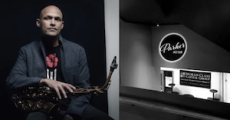
MIGUEL ZENÓN
Grammy winner saxophonist and composer Miguel Zenón who brings his groundbreaking and influential talent to the stage for one show only.
The San Juan, Puerto Rico born musician is a Doris Duke Artist and Guggenheim and MacArthur Fellow has worked with the SFJAZZ Collective, Charlie Haden, Fred Hersch, Kenny Werner, David Sánchez, Danilo Perez, The Village Vanguard Orchestra, Kurt Elling, Joey Calderazzo, Steve Coleman, Ray Barreto, Andy Montañez, Jerry Gonzalez & The Fort Apache Band, The Mingus Big Band and Bobby Hutcherson among others.
Cover: $$35.00 ~ $40.00
More Posts: bandleader,club,genius,jazz,music,preserving,saxophone,travel
Requisites
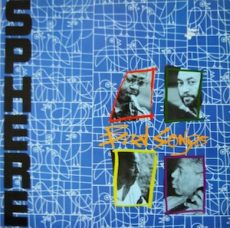
Bird Songs ~ Sphere | By Eddie Carter
Sphere initially came together to celebrate the music of Thelonious Monk; however, the quartet soon expanded its repertoire to include original albums as well. I first heard “I Didn’t Know What Time It Was” on WNOP, Cincinnati’s then-jazz station, and I immediately purchased the album right after work. Listening to it again a few nights ago inspired me to share my thoughts this morning. Bird Songs (Verve Digital 837 032-1), the quartet’s sixth release, is an excellent showcase of the underrated artistry of tenor saxophonist Charlie Rouse. Also on board are Kenny Barron on piano, Buster Williams on bass, and Ben Riley on drums, as the quartet celebrates the legacy of Charlie Parker. My copy of this album is the 1988 U.S. digital stereo release.
Side One opens with the quartet’s introduction and theme to Red Cross. Kenny sparkles with inventive runs and unexpected turns in the opening statement. Charlie follows, paying homage to Bird’s rhythmic playfulness, driven by Buster and Riley’s groundwork into the group’s rousing closing chorus. I Didn’t Know What Time It Was by Richard Rodgers and Lorenz Hart is a beloved jazz standard that was a staple in Parker’s repertoire. Williams and the rhythm section set the scene elegantly. Rouse enters next with a smoky, reflective melody, before taking flight in the first solo. The trio’s brief, tasteful interlude clears the way for Barron’s swinging interpretation. After a second trio interlude nudges the tempo forward, Rouse returns for the reprise, and the song gently fades out with the trio’s subtle touch.
The ensemble moves into Dewey Square next, with the rhythm section’s introduction paving the way for Charlie todeliver the melody. Buster begins the solos with a delightfully spirited walk, then Charlie steps into the second statement with a passionately frisky tone that’s crisp, well-structured and executed vivaciously. Kenny tackles the closing reading with youthful zest that’s right on the beat. Ben adds a concise comment during the theme’s reprise and exit. Moose The Mooche shifts the energy upward to begin Side Two with the quartet’s brisk introduction and theme. Rouse fires off the first solo with an infectiously cheerful solo. Barron leaves a memorable mark in the second reading, then Riley takes the spotlight next with youthful vigor. Barron places a few inserts during the theme’s restatement.
Barbados showcases Parker’s take on the calypso rhythm, infused with a bebop twist. The quartet’s melody is joyous, setting the stage for Charlie’s opening solo, which captures the tune’s Caribbean sunlight. Buster walks with a buoyant swagger next, then Kenny weaves a zesty spell with uplifting confidence. Ben evokes the gentle ebb and flow of island waves, carrying the quartet to the closing chorus. The ensemble’s brisk, buoyant introduction to Ah-Leu-Cha leads to an exuberant melody. Rouse draws on his robust tone and melodic inventiveness in the first solo. Barron opens the following reading with playful fragments derived from the central theme. Williams steps forward last, threading a stream of flawlessly constructed musical thoughts until the quartet reconvenes for the melody’s return and climax.
The album’s closer, Quasimodo, slows the pace one final time, for the group’s medium theme. First up is Kenny, who unfolds his solo gradually, with lines marked by crisp articulation and a deft touch. The baton then passes to Charlie, who enters with a relaxed warmth and expressiveness. He listens and responds to the rhythm section, ahead of the theme’s restatement and finale. Joanne Klein and Sphere produced the album, with Richard Seidel serving as executive producer. Rudy Van Gelder was behind the recording dials, and the album was recorded directly to two-track digital using the Sony 3402 DASH Reel-to-Reel Recorder. The album’s sound quality possesses a superb soundstage that emerges from your speakers as if the musicians are positioned directly in front of your sweet spot.
Bird Songs was the final recording Charlie Rouse made with the quartet, as he sadly passed away from lung cancer eight months later, on November 30, 1988, at the age of 64. The ensemble delivers a tight and cohesive performance throughout, and this is truly one of those thoughtfully crafted sessions that invites listeners to return again and again. For anyone who treasures bebop, I enthusiastically suggest adding Bird Songs by Sphere to your library during your next visit to the record store. The album serves as a stirring homage to Charlie Parker, with four remarkable musicians breathing new life into his legacy, creating an experience rich in pure joy, surprise, and profound artistry!
~ I Didn’t Know What Time It Was – Source: JazzStandards.com
~ Postscript Excerpt: DASH – The Digital Audio Stationary Head standard is a reel-to-reel digital audio tape format introduced by Sony in early 1982 for high-quality multitrack studio recording and mastering, as an alternative to analog recording methods. Source: Wikipedia.org
© 2025 by Edward Thomas Carter

More Posts: bass,choice,classic,collectible,collector,drums,history,instrumental,jazz,music,piano,saxophone
Daily Dose Of Jazz…
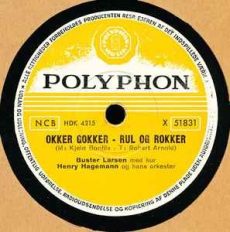
Henry Hagemann was born on September 6, 1910 in Copenhagen, Denmark He became a professional musician in 1931 and played primarily saxophone and clarinet. Throughout his career, he played with Kai Ewans, Winstrup Olesen and Leo Mathisen, among others.
From 1944 to 1949 he led his own ensemble. Afterward he performed as a theater musician, first with Hans Schreiber in the Fiffer revues and later in the Circus revue . He has also been engaged at the New Scala, where he regularly served as bandmaster.
Saxophonist and clarinetist Henry Hagemann died April 5, 1964.

More Posts: bandleader,clarinet,history,instrumental,jazz,music,saxophone
Daily Dose Of Jazz…
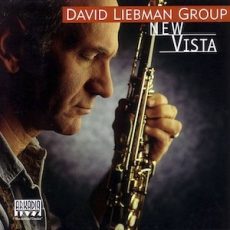
David Liebman was born September 4, 1946 into a Jewish family in Brooklyn, New York. As a child he contracted polio and began classical piano lessons at the age of nine and saxophone by twelve. His interest in jazz came when he saw John Coltrane perform live in New York City clubs aand throughout high school and college, Liebman pursued his jazz interest by studying with Joe Allard, Lennie Tristano, and Charles Lloyd. Upon graduation from New York University he began to seriously devote himself to the full-time pursuit of being a jazz artist.
In the early 1970s, he organized the cooperative, Free Life Communication, which became an integral part of the New York loft jazz scene. He landed a place with Elvin Jones’ band then an apprenticeship with Miles Davis from 1970 to 1974. Liebman explored his own music with the groups Open Sky Trio and Lookout Farm.In 1977 he toured the world with pianist Chick Corea, followed by his own quintet over three years.
David has worked with George Mraz, Al Foster, Ron McClure and Billy Hart, Vic Juris, Tony Marino, Bobby Avey, Matt Vashlishan and Alex Ritz, Joachim Kühn, Daniel Humair, Paolo Fresu, Jon Christensen, Bobo Stenson among others. He played with several European orchestras, and his artistic output is straight-ahead classic jazz, chamber music, fusion and avant garde.
As an educator he has published instructional DVDs, has taught at universities and clinics, and has regularly received grantees to study with him funded by the NEA, the Canadian Arts Council, as well as Arts Councils of numerous European countries. In 1989, he was the artistic director of the International Association of Schools of Jazz.
Saxophonist, flautist and jazz educator David Liebman, who received a NEA Jazz Masters lifetime achievement award, continues to perform and record.
More Posts: bandleader,educator,flute,history,instrumental,jazz,music,saxophone
Requisites
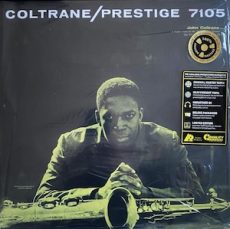
Coltrane ~ John Coltrane | By Eddie Carter
As someone who has enjoyed John Coltrane’s music for years, I’ve revisited this morning’s album from the library countless times, and each time I listen, it reveals something fresh and exciting. Coltrane (Prestige PRLP 7105) is the first chapter in a body of work that continues to challenge, inspire, and uplift listeners. John Coltrane’s path to his debut album was anything but easy. He grappled with addiction and periods of self-doubt, which eventually led to his dismissal from Miles Davis’s quintet. After returning to Philadelphia to end his addiction, John overcame his dependencies and embarked on a profound spiritual journey, allowing him to discover his singular musical voice and ultimately his first Prestige recording session.
Joining the tenor saxophonist are Johnnie Splawn on trumpet (tracks: A1, B1 to B3), Sahib Shihab on baritone sax (A1, B1, B3), Red Garland (A1 to A3), and Mal Waldron (B1 to B3) on piano, Paul Chambers on bass, and Albert “Tootie” Heath on drums. My copy of this album is the 2023 Analogue Productions mono audiophile reissue, sharing the original catalog number. “Bakai” by Cal Massey opens the first side, unveiling the ensemble’s relaxing melody. Red initiates the solos with a gentle and lyrical touch, as smooth as a calm sea. John’s following statement is grounded in a steady, unwavering rhythm of harmonic exploration. Sahib then steps in with an exquisite statement that nearly steals the show, leading back to the sextet’s theme restatement and ending.
Violets For Your Furs is a charming ballad from the 1940s by Tom Adair and Matt Dennis, which Red brings to life with a tender introduction to Coltrane’s lyrical sensitivity in the quartet’s theme, and a softer, more romantic side in the opening solo. Garland comes in next for a thoughtful, reflective reading until Coltrane gracefully reenters for the theme’s elegant climax. “Time Was” by Gabriel Luna de la Fuente, Paz Miguel Prado, and Bob Russell moves the beat upward for the quartet to give a lively melody. John leads off the solos with an abundance of passion, then Red continues soaring with joyful exuberance in the second reading. Paul has the last word and takes a short walk ahead of the theme’s return and finish.
Straight Street by John Coltrane gets the second side off to a good start. This song announces the spiritual dimension that would become central to his later albums. The sextet returns to full voice for a swinging melody with Mal taking over the piano duties. Coltrane gets right to work and wails on the opening statement. Splawn steps in next, firing on all cylinders, then Waldron takes the final spotlight preceding the group’s return for a vivacious exit. The pace slows down again for the album’s second 1940s ballad, “While My Lady Sleeps,” by Gus Kahn and Bronislaw Kaper. The ensemble presents a splendid study in soulful improvisation, with John paving the way through the melody into an affectionately intimate reading that ends as beautiful as it began.
Chronic Blues by John Coltrane opens with the sextet easing into the theme at a laid-back, comfortable tempo. Shihab launches the opening solo with rhythmic grace and effortless flow. Coltrane next delivers a smooth and inviting swing, as warm and familiar as a favorite homemade dish. Splawn’s turn brings a light and airy touch, infusing the piece with an appealing charm. Waldron closes things out with a breezy reading that leaves the sextet’s finale deeply satisfying. Bob Weinstock supervised the initial session, and Rudy Van Gelder was behind the recording dials. Kevin Gray mastered this audiophile reissue at Cohearant Audio. The album’s sound quality is spectacular, with a gorgeous soundstage that places the musicians directly in front of your sweet spot.
The record was pressed on 180-gram audiophile vinyl and offers an absolutely silent background until the music unfolds. Upon its release, “Coltrane” was met with excitement from jazz lovers and critics alike, though it didn’t propel John Coltrane to instant fame. That recognition would eventually arrive with “Giant Steps,” “My Favorite Things,” and “A Love Supreme.” Still, his debut firmly established Coltrane as a bandleader, composer, and innovator. It also marked the beginning of an extraordinary journey, where he would push the boundaries of jazz, explore spiritual themes, and redefine musical expression. If you haven’t experienced “Coltrane” yet, I highly recommend searching for it on your next record store visit. It’s an outstanding album by John Coltrane that provides a calming, immersive listening experience, gently enveloping you in its soothing melodies from the very first note!
A Love Supreme (Impulse A-77/AS-77), Giant Steps (Atlantic 1311/SD 1311), My Favorite Things (Atlantic 1361/SD
1361) – Source: Discogs.com Violets For Your Furs, While My Lady Sleeps – Source: Wikipedia.org © 2025 by Edward Thomas Carter
More Posts: choice,classic,collectible,collector,history,instrumental,jazz,music,saxophone