

Daily Dose Of Jazz…
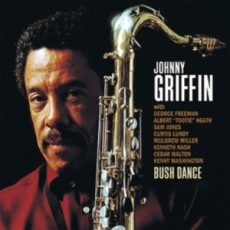
John Arnold Griffin III was born on April 24, 1928 in Chicago, Illinois. Nicknamed the “Little Giant”, he studied music at DuSable High School starting out on clarinet, taking up the oboe and finally the alto saxophone. At fifteen he was playing with T-Bone Walker and three days after graduation joined Lionel Hampton who encouraged the young man to take up the tenor, appearing on a Hamp recording in 1945 at age 17.
In the mid-forties Johnny formed a sextet with Joe Morris and George Freeman, played on R&B records for Atlantic Records and played baritone with Arnett Cobb’s R&B band. After a two-year stint in the Army he returned to Chicago and began establishing his reputation, subsequently signing with Blue Note. By 1957 he gained membership into Art Blakey’s Jazz Messengers, then replaced Coltrane in Monk’s Five Spot Quartet, and recorded Thelonious In Action and Misterioso.
On his first leader outing in 1956 with Blue Note that brought him critical acclaim, Griffin led Wynton Kelly, Curly Russell and Max Roach on “Introducing Johnny Griffin”. This was immediately followed the next year with “A Blowing Session” featuring Coltrane and Hank Mobley. He went on to play with Monk, Blakey and with Clark Terry. During this period he became known as the fastest tenor in the west for the ease with which he could execute fast note runs with excellent intonation.
In 1960 he teamed up with Eddie “Lockjaw” Davis establishing a quintet and recorded several albums over the next two years, then moved to France in ’63 and recorded with Wes Montgomery and Dizzy Gillespie, Nat Adderley, and joined the Kenny Clarke-Francy Boland Big Band and by 1978 he moved to the Netherlands. He became the first choice sax player for touring musicians to the continent. In the seventies he and Davis recorded again, he played with Toots Thielemans, Nat Adderley, Grady Tate, Stan Getz, Art Farmer, Slide Hampton, Gerry Mulligan and arranger Quincy Jones among a host of others.
On July 25, 2008, Johnny Griffin passed away of a heart attack at the age of 80 in Mauprévoir, France, his home for the last 24 years of his life.

More Posts: saxophone
Daily Dose Of Jazz…
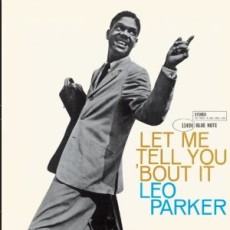
Leo Parker was born on April 18, 1925 in Washington, DC. He studied alto saxophone in high school and by 1944 had recorded with Coleman Hawkins. Switching to baritone the same year, he joined Billy Eckstine’s bebop band for the next two years.
In 1945 he became a member of the “Unholy Four” of saxophonists joining Dexter Gordon, Sonny Stitt, Gene Ammons. Possessed of a big, beefy sound tone and a fluent technique that spoke to R & B and advanced harmonies of bebop, Leo played with Dizzy Gillespie, Illinois Jacquet, Fats Navarro, J.J. Johnson, Teddy Edwards, Wardell Gray and Sir Charles Thompson, the later which he had a hit with “Mad Lad”.
During the ‘50s Leo experienced problems with drug abuse that interfered with his recording obligations. Although he made two comebacks recordings for Blue Note in 1961, the following year Leo Parker died of a heart attack at age 36 in New York City on February 11, 1962.
More Posts: saxophone
Daily Dose Of Jazz…
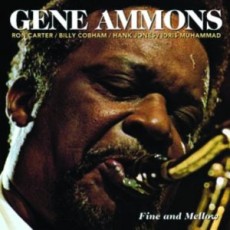
Eugene Ammons was born in Chicago, Illinois on April 14, 1925 to one of the greatest boogie-woogie pianist, Albert Ammons. At the age of 18 he left Chicago to go on the road with King Kolax for a year and in 1944 and ‘49 he worked as a featured soloist with Billy Eckstine and Woody Herman respectively. By 1950 he formed a duet with Sonny Stitt and recorded as a leader from 1947 to 1953 for the Mercury, Aristocrat, Chess, Decca, United and for the rest of his career he was affiliated with Prestige.
Known as “Jug” and “The Boss”, Gene’s playing showed influences from Lester Young and Ben Webster and both helped develop higher levels of expressiveness with from the tenor. Along with Dexter Gordon and Sonny Stitt, he integrated those developments into the emerging vernacular of bebop. His adeptness with technical aspects did not abandon the commercial blues and R&B sounds and he became an important part of the soul jazz movement in the mid-50s combining the tenor with the Hammond B3.
Using a thinner drier tone Ammons exploited a vast textural range that would later influence Stanley Turrentine, Houston Person and Archie Shepp and much later Joshua Redman. Yet he had little interest in the modal jazz of Coltrane, Henderson or Shorter. His ballads are classic, a testament to his sense of intonation, melodic symmetry and lyrical expressiveness.
Along with Von Freeman, they founded the Chicago School of Tenor Saxophone. On August 6, 1974 Gene Ammons passed away after a battle with cancer.
More Posts: saxophone
Daily Dose Of Jazz…
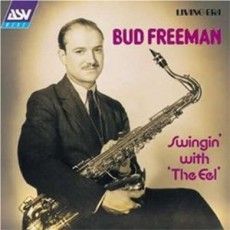
Lawrence “Bud” Freeman was born on April 13, 1906 in Chicago, Illinois and became one of the most influential and important jazz tenor saxophonists of the Big Band era. During high school in 1922 he became one of the original Austin High School Gang playing the C-melody saxophone alongside Jimmy McPartland and Frank Teschemacher. Two years later he switched to tenor and influenced by the New Orleans Rhythm Kings and Louis Armstrong the Gang would formulate their own style that would become part of the emerging Chicago jazz sound.
In 1927 Freeman moved to New York and worked as a session player and band member with Red Nichols, Roger Wolfe Kahn, Ben Pollack Joe Venuti and Eddie Condon in 1933 producing one of his most notable performances on the recording of “The Eel” which would later become Bud’s nickname for his long snake-like improvisations.
Bud’s smooth and full-tenor sax style with a heavy robust swing was the signature that got him gigs with the Tommy Dorsey and Benny Goodman orchestras along with leading his own Summa Cum Laude Orchestra. During WWII he joined the Army and led the band in the Aleutian Islands. Returning to New York after his discharge, for the next couple of decades he led his own groups, worked with Eddie Condon, Buck Clayton, ruby Braff, Vic Dickerson and Jo Jones. He was a member of the World’s Greatest Jazz Band off and on, moved to England in 1974, performing, touring and recording throughout Europe. He returned to Chicago and continued to work well into his eighties.
Tenor saxophonist, clarinetist, composer and bandleader Bud Freeman passed away on March 15, 1991 in his hometown of Chicago. He was posthumously inducted into the Big Band and Jazz Hall Of Fame in 1992.

Daily Dose Of Jazz…
Tenor saxophonist Julian Dash was born on April 9, 1916 in Charleston, South Carolina. He first played the alto saxophone and made his debut in the Charleston Nighthawks in 1935, then switched to tenor that year playing with the Revellers and the Bama State Collegians at Alabama State Teachers College from 1935-36 followed with a move to New York to study embalming.
Dash headed his own group from 1936 to 38 then replaced Paul Bascomb in the Erskine Hawkins Orchestra, an association that lasted into the 50’s. After the group disbanded Julian became a part-time player, worked with Buck Clayton in 1953, worked with Marlowe Morris in the sixties, led his own quintet in 1970-71 prior to retiring in 1971. Julian Dash, tenor saxophonist who was based in swing music and co-wrote the classic hit Tuxedo Junction, passed away on February 25, 1974.
More Posts: saxophone