

Daily Dose Of Jazz…
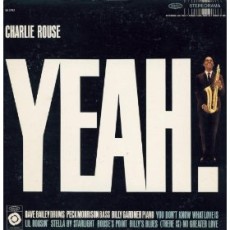
Charlie Rouse was born on April 6, 1924 in Washington, DC. He played tenor saxophone and flute, developing a distinctive nasal tone complimenting a bop-oriented style. Rouse moved very little, looked straight-ahead and wore a solemn expression when he played. He became highly influential by association with Thelonious Monk from 1959 to 1970. He would later become a founding member of Sphere, a band that paid tribute to Monk’s music.
Throughout the forties Rouse worked with Billy Eckstine, Dizzy Gillespie, Duke Ellington, made his recording debut with Tadd Dameron, and as the 50’s opened he was a part of Count Basie’s octet, and worked with Clifford Brown and Oscar Pettiford. He co-led the Jazz Modes with Julius Watkins and would go on to work with Mal Waldron. He would record, as a leader gaining some recognition by the eighties; with Carmen McRae on her classic Carmen Sings Monk project, and his last recording would be a Monk tribute concert.
The hard bop tenor and flautist died of lung cancer at the age of 64 in Seattle, Washington on November 30, 1988. Coincidently, Monk’s patroness NIca de Koenigswarter died the same day in New York City.

Daily Dose Of Jazz…
Abraham Samuel “Boomie” Richman was born on April 2, 1922 in Brockton, Massachusetts and began his career as a tenor saxophonist playing locally in his hometown. Moving to New York at twenty and within three years became a key soloist with the Tommy Dorsey Orchestra, a gig that lasted for six years at the height of the big band era. Playing a Selmer Tenor Mark VI saxophone with a baritone reed with a wide flare created a very expensive sound for the tenor who also played clarinet, bass clarinet, piccolo and flute.
Following his leaving the Dorsey band he were spent as a session player for the likes of Ella Fitzgerald, Tony Bennett, Nat King Cole, Frank Sinatra, Rosemary Clooney, Lena Horne, Sammy Davis, Benny Goodman, Peggy Lee, Judy Garland and Buddy Holly.
Richman played with Benny Goodman off and on throughout the early fifties. Upon his retirement from Goodman in 1956, he became the ‘first-call’ studio ace in New York City recording for television and radio commercials. This had him playing on shows hosted by Jimmy Dean, Perry Como, Dick Cavett, Patti Page, Pat Boone and Andy Williams. His last recording was for the movie The Godfather. His swing-based style remained unchanged well into the eighties when he retired from the music scene.

More Posts: saxophone
Daily Dose Of Jazz…
James Moody was born March 26, 1925 in Savannah, Georgia but grew up in New Jersey. He was attracted to the saxophone after hearing George Holmes Tate, Don Byas, and Count Basie. Joining the U.S. Air Force in 1943 he played in the “Negro Band” on the segregated base. Following his discharge, he began playing bebop with Dizzy Gillespie for two years. One of his colleagues was Kenny Barron, who would become an important collaborator.
He recorded his first record for Blue Note in 1948, the first in a long career playing both saxophone and flute. Relocating to Europe for three years stating he had been scarred by racism in the U.S., it was during this period that his acclaimed hit “Moody’s Mood For Love” was recorded and he added the alto to his repertoire. Returning to the States in 1952 he recorded with Prestige, played flute and sax with Pee Wee Moore and by the 60’s rejoined Dizzy.
Throughout the seventies he worked in Las Vegas show bands before returning to jazz as a leader and playing with the Lionel Hampton’s Golden Men Of Jazz. Preferring the tenor, Moody alternates with the alto and adding flute on many of his recordings.
The octogenarian continued to be a globetrotter with his quartet featuring pianist Renee Rosnes, bassist Todd Coolman and drummer Adam Nussbaum. He is a member of the Dizzy Gillespie Alumni All-Stars Big Band, often collaborating with conductor Jon Faddis, and worked alongside Jon in the WDR Big Band in Cologne, Germany. James Moody has been an institution in jazz since the 1940’s playing tenor, flute and occasionally the alto saxophone.
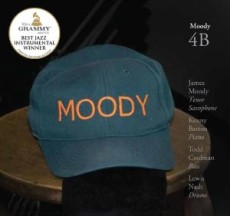
Saxophonist, flautist and composer James Moody passed away of complications from pancreatic cancer at age 85 in San Diego, California on December 9, 2010. Two months later he was posthumously awarded the Grammy Award for Best Jazz Instrumental Album for his recording “Moody 4B”, and named in his honor, the New Jersey Performing Arts Center hosts the James Moody Democracy of Jazz Festival.
Daily Dose Of Jazz…
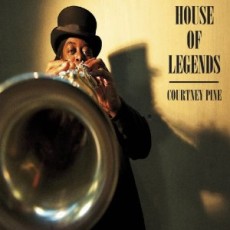
Courtney Pine, Commander of the British Empire (CBE), was born on March 18, 1964 in London, England. At school he studied clarinet, although he is known primarily for his saxophone. A product of Jamaican immigrants, as a child he wanted to be an astronaut but spent his childhood learning a host of instruments including flute, clarinet, tenor, soprano and baritone saxophones and keyboards.
Cutting his teeth with the hard bop group called Dwarf Steps, he went on to tour with Clint Eastwood and reggae star General Saint. This was followed with a return to jazz, studying Sonny Rollins and Coltrane’s improvisation and becoming a member of Charlie Watts’ band. Pine went on to tour with George Russell and Art Blakey’s Jazz Messengers and recorded his debut album Urge Within for Antilles Records, garnering both critical and financial success.
His Modern Day Jazz Stories immersed him in tradition and the purest were pleased with Geri Allen, Mark Whitfield, Eddie Henderson, Charnett Moffett and Cassandra Wilson. But their zeal was soon diminished with the release of his ’97 hip-hop Underground that employed the talents of Jeff Watts, Mark Whitfield, Reginald Veal, Nicholas Payton and Cyrus Chestnut alongside some great DJs.
An adventurer in jazz, saxophonist Courtney Pine continually fascinates and frustrates critics with his musical vision that has brought the world within and outside the jazz tradition – pop, reggae, electronic, funk, soul and world music as he tackles new and uncharted territory.
Courtney Pine: 1964 / Saxophone
More Posts: saxophone
Daily Dose Of Jazz…
Charles Lloyd was born on March 15, 1938 in Memphis, Tennessee and from an early age was exposed to jazz and immersed in the city’s rich musical culture. Beginning saxophone at age 9, he took lessons from pianist Phineas Newborn and hung out with his closest friend Booker Little. Being in the blues city started gigging with B.B. King, Howlin’ Wolf, Bobby Blue Bland and others.
In ’56 he moved to Los Angeles earning a music degree from USC, playing with Gerald Wilson due this period. By 1960 he became Chico Hamilton’s music director, revolutionizing then chamber jazz to a more progressive post-bop sound. From thee he went on to join Cannonball working with Herbie Hancock, Ron Carter, and Tony Williams, then leading his own quartet with Keith Jarrett, Cecil McBee and Jack DeJohnette that signed with Atlantic Records.
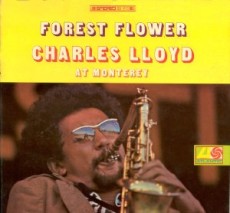
This group brought an interesting fusion of straight-ahead post-bop, free jazz and soul jazz to their music catching on with both fans and critics. Crossing over with young rock fans Lloyd became the first jazz group to play the Fillmore West in San Francisco. The subsequent album Forest Flower, recorded at the 1966 Monterey Jazz Festival, became a huge commercial success.
Entering a period of semi-retirement in 1968 he recorded several albums in the seventies and appeared occasionally as a sideman. During the ’70s he backed and toured with the Beach Boys and a member of Celebration comprised of members of the band. In the early eighties he resumed playing actively after being approached by Michel Petrucciani and by the end of the decade was touring and recording again. This period of recording showcased his sensitivity to playing ballads.
His tenor is soft-toned, reminiscent of a variation of Coltrane but his flute is original. Throughout his career Lloyd’s style has remains unchanged and he continues to play and record.

More Posts: saxophone