

The Jazz Voyager
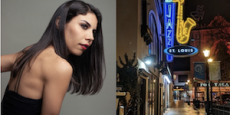
Flying to the Midwest once more to the Gateway To The West for a little bit of jazz at a spot known to many as Jazz St. Louis. Gaining international fame this small intimate atmospheric venue hosts some of the finest musicians and vocalsits since its humble beginnings in 1995.
A new experience for this jazz voyager is always welcomed and the Grammy-nominated saxophonist and composer Melissa Aldana is just that. She’ll be bringing her visionary sound to the club, including music from her latest Blue Note Records release, Echoes Of The Inner Prophet. I’m told I will be hearing a blending of deep introspection with dynamic collaboration, exploring themes of personal growth, storytelling, and sonic innovation. Influenced by jazz legends like Wayne Shorter and Sonny Rollins, I am looking forward to this evening as she honors the rich tradition of modern jazz.
Located at 3536 Washington Avenue, St. Louis, Misssouri 63103. For more information contact the venue at jazzstl.org.
The Band: Melissa Aldana – saxophone | Sam Yahel – piano | Joe Martin – bass | JK Kim – drums
Tickets: $40.00 ~ $50.00
Show times: 7:30pm & 9:30pm | 3.27 @ 11:00am

More Posts: adventure,club,genius,jazz,music,preserving,saxophone,travel
Daily Dose Of Jazz…
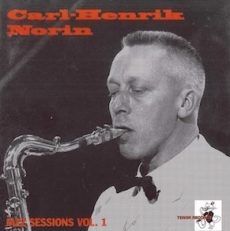
Carl-Henrik Norin was born on March 27, 1920 in Västerås, Sweden. He first began playing professionally in the early 1940s with Gösta Tönne and Thore Ehrling. As a member of Ehrling’s ensemble, he composed the piece Mississippi Mood.
He led a sextet in Stockholm, Sweden in the 1950s and early 1960s, which played jazz as well as accompanying popular singers such as Bibi Johns. Among his sidemen were Jan Allan and Rolf Billberg.
He played with Harry Arnold, Roy Eldridge, Lars Gullin, Peanuts Holland, and Bjarne Nerem. Saxophonist Carl-Henrik Norin died on May 23, 1967, Stockholm, Sweden.
More Posts: bandleader,history,instrumental,jazz,music,saxophone
Daily Dose Of Jazz…
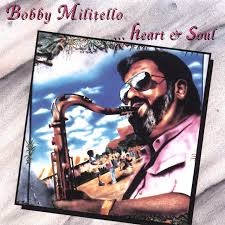
Robert Philip Militello a.k.a. Bobby M. was born on March 25, 1950 in Buffalo, New York. He was groomed by the legendary Sam Scamacca at Buffalo’s iconic Lafayette High School in the 1960s.
During the Seventies, Militello went on tour with Maynard Ferguson and returned to Buffalo in the early 1980s to work as a freelance musician.
Moving to Los Angeles, California he spent the rest of the 1980s and early 1990s as a member of orchestras led by Bill Holman and Bob Florence. He toured and recorded with Dave Brubeck from 1982 to 2012.
Saxophonist and flautist Bobby Militello leads a quartet that performs concerts dedicated to Brubeck.
More Posts: bandleader,flute,history,instrumental,jazz,music,saxophone
Requisites
Live From Los Angeles ~ Oliver Nelson’s Big Band | By Eddie Carter
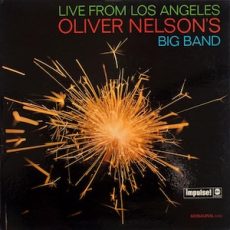
Submitted for your approval this morning is a 1967 live album by Oliver Nelson’s Big Band, Live From Los Angeles (Impulse A-9153/AS-9153). It was recorded at Marty’s on The Hill over three nights during a six-day engagement. Oliver was a brilliant arranger, composer, and multi-instrumentalist. The band members are Bobby Bryant, Conte Candoli, Buddy Childers, and Freddy Hill on trumpet; Lou Blackburn, Billy Byers, Pete Myers, and Ernie Tack on trombone; Gabe Baltazar and Frank Strozier on alto saxophone; Bill Perkins and Tom Scott on tenor saxophone, Oliver Nelson on soprano saxophone, arranger and conductor, Jack Nimitz on baritone saxophone, Frank Strazzeri on piano, Mel Brown on guitar, Monty Budwig on bass, and Ed Thigpen on drums. My copy is the 1967 U.S. Mono release.
Side One opens with Miss Fine, an original by Oliver Nelson named in honor of his sister. The band begins at a medium beat, with their ensemble playing admirably tight during the opening and concluding chorus. Freddy Hill delivers a captivating performance in the song’s only interpretation, mesmerizing both the audience and the listener. Milestones by Miles Davis is a high-energy swinger from the start, setting a brisk pace for the big band’s theme. Frank Strozier bursts out of the gate quickly, followed by an intense exchange with Tom Scott. Tom takes flight last with a spirited performance leading to the final theme and ending.
Frank takes center stage in the next tune, I Remember Bird by Leonard Feather, a gentle ballad that begins with the saxophonist presenting the theme and its restatement while the band supports in the background. As the only soloist, he provides delicate softness in a gorgeous interpretation, preceding a beautiful conclusion. Night Train by Jimmy Forrest, Lewis Simpkins, and Oscar Washington is one of two tunes Oliver recorded with Jimmy Smith and Wes Montgomery a year earlier. The ensemble opens and closes similarly. Mel Brown is the featured soloist and serves a healthy portion of soul food for the ears until the band takes it out.
Oliver Nelson’s Guitar Blues gets Side Two underway, giving Mel another opportunity to shine. The band sets things in motion with a feisty melody, then Mel shows up and shows out in an outstanding performance, culminating in the theme’s reprise and a spirited finale. Down By The Riverside is an African-American spiritual that initially received a jazzy makeover from Jimmy, Wes, and Oliver on their collaborative album. After the band establishes the theme in this version, the driving force consists of four trumpeters: Bobby Bryant, Freddy Hill, Conte Candoli, and Buddy Childers, who take four successive solos that nearly bring the house down before the band wraps things up.
The band’s theme, Ja Da by Bob Carleton, brings the album to a gentle close. The slow-paced melody sets the mood for Lou Blackburn’s lone solo while the ensemble provides a warm and heartfelt backdrop. The trombonist’s performance creates a rich tapestry of sound, leading to an elegant theme restatement. Bob Thiele produced Live From Los Angeles, and Wally Heider was the recording engineer. The album’s sound quality is exceptional, immersing the listener in the big band’s performances and making you feel like you’re in the audience. The album adheres to Impulse’s high standards, featuring laminated gatefold covers, distinctive spine color, stunning photography, insightful liner notes, and outstanding music.
Oliver Nelson was also a master of the alto and tenor saxophones. Throughout his career, he arranged numerous albums for jazz and pop musicians and vocalists, showcasing a style combining traditional big band elements with modern jazz innovations. He also recorded for Argo, Flying Dutchman, Prestige, and Verve Records. After moving to the West Coast in 1967, Nelson became sought after for scoring background music for films and television shows. The jazz community deeply mourned his untimely death from a heart attack at the age of forty-three. If you’re in the mood for a terrific big-band live album, I recommend Oliver Nelson’s Big Band Live From Los Angeles the next time you’re record shopping. It’s a thrilling release that promises endless listening pleasure for jazz enthusiasts like me!
~ Jimmy & Wes: The Dynamic Duo (Verve Records V-8678/V6-8678) – Source: Discogs.com
~ Ja Da, Milestones, Night Train – Source: Wikipedia.org
© 2025 by Edward Thomas Carter

More Posts: choice,classic,collectible,collector,history,instrumental,jazz,music,saxophone
Daily Dose Of Jazz…
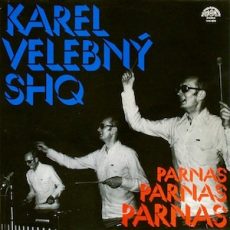
Karel Velebný was born March 17, 1931 in Prague, Czechoslovakia and at seven years old, he played piano and at fifteen was a modern jazz enthusiast who taught himself to play alto saxophone. He graduated from Gymnasium then studied drumming at the Prague Conservatory, making his first public performance as a student, and became a full-time professional as soon as he graduated.
From 1955 to 1958 he played with Czech jazzman Karel Krautgartner’s orchestra, then joined contrabassist Luděk Hulan to co-found Studio 5, which became the key ensemble of modern Czech jazz. He continued to work with Krautgartner until the latter emigrated in 1968.
In 1960, the Studio 5 ensemble was absorbed by the Dance Orchestra of Czechoslovakia Radio, but Velebný and the original Studio 5 members soon quit. In 1961, he and flautist Jan Konopásek co-founded SHQ, initially part of the Spejbl and Hurvínek Theatre thus Spejbl and Huvínek Quintet, but later began taking independent performances.
SHQ became one of the most important bands in Czech jazz history. He was its leader, composer, arranger, played as a multi-instrumentalist and taught the younger band members. SHQ’s instrumental line-up and membership changed frequently. Karel played with various Czech jazz ensembles, including Kamil Hála’s orchestra, the Linha Singers ensemble and with other regular collaborators.
As a composer, Velebný concentrated solely on jazz, in compositional styles and arrangements reminiscent of Gerry Mulligan, Chick Corea, Gary Burton and Benny Golson. He wrote mainly for his own ensembles notably Studio 5 and SHQ but also for the Kamil Hála Orchestra, the Karel Vlach Orchestra and others.
In 1978 he was invited to the Berklee College of Music, where he studied jazz teaching and the different approaches of European and American jazz. He organized and led the Summer Jazz Workshop in Frýdlant, Czech Republic until his death. As a teacher, he emphasized knowledge of techniques which could be broadly applied on jazz standards. He also wrote the specialist jazz textbook The Jazz Practical.
Diagnosed with a serious heart disease he was forced to quit as a saxophonist and vibraphonist and was restricted to piano. On March 7, 1989 vibraphonist, pianist and saxophonist Karel Velebný,who was also a composer, arranger, actor, writer and music pedagogue and one of the founders of modern Czech jazz in the second half of the 20th century, died in Prague.
More Posts: bandleader,history,instrumental,jazz,music,piano,saxophone,vibraphone