

Daily Dose Of Jazz…
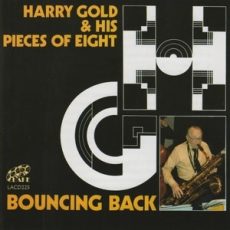
Harry Gold, born Hyman Goldberg on February 26, 1907 in Leytonstone, London, England the eldest of six children to a Romanian/Polish heritage. Raised in the East End of London, he decided on a career in music after his father took him to see the Original Dixieland Jazz Band during their famous visit to Britain in 1919–1920.
He studied saxophone, clarinet, oboe and music theory under Louis Kimmel, a professor at the London College of Music. Harry began working professionally as a musician in the early 1920s playing with the Metronomes, Vic Filmer, Geraldo, Ambrose and many other bands. It was, however, his tenure as the star tenor saxophonist with the nationally popular dance band of Roy Fox from 1932 to 1937 that brought him to wide public attention.
In 1937, while working with Oscar Rabin, he formed a band within the Rabin orchestra, performing break sets as “The Pieces of Eight”. This band continued to perform throughout World War II, dodging bombs during the London Blitz and across the country. After the war Harry Gold and his Pieces of Eight became household names in Britain through the late 1940s and 1950s. During this time his Pieces of Eight accompanied the singer and composer Hoagy Carmichael on a well-received tour of the UK.
Gold carried on working into his late 80s and early 90s, playing occasionally. He left an extensive back catalogue of recordings on 78 rpm discs, Formally trained in composition and orchestration, Gold also wrote and arranged music outside of the jazz genre, and most of his career was spent actively in union duties and in efforts to promote the welfare of other musicians.
Dixieland jazz saxophonist and bandleader Harry Gold, whose career spanned almost the whole history of jazz in Britain in the 20th century, died on November 13, 2005.

More Posts: bandleader,history,instrumental,jazz,music,saxophone
LAKECIA BENJAMIN
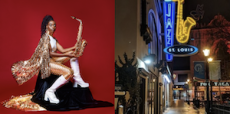
Lakecia Benjamin is a 5-time Grammy-nominated saxophonist, composer, arranger, and educator whose music blends jazz, funk, R&B, and hip-hop. Known for her warm tone and dynamic performances, she has collaborated with artists such as Missy Elliott, Alicia Keys, Gregory Porter, and Terri Lyne Carrington.
Benjamin has released several acclaimed albums, including Pursuance: The Coltranes (2020) and Phoenix (2023), which earned three Grammy nominations. A New York City native, she studied at the New School under jazz legends like Gary Bartz and Reggie Workman, honing her craft while touring with luminaries across genres.
Tickets: $45.00~$50.00
Showtimes:
More Posts: adventure,arranger,bandleader,club,composer,educator,genius,instrumental,music,preserving,saxophone,travel
RÉMI BOLDUC PRESENTS THE NEXT GENERATION
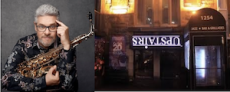
Rémi Bolduc is a Canadian jazz saxophonist, bandleader and composer. He teaches jazz at the Schulich School of Music, McGill University in Montreal, Canada.
had an early start to his career, playing the saxophone professionally at 15 years of age. In 1982, he moved to Montreal, Quebec where he would work with established saxophonists Sayyd Abdul Al-Khabyyr, Simon Stone and Bob Mover. In the 1980s, Bolduc joined the hard-bop Bernard Primeau Jazz Ensemble and the Vic Vogel Big Band. He studied with New York-based alto saxophonist Steve Coleman and composer Vince Mendoza.
The saxophonist is now bringing into the forefront a host of young musicians who will become the torchbearers in the future of Canadian jazz.
Tickets: 3 sets: 7pm ($12.50+tax), 8:15pm ($10+tax) & 9:30pm (Free)
More Posts: bandleader,club,genius,instrumental,jazz,music,preserving,saxophone,travel

ARTEMIS
Fresh off their 2nd consecutive win for “Jazz Group of the Year” in the Downbeat Readers Poll, Aretemis returns with their third Blue Note album Arboresque. The album and the group features the quintet helmed by pianist and musical director Renee Rosnes, trumpeter Ingrid Jensen, tenor saxophonist Nicole Glover, bassist Noriko Ueda, and drummer Allison Miller.
A paean to the sheer joy of collaboration and creativity, the album also explores a theme of natural and environmental beauty. This is the debut performance of Artemis and celebration of their album release at the legendary New York City venue.
Tickets: $40.00 + fee
More Posts: adventure,bandleader,bass,club,drums,genius,instrumental,jazz,music,piano,preserving,saxophone,travel,trumpet

Daily Dose Of Jazz…
George Holmes “Buddy” Tate was born on February 22, 1913 in Sherman, Texas and first played the alto saxophone. He began performing in public as early as 1925 in a band called McCloud’s Night Owls, then later in the decade was playing tenor saxophone around the Southwest with bands led by Terrence Holder, Andy Kirk and Nat Towles.
He joined Count Basie in 1939 replacing Herschel Evans and stayed with him until 1948. After his period with Basie ended, he worked with several other bands before finding success on his own, starting in 1953 in Harlem. Buddy’s group worked at the Celebrity Club from 1953 to 1974. In the late 1970s, he co-led a band with Paul Quinichette and worked with Benny Goodman.
In 1979, Tate’s hometown invited him to play a concert at Austin College’s Sid Richardson Center as part of The Sherman Symphony Pops Series. Mayor Virginia Morriss issued a proclamation declaring October 6th as Buddy Tate Day. Accompanying Tate were Jay McShann, Claude Williams, Buster Smith and Paul Gunther.
In 1980, he was injured by scalding water in a hotel shower, which kept him inactive for four months. The 1990s saw him slow down, but he remained active playing with Lionel Hampton among others.
In 1992, Tate took part in the documentary, Texas Tenor: The Illinois Jacquet Story. In 1996, he recorded with reeds player James Carter on the younger man’s second release for Atlantic Records, Conversin’ with the Elders, along with trumpeters Harry “Sweets” Edison and Lester Bowie, and saxophonists Hamiet Bluiett and Larry Smith.
Living in New York until 2001, he moved to Phoenix, Arizona to be cared for by his daughter. Saxophonist and clarinetist Buddy Tate died in Chandler, Arizona twelve days before his 88th birthday on February 10, 2001.
More Posts: clarinet,history,instrumental,jazz,music,saxophone