


JOSHUA REDMAN
Celebrating his “where are we” tour with us at Keystone Korner Baltimore this February,Joshua Redman is one of the most acclaimed and charismatic jazz artists to have emerged in the decade of the 1990s. The early influences of John Coltrane, Ornette Coleman, Cannonball Adderley, and his father, Dewey Redman, as well as The Beatles, Aretha Franklin, the Temptations, Earth, Wind and Fire, Prince, The Police, and Led Zeppelin drew Joshua more deeply into music. Although he loved playing the saxophone, academics were always his first priority, and he never seriously considered becoming a professional musician. After graduating from Harvard College with a B.A. in Social Studies, he had already been accepted by Yale Law School, but deferred entrance for what he believed was only going to be one year to join friends in Brooklyn. Redman almost immediately he found himself immersed in the New York jazz scene. In November 1991, five months after moving to New York, Redman was named the winner of the prestigious Thelonious Monk International Saxophone Competition.
Sets: 7pm & 9:30pm
Joshua Redman ~ tenor saxophone
Gabrielle Cavassa ~ voice
Paul Cornish ~ piano
Philip Norris ~ bass
Nazir Ebo ~ drums
More Posts: adventure,club,genius,jazz,music,preserving,saxophone,travel,vocal
Daily Dose Of Jazz…
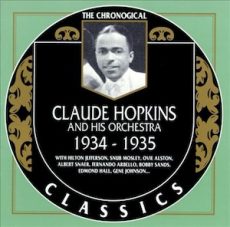
Bobby Sands was born January 28, 1907 in Brooklyn, New York. Learning to play the tenor and baritone saxophones he worked with bandleader Charlie Skeets in the late ’20s. By the end of the decqade his eyes were on an outfit known as the Strand Roof Orchestra under the direction of Billy Fowler. His performances during the 1930s solidified the band’s reputation, both live and recorded.
Sands joined pianist and bandleader Claude Hopkins, sharing star soloing duties with the leader as well as clarinetist Edmond Hall in his early years. The band featured a program of both high-spirited novelty songs and a serious jazz repertoire. I Can’t Dance, I’ve Got Ants in My Pants and In the Shade of the Old Apple Tree were the necessary recordings Hopkins made in order to stay attractive to label producers throughout the ’30s.
A superb arrangement of Jelly Roll Morton’s King Porter Stomp joins with Hopkins’ own Minor Mania in which Bobby is in both section and solo capacity. Tenor and baritone saxophonist Bobby Sands retired from music in the 1940s and became a printer. The date and place of his death are unknown.

More Posts: history,instrumental,jazz,music,saxophone
MARK TURNER QUARTET
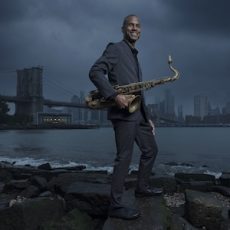
In a career spanning two decades and a wide range of musical endeavors, saxophonist Mark Turner is emerging as a powerful figure in the jazz community. With a distinctive, personal sound, exceptional improvisational skills and an innovative, demanding compositional approach, he has earned a reputation as one of the most original and influential figures in jazz music.
Born in 1965 in Ohio and raised in Southern California, Turner grew up surrounded by music. “There was always a lot of R&B, jazz, soul and gospel music in the house,” he recalls. “It was in the 1970s, when the whole civil rights fight was starting to become mainstream, and my mother and stepfather were in the first wave of young black professionals and intellectuals to move into wealthy white neighborhoods. They and their friends always went to jazz concerts. I was inspired by it, both the history of jazz music and African-American culture, and the music itself.” Turner, now a full member of the movement, not only released over a dozen albums as a leader, but was also very active as a sideman. He has recorded and performed with artists including Jakob Bro, Tom Harrell, Billy Hart, Ed Simon, Enrico Rava, Kurt Rosenwinkel, David Virreles, Ethan Iverson, Baptiste Trotignon and SFJazz Collective.
Tickets In Dollars: $41.26
More Posts: adventure,club,genius,jazz,music,preserving,saxophone,travel
VINCENT HERRING & SOUL CHEMISTRY
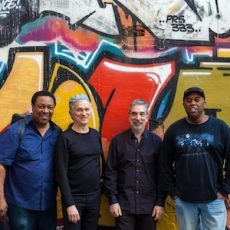
Vincent Herring and Joris Dudli recall their long and fruitful collaboration with their latest, highly anticipated release SOUL CHEMISTRY. Together with rising star Erena Terakubo on saxophones, New York masters Gary Fisher on piano and Essiet Essiet on bass, this group has the perfect chemistry to create the intense, always soulful jazz of today.
Line-up:
Vincent Herring – alto saxophone
Erena Terakubo – alto & tenor saxophone
Gary Fisher – percussion
Essiet Essiet – bass
Joris Dudli – drums
Tickets In Dollars: $25.41
More Posts: adventure,club,genius,jazz,music,preserving,saxophone,travel
KENNY GARRETT AND SOUNDS FROM THE ANCESTORS
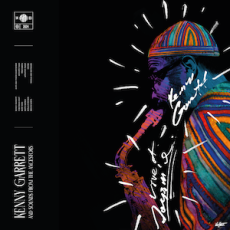
Since joining Miles Davis’ band in the mid-1980s, saxophonist Kenny Garrett has distinguished himself with one thing above all else: his pursuit of absolute perfection. This may have gotten in the way of his emotionality in some episodes, but who can just jump out of their skin like that? On his new album ‘Sounds From The Ancestors’, Kenny goes further than ever before to gain distance. And here he reveals the musical sides of his personality that we have not yet known from him.
The album “Sounds From The Ancestors” is so multi-layered, as if it were a film in which he himself acted as director, screenwriter, cinematographer, main actor and, of course, soundtrack provider.
Line-up:
Kenny Garrett – Alto and Tenor Saxophones
Corcoran Holt – Acoustic Bass
Rudy Bird – Percussion
Keith Brown – Acoustic Piano
Ronald Bruner – Drums
Melvis Santa – Vocals and Keyboard
Tickets In Dollars: $65.90
Two Shows | 18:00 (6:00pm) and 21:30 (9:30)
More Posts: adventure,club,genius,jazz,music,preserving,saxophone,travel