

Daily Dose Of Jazz…
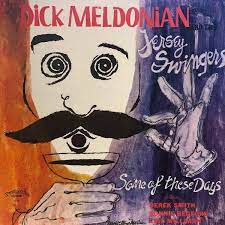
Richard Anthony Meldonian was born January 27, 1930 in Providence, Rhode Island. He first began playing the clarinet when he was eight years old and by eleven was proficient on the tenor saxophone. In 1944 he led his first band that he formed.
1949 saw Dick working as a professional musician in the bands of Freddie Slack, and into the Fifties with Charlie Barnet and as an alto saxophonist with Stan Kenton alongside Bud Shank and Art Pepper. He also played with Shorty Rogers, Nat Pierce, Elliot Lawrence and Bill Russo.
Moving to New York City in the mid 1950s, Meldonian worked as a studio and session musician, among other things. with Phil Sunkel, Sam Most and Erroll Garner. In 1957 he was a member of Paul Quinichette’s band with Gene Roland and John Carisi. In 1960 he joined the Gerry Mulligan Concert Jazz Band.
He became better known as the leader of his own quartet, The Jersey Swingers , in the late 1970s and through the big band that he led with drummer Sonny Igoe in the early 1980s. During this time, Dick also recorded with the big band and smaller formations under his own name for the Progressive, Circle and Statiras labels. In 1992 he was still working with Harry DiVito and Marty Grosz.
Soprano and tenor saxophonist Dick Meldonian died on January 25, 2017.

More Posts: bandleader,history,instrumental,jazz,music,saxophone
The Jazz Voyager
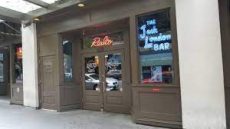
As I say farewell to Indianapolis, I’m looking out the window of the plane heading to the great northwest of Portland, Oregon to pay a visit to the Jack London Revue. The venue is rooted in the original American tradition of jazz and the underlying principles of freedom through improvisation, however, they feature a wide range of music that has been inspired by jazz’s world wide diaspora.L
Saxophonist Lakecia Benjamin will be getting all the attention of this Jazz Voyager as she fuses traditional conceptions of jazz, hip~hop, and soul in her performance. She has received 3 Grammy nominations for her latest album Phoenix. The far-reaching new album finds her poised alongside a curated all-star cast of Wayne Shorter to Dianne Reeves, Georgia Anne Muldrow to Patrice Rushen, and Sonia Sanchez to Angela Davis. The album is produced by the multi-Grammy winner drummer and activist Terri Lyne Carrington.
The club is located at 529 SW 4th Avenue 97204 For those requiring more information go to https://notoriousjazz.com/event/lakecia-benjamin.

More Posts: adventure,club,genius,jazz,music,organ,preserving,saxophone,travel
Requisites
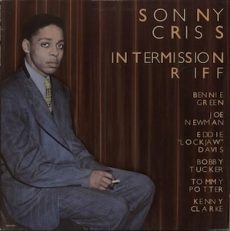
Intermission Riff ~ Sonny Criss | By Eddie Carter
In 1951, producer Norman Granz, the founder of several jazz labels and the chief architect behind the Jazz at The Philharmonic concerts, began a tour featuring Billy Eckstine at the Shrine Auditorium in Los Angeles, California. During the intermission, an all-star septet led by alto saxophonist William “Sonny” Criss took the stage. The result of their performance is this morning’s album from the library, Intermission Riff (Pablo Records 2310-929), released in 1988 after archivist Eric Miller discovered the tapes. His bandmates are Joe Newman on trumpet, Bennie Green on trombone, Eddie “Lockjaw” Davis on tenor sax, Bobby Tucker on piano, Tommy Potter on bass and Kenny Clarke on drums. My copy is the original U.S. Mono release.
Intermission Riff by Ray Wetzel and Michael H. Goldsen opens the set. Eddie begins with a robust introduction before the ensemble’s lively melody. “Lockjaw” gets busy first in the opening solo. Joe motors along in the next spirited statement, and then Sonny follows with an electrifying reading that receives a huge ovation from the audience at its climax. Green provides an exclamation point with an exhilarating solo into a thrilling ending. How High The Moon by Nancy Hamilton and Morgan Lewis starts with the trio’s calypso introduction preceding the high-spirited theme. Newman starts things off, and then Davis is remarkably assured on the next solo. Potter gives an impressive reading next. Green excels on the following reading, and Criss cooks with passionate enthusiasm on the closer.
A rocking version of Perdido by Juan Tizol, Ervin Drake and Hans Lengsfelder starts with the septet’s vigorous melody. Criss makes a strong impression on the first solo. Newman shows assurance and confidence in the second reading. Tucker takes over with an energetic performance, followed by Davis’ unrestrained enthusiasm. Green enters the next solo with a vengeance, then Clarke closes with a brisk workout into the reprise and ending. Body and Soul by Johnny Green, Edward Heyman, Robert Sour and Frank Eyton begins with Green’s soothing introduction before the pace moves to mid-tempo for the ensemble’s melody. Newman, Tucker, Criss, and Davis all contribute concise readings that are expressed very well.
High Jump by E. Greene culminates the set in a blowing session as fast as the Road Runner after the septet’s joyous exuberance in the melody. Bennie speaks his piece first with the added horsepower of the front line in one chorus. Sonny meets the challenge on the second statement, and then Newman gives an aggressive reading that dares the rhythm section to keep up with him. Davis infuses his solo with a few bars of Wild Blue Yonder while exchanging a few thoughts with Kenny, who responds in explosive form preceding the closing chorus. George Horn initially mastered Intermission Riff and it was digitally remixed by Danny Kopelson. The album’s sound quality does have a few momentary sound dropouts, but Eric Miller thought the music was too important to be edited, so he didn’t remove them.
Intermission Riff gives a glimpse of Sonny Criss, who possessed a beautiful sound that was capable of creating emotional solos. He had much to offer the jazz world, as demonstrated on his albums for Imperial, Impulse, Muse Peacock, Prestige and Xanadu. In 1977, he was diagnosed with stomach cancer, and on November 19 of that year, at age fifty, he took his own life as a result of the constant pain. Whether you’re just discovering his music or are already familiar with his discography, I offer for your consideration on your next record shopping trip, Intermission Riff. It’s a remarkable live performance by
Sonny Criss that swings with the best of them and is recommended for a spot in any jazz library!
~ Body and Soul, How High The Moon, Perdido – Source: JazzStandards.com ~ Sonny Criss – Source: Wikipedia.org © 2024 by Edward Thomas Carter

More Posts: choice,classic,collectible,collector,history,instrumental,jazz,music,saxophone

LISA FISCHER & GRAND BATON | BRANFORD MARSALIS
Lisa Fischer set out to take center stage with her own award-winning style after four decades of featured background singing with icons like The Rolling Stones, Chaka Khan, Luther Vandross, Tina Turner, and Nine Inch Nails. The 2013 Best Documentary Oscar winning film, “Twenty Feet from Stardom,” altered the course of Fischer’s musical journey by telling her story through clips of her legendary duets with Mick Jagger and Sting. The film left audiences eager to hear more, leading to her organic fusion of Caribbean psychedelic soul and jazzy progressive rock which has been exciting fans worldwide! Lisa Fischer will take the stage with Grand Baton, an Afro-Caribbean progressive rock and jazz fusion band. Fischer and Grand Baton have performed at several jazz festivals including The Monterey Jazz Festival, The Newport Jazz Festival, and The New Orleans Jazz & Heritage Festival.
After four decades in the international spotlight, the achievements of saxophonist Branford Marsalis continue to grow. From his initial recognition as a young jazz lion, he has expanded his vision as an instrumentalist, composer, bandleader, and educator, crossing stylistic boundaries while maintaining an unwavering creative integrity. In the process, he has become a multi award-winning artist with three Grammys, a citation by the National Endowment for the Arts as a Jazz Master, and an avatar of contemporary artistic excellence.
More Posts: adventure,club,genius,jazz,music,preserving,saxophone,travel,vocal
DAVID SANCHEZ & NAJEE
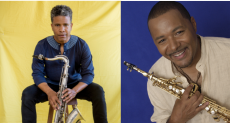
David Sanchez has emerged as one of the most respected jazz musicians of the 21st century, blending Afro-Caribbean rhythms from his Puerto Rican upbringing with jazz influences. He’s garnered critical acclaim and multiple awards for his diverse and innovative compositions. During Jazz Fest his ensemble will consist of a piano, acoustic bass, drums, percussion, and guitar.
Najee, a two-time Grammy nominated saxophonist and flautist has become an international pioneer in the industry by pushing musical boundaries throughout his career and collaborating with legendary artists such as Prince, Quincy Jones, Stevie Wonder and Chaka Khan. His fusing R&B and jazz into a unique and captivating sound has resulted in six #1 albums on the Billboard charts.
More Posts: adventure,club,genius,jazz,music,preserving,saxophone,travel