

Requisites
Sphere On Tour ~ Sphere | By Eddie Carter
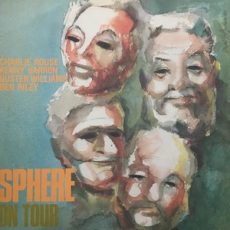
This morning’s album from the library is a 1985 live recording by the bop quartet Sphere. Sphere on Tour (Red Record VPA 191) was the first of two live dates in their small discography and one of two records they recorded for the Italian label. Sphere took the pianist’s middle name and was originally formed to honor Thelonious Monk’s legacy after his death. The quartet quickly broadened its focus by recording albums that also featured its own original compositions. The group consists of two former members of Monk’s group, tenor saxophonist Charlie Rouse and drummer Ben Riley, and is anchored by pianist Kenny Barron and bassist Buster Williams. The copy I own is the 1986 Italian stereo release.
Dual Force by Buster Williams opens the set with the foursome’s lively melody setting the tone. Kenny gets things started with a spirited lead solo, then Charlie wails enthusiastically in a lengthy performance. Buster takes a short, scintillating statement leading to the theme’s restatement and an upbeat finish. Beautiful Friendship by Donald Kahn and Stanley Styne slows the pace when the rhythm section’s pretty introduction moves to an upbeat theme when Charlie enters. Kenny is up first to give a charming solo, then Charlie cooks at an easy groove next. Buster evokes a sense of intimacy in a short statement, and Ben has the last word before the theme returns and the song ends softly.
Scratch by Kenny Barron begins with the foursome’s offbeat introduction and melody. Charlie’s opening statement pushes his solo to the outer limits of musical boundaries. Kenny follows with a bit of quirky fun, then Buster takes an interesting walk, preceding the quirky theme reprise and abrupt stop. Tayamisha by Buster Williams starts Side Two at midtempo with the bassist’s introduction to the opening ensemble. Charlie leads the way with a smoothly flowing interpretation. Kenny comes in next for a delightful display of evident pleasure, then Buster takes us home in a short walk of consummate ease ahead of the quartet’s theme restatement and ending.
Up next is Spiral by Kenny Barron. Kenny brings the song to life, segueing into the quartet’s melody. Charlie sets the tone in the first solo with warmth, deep conviction and melodic beauty. Kenny follows with an exquisite, elegant statement, then Buster communicates his heart before the foursome regroups for the theme’s return. To conclude the album, the quartet dresses up one of Thelonious Monk’s most popular tunes, Well, You Needn’t, mistakenly listed as “Will, You Needn’t,” with a spirited introduction by Riley and the rhythm section, ahead of the ensemble melody. Charlie is off to the races with an intense drive. Kenny builds upon his solo with a steady attack, then Buster takes a short, swift walk leading back to the ending theme, band introductions and a pleasant goodnight to the audience.
Sphere on Tour was produced by Red Records co-founders Alberto Alberti and Sergio Veschi. Gianni Grassilli was the recording engineer, and the album’s sound quality is superb, with a soundstage that transports the listener to the audience as the musicians perform. The original group, consisting of Rouse, Barron, Williams, and Riley, recorded six albums from 1982 to 1988. They disbanded briefly after Rouse’s death, then made one final album with Gary Bartz in 1997. If you’re in the mood for live bop from a fabulous quartet who effortlessly blend innovation and tradition, I invite you to check out Sphere on Tour on your next record shopping trip. It’s a terrific introduction to their music collectively and might become a welcome addition to your jazz library!
~ A Beautiful Friendship, Well, You Needn’t – Source: Wikipedia.org
© 2026 by Edward Thomas Carter
More Posts: bass,choice,classic,collectible,collector,drums,history,instrumental,jazz,music,piano,saxophone
Daily Dose Of Jazz…
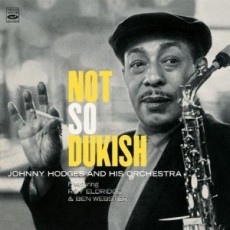
Johnny Hodges was born John Keith Hodges on July 25, 1906 in Cambridge, Massachusetts but soon after the family moved to Boston. Growing up with baritone saxophonist Harry Carney and saxophonists Charlie Holmes and Howard E. Johnson, he started out on drums and piano and was mostly self-taught. He became good enough to play the piano at dances in private homes. By the time he was a teenager, he took up the soprano saxophone and around this time he picked up the nickname “Rabbit”, either for his ability to outrun truant officers or his nibbling on lettuce and tomato sandwiches.
When Hodges was 14 he saw Sidney Bechet, introduced himself, played a tune, received encouragement to continue to play and grew a name for himself in the Boston area till he moved to New York in 1924, able to play both the alto and soprano saxophone.
Hodges started playing with Lloyd Scott, Sidney Bechet, Lucky Roberts and Chick Webb. In 1928 he joined the Ellington orchestra and became one of the identifying voices on both alto and soprano sax. Leaving Duke in 1951 to lead his own band, he returned four years later shortly before Ellington’s 1956 performance at the Newport Jazz Festival. Ellington would write pieces like “Confab with Rab”, “Jeep’s Blues”, “Sultry Sunset”, “Hodge Podge” and “Prelude To A Kiss” among many others that featured Hodge.
Johnny’s pure tone and economy of melody on both the blues and ballads won him admiration from musicians of all eras and styles, from Ben Webster to John Coltrane, who both played with him when he had his own orchestra in the 1950s, to Lawrence Welk, who featured him in an album of standards.
Alto saxophonist Johnny Hodges’ last recordings are featured on the New Orleans Suite album and his final performances were at the Imperial Room in Toronto, less than a week before his death from a heart attack on May 11, 1970. He is considered one of the definitive alto saxophones players of swing in the Big Band Era and of mainstream jazz.
More Posts: saxophone

Daily Dose Of Jazz…
Bill Perkins was born on July 22, 1924 in San Francisco, California, grew up in Chile, moved to Santa Barbara and served in the military during World War II. While living in Santa Barbara after his discharge, he studied music and engineering at Cal-Tech at the University of California and a Westlake College.
Bill started out performing in the big bands of Woody Herman and Jerry Wald. He also worked for the Stan Kenton orchestra, a move that subsequently led to his entry into the cool jazz idiom. He became one of the coolest and a major influence in the cool school on the West Coast jazz scene.
Perk, as he was known, started recording as a leader in 1956 with John Lewis on Grand Encounter and sessions with Art Pepper, Bud Shank and Richie Kamuca, to name just a few. During the 60s he held had a dual career as a studio musician and recording engineer. From 1970-1992 he held a chair in The Tonight Show band and a member of the Bud Shank Sextet.
Though he played baritone, alto, soprano and flute he was best known for his tenor and most remembered for his baritone and tenor work with The Lighthouse All-Stars. Over the course of his career Bill Perkins recorded twenty-three albums as a leader and sideman up until the time of his death on August 9, 2003.
Requisites
Something in Common ~ Houston Person and Ron Carter | By Eddie Carter
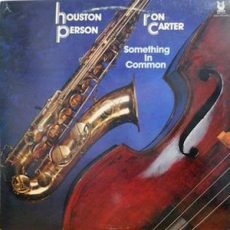
After a challenging day and an exhausting week, I was looking for something gentle to help me unwind and restore my energy. This morning’s discussion, submitted for your approval, came after I listened to a few duet releases in my library and features two of my favorite musicians, Houston Person and Ron Carter. Something in Common (Muse Records MR 5376) is a digital recording pairing the tenor saxophonist and bassist in a thoroughly enjoyable program of cool jazz, one of my go-to albums for soothing my senses. The copy I own is the 1990 U.S. stereo release.
The opener, Blue Seven by Sonny Rollins, gets things off to a good start with Houston’s big-toned, warm, relaxed melody and Ron walking beside him with a perfect bass rhythm. Houston catches sunlight in the opening solo, using a subtle tone that builds into a textbook performance. Ron walks comfortably at an easy pace into the theme’s reprise and climax. I Thought About You by Jimmy Van Heusen and Johnny Mercer begins with the duo handling the melody as if sharing a personal secret with the listener. Ron is the featured soloist here, expressing his feelings with tenderness and sentimentality through the duo’s restatement of the theme and compassionate finale.
Mack The Knife by Kurt Weill, Marc Blitzstein, and Bertolt Brecht is a jazz classic from the twenties, and the duo puts a lively, fresh take on the opening chorus. Houston captures the spirit of this timeless tune with a wonderfully inventive first performance. Ron thoughtfully makes every note shine in a charming solo, leading smoothly into Houston’s beautifully crafted postscript that guides us into the closing chorus. Clifford Brown’s Joy Spring begins with the duo’s relaxed, easygoing theme, inviting Ron to stroll confidently through the opening statement. Houston responds with a warm, laid-back interpretation before the melody makes its lovely return.
Good Morning Heartache by Ervin Drake, Dan Fisher, and Irene Higginbotham is one of the album’s definitive highlights. Houston treats the melancholy theme as a story, shaping each verse of the song’s only solo, with Ron supporting him effortlessly until the tender reprise and ending. The beat moves upward for Anthropology by Charlie Parker, and the melody unfolds with relaxed assurance from two masters with nothing left to prove. Houston’s opening solo flows seamlessly through every phrase. Ron puts an indelible stamp on the closing statement, and the theme’s restatement concludes perfectly.
Once In A While by Michael Edwards and Bud Green closes the album on a warm, gentle note, opening with Houston and Ron’s beautiful, dreamy melody. Ron takes a walk through the song’s only interpretation as it builds toward the duo’s tender reprise and climax. Houston Person and Ron Carter produced Something in Common with Rudy Van Gelder handling the recording console. The album has a beautiful soundstage and is a joy to listen to from start to finish. If you’re in the mood for a terrific album that’s especially enjoyable any time of day or night, I invite you to check out Something in Common by Houston Person and Ron Carter on your next record-shopping trip. It’s a terrific album by two jazz masters, and a title I’m sure you won’t be able to listen to just once!
~ I Thought About You, Mack The Knife, Once In a While – Source: JazzStandards.com
~ Anthropology, Good Morning Heartache, Joy Spring – Source: Wikipedia.org
© 2026 by Edward Thomas Carter
More Posts: bass,choice,classic,collectible,collector,history,instrumental,jazz,music,piano,saxophone
Daily Dose Of Jazz…
Paulo Moura was born on July 15, 1932 in Sao Jose do Rio Preto, Brazil. His father, a maestro of a marching band, encouraged his son to train as a tailor but Paulo instead studied in the National Music School and performed with the Brazilian Symphonic Orchestra.
He was the first black artist to become first clarinetist in the Municipal Theatre Orchestra. He appeared at Bossa Nova night at Carnegie Hall in 1962 with Sergio Mendes and both were featured on Cannonball Adderley’s 1962 album, Cannonball’s Bossa Nova.
From 1997 to 1999, Paulo was on the State Council of Culture in Rio de Janiero, a Councillor of the Federal Council of Music, and President of the Museum Foundation of Image and Sound. In 2000, Moura became the first Brazilian instrumentalist to win the Latin Grammy.
He won the Sharp Award for the most popular instrumentalist of the year in 1992. His CD “Paulo Moura e Os Oito Batutas” was listed by Barnes & Noble as one of the top 10 recommendations of the year for 1998. Clarinetist and saxophonist Paulo Moura passed away of lymphoma on July 12, 2010 just three days before his 78th birthday.