

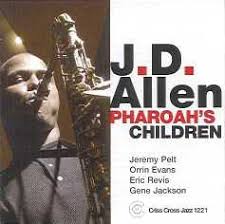
Daily Dose Of Jazz…
J. D. Allen III was born John Daniel Allen III on December 11, 1972 in Detroit, Michigan. His apprenticeship was anchored by his lengthy tenure with jazz vocalist Betty Carter.
After moving to New York City, Allen played with George Cables, Betty Carter, Ron Carter, Jack DeJohnette, Frank Foster, Butch Morris, David Murray, and Wallace Roney. Closer to his generation, he has played with Lucian Ban, Cindy Blackman, Gerald Cleaver, Dave Douglas, Orrin Evans, Duane Eubanks, Marcus Gilmore, Russell Gunn, Winard Harper, Elisabeth Kontomanou, Meshell Ndegeocello, Jeremy Pelt, and Eric Revis.
His debut solo album, In Search Of, released in 1999, garnered his selection as Best New Artist in Italy. In 2002, his second album was chosen a top ten album of the year by Jazziz magazine. Ten years later he was named best composer and best tenor saxophonist in the DownBeat Critics’ Poll.
He also works under the pseudonyms Bigger Thomas and Cross Damon. Tenor saxophonist and composer J.D. Allen continues to perform and record.

More Posts: bandleader,history,instrumental,jazz,music,saxophone
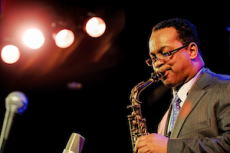
VICTOR GOINES
Tonight, New Orleans-bred and presently St. Louis x Chicago x NYC-based saxophonist, clarinetist, composer and educator Victor Goines is the guest bandleader of Snug’s “E-Day” Series, when musicians close to our late great Ellis Marsalis present their tribute concerts to his musical legacy on the night of the week that was Ellis’ Snug residency for over 30 years.
Notably, Victor performed in the Ellis Marsalis Quartet for a number of years beginning in the 1980s. Ellis later hired Victor as a faculty member when he created the University of New Orleans Jazz Studies Department in 1989. Victor Goines is widely recognized as one of the most engaging and versatile performers and composers in music today. Drawing from his New Orleans roots, his extraordinary career includes performances throughout the world earning acclaim from audiences, critics and colleagues. Goines has been a member of the Jazz at Lincoln Center Orchestra in NYC and the Wynton Marsalis Septet since 1993.
He has recorded and/or performed with many notable jazz and popular artists including Ahmad Jamal, Ruth Brown, Dee Dee Bridgewater, Ray Charles, Bob Dylan, Dizzy Gillespie, Lenny Kravitz, Ellis Marsalis Jr, Branford Marsalis, Dianne Reeves, Willie Nelson, Marcus Roberts, Diana Ross, Stevie Wonder, more.
His discography boasts over 20 albums as a bandleader, and recordings on over 70 other releases, including Wynton Marsalis’ Pulitzer Prize-winning recording, “Blood on the Fields” and Ted Nash’s Grammy Award-winning “Presidential Suite.” A gifted composer, Goines has more than 100 original works to his credit, including his 1992 debut album “Genesis” on the late Harold Battiste Jr’s seminal AFO Records. In 2000, he was commissioned by Juilliard’s Dance Division to compose or their 50th Anniversary.
Victor is currently the Executive Artistic Director at Jazz St. Louis.
Victor Goines New Orleans Quartet
Victor Goines – clarinet & saxophones
Oscar Rossignoli – piano
Jason Stewart – bass
Jason Marsalis – drums
More Posts: adventure,club,genius,jazz,music,preserving,saxophone,travel
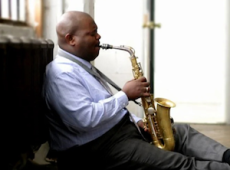
WESSELL “WARMDADDY” ANDERSON
Alto saxophonistWessell “Warmdaddy” Anderson grew up in the tough Bedford Stuyvesent and Crown Heights neighborhoods of Brooklyn, NY. By the time Anderson was 14 years old, he was deeply involved in the local jazz scene (thanks in part to his father, a drummer) and attending jam sessions at then-active Brooklyn and Queens jazz clubs like the Blue Coronet, Pumpkin’s, and the Turbo Village.
Anderson later studied at Harlem’s famed Jazzmobile workshops with the likes of Frank Wess, Charles Davis, and Frank Foster. Here, Anderson also met Wynton and Branford Marsalis, who were both playing with Art Blakey’s Jazz Messengers at the time. At Branford’s urging, Anderson soon departed New York to study with famed clarinetist Alvin Batiste at Southern University in Baton Rouge, LA.
It wasn’t long before Anderson got his first big break, when Wynton Marsalis asked Anderson to tour with the Wynton Marsalis Septet. Soon, Anderson was off to the studio and the road with Marsalis, helping make some of the most defining music of the late-’80s and early-’90s jazz revival. Although Marsalis disbanded the group in 1995, Anderson is still the first string alto saxist with Marsalis’ Lincoln Center Jazz Orchestra.
It was during his time with Marsalis’ group that Anderson began to develop his own sound: a mix of traditional New Orleans jazz and a sweeping blues style similar to that of Cannonball Adderley, and Wynton thus dubbed him “Warmdaddy” soul.
The Quintet
Wess “Warmdaddy” Anderson – saxophone
Ed Perkins – vocals
Victor Atkins – piano
Robin Sherman – bass
Jason Marsalis – drums
More Posts: adventure,club,genius,jazz,music,preserving,saxophone,travel
Requisites
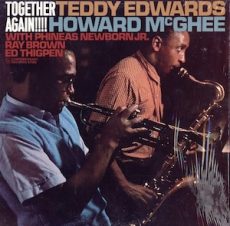
Together Again!!!! ~ Teddy Edwards and Howard McGhee | By Eddie Carter
Teddy Edwards and Howard McGhee enter this morning’s spotlight with their excellent 1961 collaboration, Together Again!!!! (Contemporary Records M3588/S7588). The tenor saxophonist and trumpeter initially worked together from 1945 to 1947 when Edwards was a member of McGhee’s sextet. It’s their second collaboration since the Bebop era, but the first time the duo recorded together. The supporting cast is a magical rhythm section: Phineas Newborn Jr. on piano, Ray Brown on bass, and Ed Thigpen on drums. My copy is the 1975 U.S. Stereo reissue, sharing the original catalog number.
The album opener is the title track, Together Again, by Teddy Edwards. The quintet begins the melody harmonizing in perfect agreement. Howard takes the wheel and cruises leisurely on the opening statement. Teddy wails with a vibrant voice in the following solo. Phineas heightens the excitement with an impressive reading; then Ray adds a brisk footnote leading to the theme’s return and summation. McGhee introduces You Stepped Out Of A Dream by Nacio Herb Brown and Gus Kahn on the muted trumpet. He showcases the horn’s warm, lyrical tone in a lighthearted setting during two solos. In between them, Edwards gives a charming reading that bounces along over the rhythm section.
Up There by Ray Brown opens briskly from the pianist’s introduction, which evolves into the ensemble’s aggressive theme. Teddy tackles the first solo with fleet agility, and then Howard flies swiftly in the second statement. Phineas swings with a vengeance until the group’s theme restatement and abrupt finish. Side Two begins with Perhaps by Charlie Parker, featuring McGhee on muted trumpet during the opening and closing chorus. Edwards builds the opening solo exquisitely. Newborn follows with an exceptional interpretation. McGhee opens the horn for a passionately nimble reading, and Ray delivers the exclamation point into the group’s exit.
Teddy and the trio have the honors next on Misty by Erroll Garner and Johnny Burke. The quartet starts with a bass and piano duet. Teddy and Ed join them for the song’s very pretty melody. Edwards is the song’s only soloist and delivers an intimately personal interpretation that, to these ears, is one of the album’s highlights. Sandy by Howard McGhee begins with the quintet’s energetic theme. Howard is off to a rousing start on the lead solo. Edwards follows him with a reading of confident assurance. Newborn goes for the jugular next with vigorous enthusiasm. Brown wraps up the solos with dazzling bass lines preceding the quintet’s return to take the song out.
Lester Koenig produced Together Again!!!!, and Roy DuNann was the recording engineer. The reissue sounds great and possesses a vibrant soundstage, allowing the musicians to emerge from your speakers into your listening room with superb fidelity! Throughout the album, the quintet demonstrates how good West Coast jazz could sound in the right hands. The music is great from start to finish, and the musicians complement each other skillfully. If you’re a fan of Cool Jazz or Post Bop, I invite you to consider Together Again!!!! by Teddy Edwards and Howard McGhee on your next record-shopping trip. It offers the opportunity to appreciate two jazz giants who, after an absence of sixteen years, prove that great music doesn’t have an expiration date and can provide listening pleasure endlessly!
~ You Stepped Out of a Dream, Misty – Source: JazzStandards.com
~ Perhaps – Source: Wikipedia.org
© 2023 by Edward Thomas Carter

More Posts: choice,classic,collectible,collector,history,instrumental,jazz,music,saxophone,trumpet
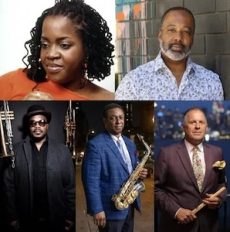
CARLA COOK
Carla Cook – vocals | Jeremy Pelt – trumpet | Vincent Herring – alto saxophone | Eric Reed – piano | tba – bass | Joe Farnsworth – drums
When Carla Cook sings, she swings. The Washington Post says, “She has sass that enlivens her impeccable diction, and tremendous soul that lets her swagger with gutbucket finesse, but it’s all buttressed with sparkling optimism and innocence.” Her improvisational style is steeped in the swing tradition yet eclectic and brimming with fresh interpretations.
Cook will be joined by Smoke’s Coltrane Festival “Countdown 2024” band, the Eric Reed/Vincent Herring Quintet featuring Jeremy Pelt, and Smoke’s Coltrane Festival “Countdown 2024” core ensemble. JazzTimes reports, “Pelt is a technical marvel. He executes intricate solos with ease, plays gorgeous ballads in a tasteful manner, and never lacks flair or sensitivity.” Audiophile Audition adds he has “the power and range of Lee Morgan and Freddie Hubbard in their seminal years.”
The group is co-led by the perpetually swinging Eric Reed, who All About Jazz says “has fully established himself in the forefront of jazz pianists,” and the fiery Herring who “has firmly established himself as one of his generation’s masters,” adds The New York City Jazz Record. It also includes one of the elite musicians working today, drummer Joe Farnsworth.
7PM Show Details: Your $250 ticket (plus tax & tip) includes a 3-course holiday dinner
9:30PM Show Details: Your $350 ticket (plus tax & tip) includes a 3-course holiday dinner, two shows, a midnight celebration, hats & noise makers
More Posts: adventure,club,genius,jazz,music,piano,preserving,saxophone,travel,vocal