

Requisites
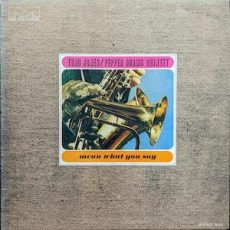
Mean What You Say ~ Thad Jones-Pepper Adams Quintet | By Eddie Carter
This morning’s album offered for your consideration brings together two of my favorite musicians, Thad Jones and Pepper Adams, for their only quintet release. Mean What You Say (Milestone MSP-9001) is their only collaborative effort and was recorded around the same time as The Thad Jones-Mel Lewis Orchestra album. Both titles hit the stores in 1966. Thad is heard exclusively on flugelhorn, and Pepper is on baritone sax. The supporting cast is a first-class rhythm section: Duke Pearson on piano, Ron Carter on bass, and Mel Lewis on drums. The program consists of six originals and two popular songs. My copy is the original US Stereo pressing.
Side One opens with the title tune, Mean What You Say, the first of four originals by Thad Jones and one of his prettiest tunes from Presenting Thad Jones-Mel Lewis & The Jazz Orchestra. The quintet opens with a wonderful melody. Duke has the first solo and states his case comfortably. Mel makes a brief comment before Thad’s relaxing statement. Pepper provides the song’s happy ending in the closer ahead of the reprise and the ending. H and T Blues begins with the ensemble’s smooth theme. Pepper takes the lead on the opening solo and cooks, then Thad thrives on the following reading. Duke swings with a smooth tone next, and Ron has a brief word before the closing chorus.
The group takes a spirited turn on Wives and Lovers by Burt Bacharach and Hal David with a lively melody. Thad launches the first reading slowly, then picks up speed to a brisk conclusion. Pepper answers him passionately, and Duke serves up a sparkling statement preceding the closing chorus and quick stop. Bossa Nova Ova is a festive tune with an infectious melody that’s sure to have your toes tapping along to the beat. Pepper is up first; his bubbling enthusiasm lets us know we’re in for a treat. Thad takes a gorgeous solo next; then Duke provides a perfect ending in a well-constructed performance into the song’s reprise and climax.
Side Two gets underway with No Refill. It’s a pretty song that flows like a summer breeze, beginning with the quintet’s theme. Ron starts with a beautiful first reading, and then Thad follows with a leisurely statement. Pepper shines brightly like the sun next, and Duke gives an interpretation as sweet as honey ahead of the theme’s reprise. Little Waltz by Ron Carter is a haunting ballad that opens with the front line’s melancholy melody. Pepper opens with a deeply moving interpretation, followed by Thad’s wonderfully warm statement. Duke is equally polite and respectful next, then Ron walks in last with a lovely finale before the theme’s restatement and tender ending.
Up next is Duke Pearson’s Chant, the pianist first performed on Donald Byrd’s A New Perspective. The ensemble starts slowly for their melody, but the pace picks up for the hearty opening statement by Pepper. Thad comes in next and delivers the second solo efficiently, then Duke delivers the knockout with a splendid performance, leading to the reprise and close. Yes Sir, That’s My Baby by Walter Donaldson and Gus Kahn is an old song from the twenties that the quintet has fun with in the opening and closing choruses with a ragtime feel. In between are three great solos by Thad, Pepper, and Duke, who are all having a blast playing.
Orrin Keepnews produced Mean What You Say, and Elvin Campbell was the recording engineer. The sound quality is exceptional, with a stunning soundstage that transports listeners to the studio as the quintet works. It’s a pity that this group didn’t get to record again because it’s a terrific studio session worthy of adorning a spot in any jazz library. Thad and Mel would assemble The Jazz Orchestra and Pepper Adams would become a significant member of the band’s early Solid State albums. Duke Pearson was a wonderful bandleader and composer who made his home on Blue Note, and Ron Carter was a member of the Miles Davis Quintet before branching out on his own in the seventies.
If you’re in the mood for an excellent Hard-Bop album and are a fan of either musician, I invite you to consider Mean What You Say by The Thad Jones-Pepper Adams Quintet for a spot in your library. It’s an absolute gem in their discography and a terrific release I’m sure you’ll enjoy!
~ A New Perspective (Blue Note BLP 4124/BST 84124), Presenting Thad Jones-Mel Lewis and The Jazz Orchestra (Solid State SS 18003) – Source: Discogs.com ~ Wives and Lovers, Yes Sir, That’s My Baby – Source: Wikipedia.org © 2023 by Edward Thomas Carter

More Posts: choice,classic,collectible,collector,flugelhorn,history,instrumental,jazz,music,saxophone

LUTHER ALLISON SEXTET FEATURING STEVE WILSON
Brandon Woody – trumpet
Steve Wilson – alto saxophone
Joe Giordano – trombone
Luther Allison – piano
Jonathon Muir-Cotton – bass
Michael Reed – drums
More Posts: adventure,club,genius,jazz,music,piano,preserving,restaurant,saxophone

CYNTHIA SCOTT FEATURING HOUSTON PERSON
More Posts: adventure,club,genius,jazz,music,preserving,restaurant,saxophone,vocal

DEVIN PHILLIPS QUARTET
More Posts: adventure,club,genius,jazz,music,preserving,saxophone,travel
KAIDI AKINNIBI
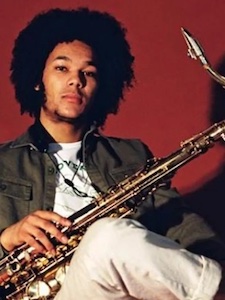
Acclaimed London-based saxophonist, whose sound is very much centred in the capital’s vibrant music scene. Growing up in south London and learning from the Kinetika Bloco and Jazz Warriors families, Kaidi’s outlook on music has always been multifaceted, which can be seen in the various collaborations with the likes of Tom Misch, Black Midi, Blue Lab Beats, Celeste, Wizkid and DoomCannon.
Line up:
KAI AKINNIBI: Tenor Sax
JAMAL WILSON: Piano/Synth
DANIEL ROGERSON: Guitar/vocals
KLEIN SSERWADDA: Bass
NICO SAGGESE: Drums
His own music, more vocally orientated, borrows from Shoegaze rock and electronic production sounds amongst his other influences in jazz and classical music to create soundscapes reminiscent of a movie soundtrack.
More Posts: adventure,club,genius,jazz,music,preserving,saxophone,travel