

Daily Dose Of Jazz…
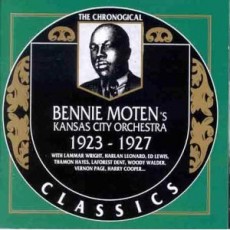
Lammar Wright Sr. was born on June 20, 1907 in Texarkana, Texas but grew up in Kansas City, Missouri. He began his musical career playing and recording with Bennie Moten’s band in 1923. Relocating to New York City in 1927 Lammar played with The Missourians, staying with the group after Cab Calloway became its leader. Wright remained Calloway’s lead trumpeter until 1942.
Playing sporadically with Calloway through the rest of the decade, Wright would also played with Don Redman, Claude Hopkins, Cootie Williams, Lucky Millinder, Sy Oliver and Louis Armstrong.
In the 1950s and 1960s he taught music and worked as a studio musician, in addition to recording with Arnett Cobb, Count Basie, the Sauter-Finegan Orchestra and George Shearing.
Wright led his own groups from time to time, had a role in the 1968 film The Night They Raided Minksy’s. Trumpeter Lammar Wright passed away on April 13, 1973 in New York City.
More Posts: trumpet
Requisites
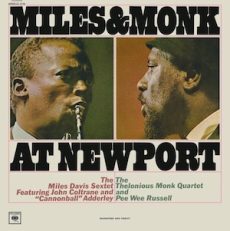
Miles & Monk at Newport ~ The Miles Davis Sextet Featuring Cannonball Adderley and John Coltrane, and The Thelonious Monk Quartet, plus Pee Wee Russell | By Eddie Carter
This morning’s album from the library, Miles & Monk at Newport (Columbia CL 2178/CS 8978), documents two performances on July 3, 1958, and 1963 by The Miles Davis Sextet and The Thelonious Monk Quartet. The lineup is Miles Davis on trumpet; Julian “Cannonball” Adderley on alto sax; John Coltrane (tracks: A1 to A4), Charlie Rouse on tenor sax; Pee Wee Russell on clarinet (tracks: B1, B2); Wynton Kelly (tracks: A1 to A4), Thelonious Monk (tracks: B1, B2) on piano; Paul Chambers (tracks: A1 to A4), Butch Warren (tracks: B1, B2) on bass; Jimmy Cobb (tracks: A1 to A4), and Frankie Dunlop (tracks: B1, B2) on drums. The copy I own is no. 1841 of the 2013 U.S. Record Store Day Limited Edition mono audiophile reissue, sharing the original catalog number from Miles Davis – The Original Mono Recordings series.
The opener is Charlie Parker’s Ah-Leu-Cha, and the sextet’s melody flies out of the gate at the outset. Miles launches into the lead solo rapidly, then John takes flight next, soaring through the skies. Cannonball also moves at lightning speed next, before the ensemble jumps back into the closing chorus featuring two brief comments by Jimmy ahead of an abrupt stop. The audience has a second to catch their breath when the sextet changes gears for Thelonious Monk’s Straight, No Chaser. The group’s easygoing melody sets the tone. Miles makes his entrance with a mellow swing. Coltrane follows with a laid-back solo, then Adderley hits a cool groove. Kelly displays his versatility next, and Chambers takes a relaxing walk, leading back into the theme’s reprise and climax.
Miles switches to a mute to introduce the melody of Fran Dance, his tribute to his then-wife Frances. Cannonball leads off this time with a leisurely, carefree opening statement. John follows, making the most of each note with brilliant idea upon idea in an invigorating interpretation. Wynton gets the last word in a bluesy reading that takes the audience and listener into a restatement of the theme and a soft summation. The first side closes with Two Bass Hit, by Dizzy Gillespie and John Coltrane. Switching back to his open trumpet, Miles kicks things off with a lively opening and main theme, while Jimmy drives the group forward with his dynamic playing. Coltrane is the featured soloist and motors along at a breakneck pace into Miles’ return for the closing chorus, and a final thought by Cobb into the explosive climax.
The Thelonious Monk Quartet and guest Pee Wee Russell begin Side Two with their 1963 performance of Nutty, the first of two originals by Monk. Monk’s introduction sets the stage for the ensemble’s good-humored opening chorus. Charlie sails through the lead solo efficiently. Pee Wee continues the laid-back mood on the second reading. Monk swings casually into the third interpretation, then Butch delivers a few solid bass lines, and Frankie has the last word before the close. Blue Monk is the tune the pianist recorded most often throughout his career. Monk opens with a short introduction segueing into the ensemble’s melody. Rouse leads the way with an abundance of nostalgic charm. Russell answers him with a soulful statement. Monk matches them with a smooth statement, and Warren takes a short walk until the theme’s reprise.
Teo Macero produced both concerts, though it’s not clear who recorded them. Still, the sound quality on both dates is surprisingly good for the time they were recorded. This mono reissue is pressed on 180-gram vinyl and is completely silent until the music begins. The front and rear covers are made of sturdy, heavy cardstock. If I had to mention one small critique, it would be that Miles & Monk were two of the biggest stars on Columbia’s roster, and it might have been wonderful to see each performance released in a two-record set. But putting that aside, Miles & Monk at Newport is more than just a piece of jazz history; it’s a lively celebration of the genre’s energy and diversity during the late 50s and early 60s. If you’re a fan of either artist, I highly recommend checking it out next time you’re record shopping. Miles Davis and Thelonious Monk lead their bands through two unforgettable performances that every jazz fan should experience!
~ Straight, No Chaser – Source: JazzStandards.com © 2026 by Edward Thomas Carter

More Posts: choice,classic,collectible,collector,history,instrumental,jazz,music,piano,trumpet

Daily Dose Of Jazz…
Claudio Roditi was born on May 28, 1946 in Rio de Janiero, Brazil. He began his musical studies of trumpet when he was just five years old and his native Brazilian music nearly took a back seat as he became enamored with jazz recordings of Louis Armstrong, Harry James and other American trumpeters.
By 13, he became familiar with Charlie Parker, Dizzy Gillespie and Miles Davis. At the age of twenty, he was named a finalist in the International Jazz Competition in Vienna, and the following year, moved to Mexico City where he was active on the contemporary music scene. Relocating to Boston in 1970 he enrolled at the Berklee School of Music.
In 1976 Roditi moved to New York eventually establishing himself in the highly competitive atmosphere of the world’s jazz capital. He would go on to perform with Joe Henderson, Charlie Rouse, Herbie Mann, Tito Puente, McCoy Tyner, and Paquito D’Rivera. He has been a member of Dizzy Gillespie’s United Nation Orchestra, The Jazz Masters led by Slide Hampton and his solo work Symphonic Bossa Nova with Ettore Stratta and the Royal Philharmonic earned Roditi a Grammy nomination in 1995 as well as Brazilliance X4 in 2010.
Claudio easily integrates post-bop elements and Brazilian rhythmic concepts, is in demand as a studio musician and a sideman, has composed, arranged and recorded seventeen critically acclaimed albums. The trumpeter currently tours leading his own band, is frequently travels as a member of Dizzy Gillespie’s United Nations Orchestra and is on the faculty of the School of Contemporary Music.
More Posts: trumpet
QUATRE
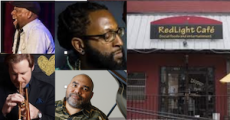
Bassist Joel Powell, drummer Chris Burroughs, pianist Tyrone Jackson and trumpeter Joe Gransden take to the stage on a Sunday evening of jazz at the Red Light Cafe.
These four musicians have been individually holding down the jazz scene in Atlanta and the metropolitan area for more than thirty years. They have played off and on with one or more in different configurations and come together as a quartet for a one night only performance.
Cover: $15.00 advance | $20.00 at door
More Posts: adventure,bandleader,bass,club,drums,genius,instrumental,jazz,music,piano,preserving,travel,trumpet
Daily Dose Of Jazz…
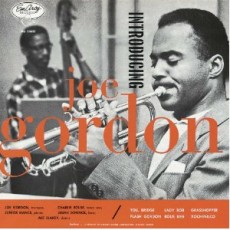
Joe Gordon was born Joseph Henry Gordon on May 15, 1928 in Boston, Massachusetts and took up trumpet in his youth. His first professional gigs were in Boston in 1947 and he would later play with Georgie Auld, Charlie Mariano, Lionel Hampton, Charlie Parker, Art Blakey and Don Redman into the mid Fifties.
In 1956 he toured the Middle East with Dizzy Gillespie’s big band soloing on “A Night In Tunisia”. Following this Gordon played with Horace Silver and then moved to Los Angeles. During his California stay over the next five years he recorded with Barney Kessel, Benny Carter, Harold Land, Shelly Manne, Donald Byrd, Dexter Gordon and Thelonious Monk.
Trumpeter Joe Gordon would record two studio sessions and one live album as a leader prior to his death in a house fire on November 4, 1963 in Santa Monica, California.
More Posts: bandleader,instrumental,jazz,music,trumpet