

Daily Dose Of Jazz…
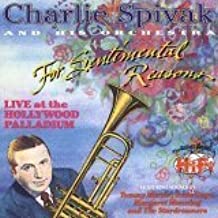
Charlie Spivak was born on February 17, 1905 in Kyiv, Ukraine and learned to play trumpet when he was ten years old. He played in his high school band, going on to work with local groups before joining the Johnny Cavallaro Orchestra.
He went on to play with Paul Specht’s band for most of 1924 to 1930, then spent time with Ben Pollack early Thirties, and the Doresy Brothers to the middle of the decade. Ray Noble was his next stop prior to the Glenn Miller Orchestra in 1935. He spent the next two years working mostly as a studio musician with Gus Arnheim, Glenn Miller, Raymond Scott’s radio orchestra, and others, followed by periods with Bob Crosby, Tommy Dorsey, and Jack Teagarden to the end of the Thirties.
Finally, with the encouragement and financial backing of Glenn Miller, he formed his own band in late 1939. His first attempt was a failure within a year, but his second proved successful, one of the most successful bands in the 1940s, and survived until 1959. He scouted top trumpeter Paul Fredricks (formerly of Alvino Rey’s Orchestra) just as Fredricks left the service at the end of World War II, in 1946. Trumpeter Paul Fredricks was recruited after WWII service and became instrumental in the band’s success in the coming years as it reached its peak.
Spivak’s experience playing with jazz musicians had little effect on his own band’s style, which was straight dance music, made up mainly of ballads and popular tunes. Trombonist Nelson Riddle, saxophonist Manny Albam and Sonny Burke arranged for the band. When the orchestra broke up he went to live in Florida, where he continued to lead a band until illness led to his temporary retirement in 1963. On his recovery, he continued to lead large and small bands, first in Las Vegas, Nevada and then moved to Greenville, South Carolina in 1967, where he led a small group featuring his wife as vocalist.
Trumpeter and bandleader Chalie Spivak, known during his heyday as The Man Who Plays The Sweetest Trumpet In The World, continued to play and record until his transition on March 1, 1982 in Greenville.

More Posts: bandleader,history,instrumental,jazz,music,trumpet
Requisites
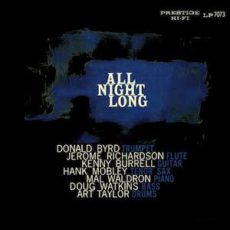
All Night Long ~ The Prestige All-Stars | By Eddie CarterThis morning’s choice from the library is a recent acquisition I’ve been hunting for since it was reissued as part of The Prestige Mono Series. It’s a swinging Fifties jam session that was originally released in 1957 by The Prestige All-Stars. All Night Long (Prestige PRLP 7073/PRST 7289) brings together a first-class ensemble, Donald Byrd on trumpet, Hank Mobley on tenor sax, Jerome Richardson (tracks: A1, B1 to B3) on flute, and (track: A1) on tenor sax, Mal Waldron on piano, Kenny Burrell on guitar, Doug Watkins on bass, and Art Taylor on drums. My copy used in this report is the 2012 Analogue Productions Mono audiophile reissue (APRJ 7073 – PRLP 7073).
Side One opens with Kenny Burrell’s All Night Long occupying the entire side. Art kicks off the song with an infectious beat. Kenny starts the opening solo with exquisite execution. Jerome’s flute flows with a happy feeling on the first of two statements. Hank takes us on a carefree joyride in the next reading, then Donald speaks his peace with a stellar presentation. Jerome resurfaces on tenor for a sparkling performance, and Mal gives a soulful effort on the next interpretation. Art follows with a brief exchange with the principal soloists before the group takes the song out. Side Two starts with the first of two tunes by Hank Mobley, Boo-Lu. Richardson sets the mood of this happy groove on the melody and opening chorus. Burrell, Byrd, Mobley, and Waldron follow with four short solos ahead of the reprise and close.
Flickers by Mal Waldron suggests a homage to the movies. It begins with the ensemble’s collective mid~tempo theme. Jerome is up first and shines with a light-hearted warmth. Donald and Hank follow with one easygoing reading each, then trade a few feisty riffs. Kenny turns in a tasty performance next and Mal applies blues-rooted energy to the finale leading to the closing chorus and Doug’s slow fade into oblivion. Mobley’s Li’l Hankie comes at you at medium speed with the ensemble in unison on the melody. Hank leads off the solos with a marvelous interpretation. Donald delves into the second reading on muted trumpet mining a vein of musical riches. Kenny tells a short story that makes every note count on the third statement. Jerome lights a fuse of creative inspiration on the next performance, followed by a stimulating conversation between the front line, Waldron, and Richardson ahead of the ending theme.
Bob Weinstock supervised the original album and the man behind the dials was Rudy Van Gelder. Kevin Gray did the remastering from the analog tapes. The record has a flat-edge and deep groove on the label like the original release, and the album cover has a high gloss. This reissue was pressed on 200-gram audiophile vinyl by Quality Record Pressings. The soundstage is outstanding, transporting the musicians to your listening room and the record is silent until the music starts. Burrell, Byrd, Watkins, and Taylor also appear on the companion album, All Day Long, recorded just a few days after this date. If you’re a Hard-Bop fan and are looking for an album with superb musicianship, I can’t think of a better choice to introduce you to The Prestige All-Stars than All Night Long! It’s a gorgeous recording that’s highly recommended and well worth adding to your library!
~ All Day Long (Prestige PRLP 7081/PRST 7277) – Source: Discogs.com © 2022 by Edward Thomas Carter

More Posts: bass,choice,classic,collectible,collector,drums,flute,guitar,history,instrumental,jazz,music,piano,saxophone,trumpet
Daily Dose Of Jazz…
Alfred “Chico” Alvarez was born in Montreal, Canada February 3, 1920 but grew up in Southern California. Upon graduation from high school, he attended the Los Angeles Conservatory of Music.
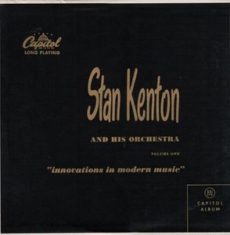
He was a soloist with the Stan Kenton Orchestra from 1941 to 1943 and rejoined the band after Army service in World War II. He also played with the Red Norvo and Charlie Barnet bands, and moved to Las Vegas, Nevada in 1958 and worked the hotel circuit in the 1960s and 1970s. It was during this time that he would accompany singers like Ella Fitzgerald and Sarah Vaughan.
He recorded two dozen albums with Kenton as well as a single recording session on the self-titled Nat King Cole, Bob Keene and His Orchestra, Vido Musso’s The Swingin’st, and Patti Page’s In the Land of Hi-Fi.
Trumpeter Chico Alvarez, who was the business agent for the musicians’ union, the president of the Allied Arts Council and a member of the Nevada State Council on the Arts, transitioned on August 1, 1992 in Las Vegas.
More Posts: history,instrumental,jazz,music,trumpet
Three Wishes
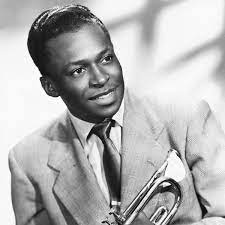
Pannonica asked Miles Davis if he had three wishes bestowed upon him what would his answers be and he replied simply with:
- “To be white.”
*Excerpt from Three Wishes: An Intimate Look at Jazz Greats ~ Compiled and Photographed by Pannonica de Koenigswarter
More Posts: baroness,history,instrumental,jazz,music,pannonica,three,trumpet,wishes
Daily Dose Of Jazz…
Zilner Trenton Randolph was born in Dermott, Arkansas on January 28, 1899 and matriculated at Biddle University, the Kreuger Conservatory, and the Wisconsin Conservatory of Music.
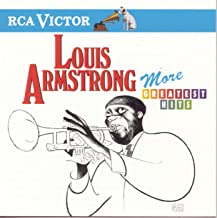
Randolph played in St. Louis, Missouri in the early 1920s, then in Bernie Young’s band in Milwaukee, Wisconsin from 1927 to 1930. A move to Chicago, Illinois in 1931 and was a trumpeter and arranger with Louis Armstrong until 1932 and again in 1933 and 1935.
He played trumpet on a number of Armstrong’s recordings and composed the tune Old Man Mose. In 1934 he played with Carroll Dickerson and Dave Peyton, and led his own Chicago band later in the decade. He arranged for bandleaders Earl Hines, Woody Herman, Fletcher Henderson, and Duke Ellington, and led a quartet in the 1940s.
From the 1940s Zilner devoted himself mainly to teaching, but recorded as a pianist in 1951. Trumpeter, arranger, composer and music educator Zilner Randolph, whose children Hattie and Lucious were part of Sun Ra’s band in the Fifties, transitioned on February 2, 1994.
More Posts: arranger,bandleader,composer,educator,history,instrumental,jazz,music,trumpet